









Portion control is the single most effective strategy for sustainable weight loss that doesn’t require you to give up your favorite foods. Unlike fad diets that eliminate entire food groups or force you to count every single calorie, portion control works with your lifestyle, not against it. The beauty of this approach lies in its simplicity: you can eat the foods you love, just in the right amounts.
Research consistently shows that people eat more when presented with larger portions, regardless of hunger levels. This phenomenon, often called “portion distortion,” has become a major driver of weight gain in modern society. Our plates have grown, our restaurant servings have ballooned, and our perception of what constitutes a normal meal has shifted dramatically.
But here is the good news: you can reverse this trend without extreme dieting or deprivation. Let’s explore practical portion control tips that lead to lasting results.
What is Portion Control?
Portion control is the practice of choosing an intentional amount of food for a meal or snack rather than eating until you feel overly full. It differs from official serving sizes, which are standardized measurements listed on food labels. While a serving size provides a general benchmark, your actual portion size should match your personal energy needs, daily activity levels, and health goals.
The Plate Method: Your Foundation for Portion Control
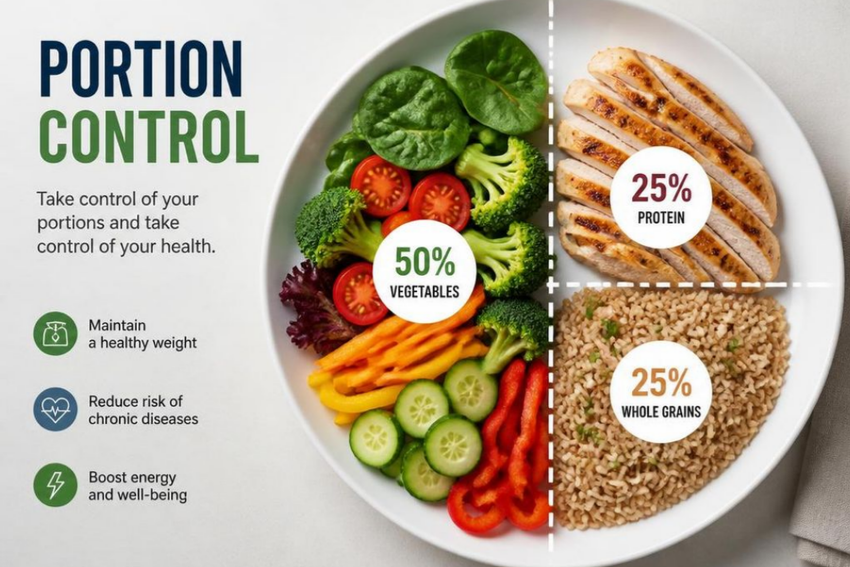
The plate method is arguably the most straightforward way to practice portion control at every meal. Here is how it works:
- Fill half of a nine inch plate with non-starchy vegetables like leafy greens, broccoli, peppers, or mushrooms. These foods are high in volume but low in calories, so they fill you up without weighing you down.
- Dedicate one quarter of your plate to lean protein. Think chicken breast, fish, tofu, eggs, or lean beef. Protein keeps you satisfied longer and supports muscle maintenance during weight loss.
- The remaining quarter goes to complex carbohydrates like brown rice, quinoa, sweet potatoes, or whole grain pasta. These provide steady energy and essential nutrients.
This simple visual framework takes the guesswork out of portion control. You do not need measuring cups or a food scale. Just look at your plate and adjust accordingly.
Visual Cues That Make Portion Control Effortless
Sometimes you need a quick reference when measuring cups are not available. Everyday objects provide excellent visual cues for portion control.
- Vegetables: One serving of non-starchy vegetables should equal the approximate size of a baseball, which easily translates to a medium bell pepper, a whole tomato, or a full cup of cooked leafy greens.
- Fruits: A single, healthy serving of fresh fruit measures roughly the size of a standard tennis ball, helping you instantly gauge ideal portions for whole apples, oranges, or fresh berries.
- Fats: One serving of concentrated fats, such as butter, margarine, or cooking oils, measures about the size of a pair of dice, ensuring you do not accidentally double your daily calorie intake.
- Proteins: A proper portion of lean meat, poultry, or fish matches the thickness and overall surface area of your open palm or a standard deck of cards.
- Carbohydrates: A balanced serving of cooked pasta, quinoa, or whole grain rice fits comfortably into a cupped handful, which equals roughly the size of your closed fist.
- Everyday Utility: Relying on these simple, intuitive visual comparisons allows you to manage serving sizes effortlessly anywhere, whether you are dining out, cooking at home, or grabbing a quick bite on the go.
These visual references make portion control practical whether you are eating at home, at a restaurant, or grabbing a quick meal on the go.
5 Practical Portion Control Tips That Actually Work
Use Smaller Plates and Bowls
This simple trick works because of how our brains process visual information. When you use a smaller plate, the same amount of food looks more substantial. A nine inch plate is ideal for portion control. Your brain registers a full plate as a satisfying meal, even when the actual quantity is smaller.
Pre Portion Your Snacks
Eating straight from the bag or box is a recipe for overeating. Take a moment to portion snacks into individual servings before you start eating. Aim for around 100 to 150 calories per snack portion. Once your portion is gone, it is gone. This prevents mindless grazing and keeps your calorie intake in check.
Eat Slowly and Pause Before Seconds
Your body needs about twenty minutes to signal fullness to your brain. When you eat quickly, you can easily consume more food than you actually need before your brain catches up. Chew thoroughly, savor each bite, and put your fork down between bites. Pause midway through your meal to assess your hunger level before deciding whether to continue.
Start with Vegetables
Load up your plate with vegetables first. These nutrient dense foods take up space and provide fiber that promotes satiety. When you fill half your plate with vegetables, there is simply less room for higher calorie options. This strategy works because it shifts your focus to what you should eat more of, rather than what you should restrict.
Hydrate Before Meals
Drinking a glass of water before eating can reduce your appetite and help you eat less. Sometimes thirst masks itself as hunger, leading you to eat when your body really needs fluid. Start each meal with a glass of water and keep a water bottle nearby throughout the day.
Portion Control When Dining Out
Restaurant portions have become notoriously oversized. A single meal out can easily contain two or three servings worth of calories. But portion control still works when you eat away from home.
- Order a light appetizer as your main entree, or choose to split a massive main course with a dining companion to instantly cut your serving size in half.
- Request a to-go box the moment your food arrives at the table and immediately pack away half of your entree to save for tomorrow’s lunch.
- Select healthier preparation methods like grilled, baked, poached, or steamed dishes instead of heavily breaded, deep-fried, or cream-sauce-laden options.
- Focus purely on physical satisfaction rather than forcing yourself to clean a restaurant-sized plate, honoring your internal fullness cues over social pressure.
- Ask for all salad dressings, gravies, and rich sauces on the side so you retain full control over how much you add to your meal.
The Role of Mindful Eating in Portion Control
Portion control is not just about what you eat, but how you eat. Mindful eating transforms the entire experience and naturally supports better portion management.
- Engage all of your senses during meals by actively noticing the vibrant colors, varied textures, rich flavors, and pleasant aromas of every single bite.
- Eliminate external distractions like smartphones, computers, and television screens to keep your full attention focused directly on your physical dining experience.
- Pause for a quick check-in before taking your first bite to determine if you are experiencing genuine physical hunger or simply responding to boredom, stress, or routine.
- Put your fork down between bites and chew your food slowly, giving your stomach the necessary 20 minutes to send hormonal fullness signals to your brain.
- Express gratitude for your meal, converting eating from a rushed daily chore into an intentional, nourishing experience that curbs emotional overeating.
Common Portion Control Mistakes to Avoid
Even with the best intentions, certain habits can undermine your portion control efforts.
- Eating direct from packaging: Grazing straight out of a large chip bag or ice cream tub removes visual stopping points, making it nearly impossible to monitor actual consumption. Always serve snacks into a small bowl.
- Forcing a clean plate: Overeating simply to empty your plate leads to unnecessary weight gain. Embrace saving remaining portions as leftovers for your next meal instead of stuffing yourself.
- Overlooking dense healthy foods: Calorie-dense superfoods like raw nuts, fresh avocados, extra virgin olive oil, and whole grains require strict portion control because small amounts carry heavy calorie counts.
- Drinking hidden calories: Liquid calories from sugary coffees, smoothies, sodas, and sweet teas bypass digestion cues without making you feel full. Stick mainly to plain water, sparkling water, or unsweetened teas.
Building Sustainable Habits Around Portion Control
Sustainable weight loss comes from consistent habits, not perfection. Start with one or two portion control strategies and gradually add more as they become second nature.
- Introduce just one or two manageable portion control strategies at a time, gradually building up your confidence until these adjustments become second nature.
- Celebrate non-scale victories like increased daily energy, better sleep quality, improved clothing fit, and a healthier overall relationship with food instead of fixating strictly on daily weight fluctuations.
- Maintain a flexible mindset that treats portion control as an empowering, lifelong framework for moderation rather than a rigid, punishment-based restriction diet.
- Plan and pre-portion your snacks for the week ahead of time so you never find yourself making impulsive, ravenous decisions when hunger strikes unexpected.
- Grant yourself grace when you overeat at social events or holidays, simply returning to your healthy portion habits at the very next meal without guilt.
Final Thoughts on Portion Control for Weight Loss
Portion control empowers you to take charge of your eating habits without the stress of complicated diet rules. By using visual cues, the plate method, and mindful eating practices, you can enjoy a wide variety of foods while still moving toward your weight loss goals.
The science is clear: portion control works. It is not about deprivation or punishment. It is about awareness, balance, and making choices that support your health for the long term.
Start small. Pick one tip from this guide and put it into practice today. Whether you switch to a smaller plate, start pre portioning your snacks, or simply pause before reaching for seconds, every step counts. Sustainable weight loss is not a sprint. It is a journey, and portion control is your most reliable companion along the way.