





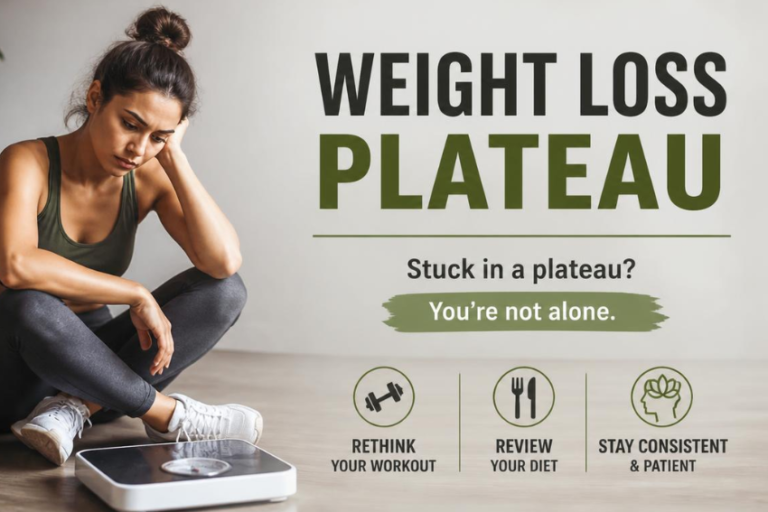





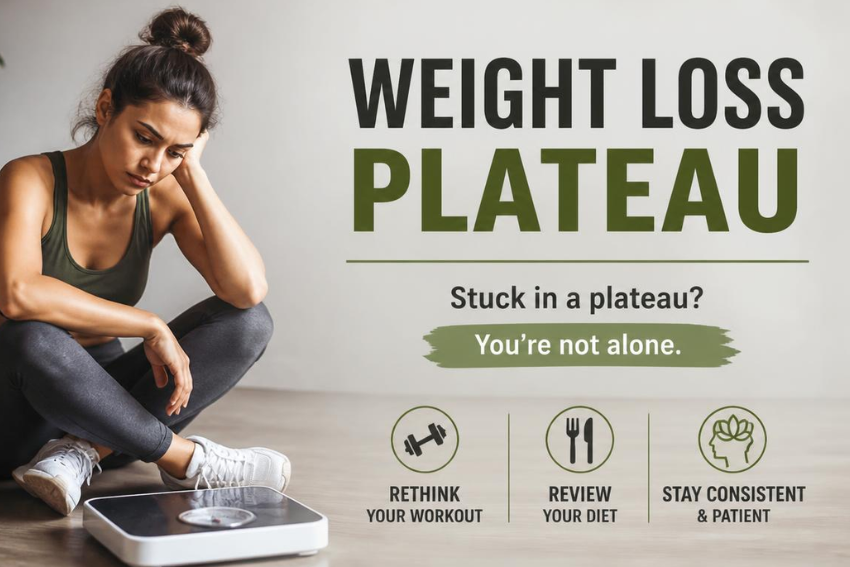
A weight loss plateau is one of the most frustrating experiences on any fitness journey. You have been doing everything right, eating clean, crushing your workouts, and watching the scale drop. Then suddenly, nothing. The number stares back at you day after day, refusing to budge. It feels personal, almost like your body is working against you.
Here is the truth: hitting a weight loss plateau is not a sign of failure. It is a normal, predictable part of the process. Research shows that weight loss plateaus typically last anywhere from 4 to 8 weeks as your body and metabolism adapt to your new composition. The science behind this is called adaptive thermogenesis or metabolic adaptation, where your body senses reduced calorie intake and slows down energy expenditure to conserve energy.
But here is the good news: you can absolutely break through. Below are proven strategies to push past that stall and get your weight loss back on track.
What Actually Causes a Weight Loss Plateau?
Before we dive into the solutions, let us quickly understand why this happens. When you lose weight, several things change inside your body:
- Your metabolism slows down. A smaller body requires fewer calories to function, so your basal metabolic rate drops.
- You lose muscle mass. During calorie restriction, your body may break down muscle tissue for energy. Since muscle burns more calories than fat even at rest, this further reduces your metabolic rate.
- Hormonal shifts occur. Leptin, the hormone that signals fullness, decreases as you lose fat. Meanwhile, ghrelin, the hunger hormone, increases.
- Your body becomes more efficient. When you repeat the same workouts, your body adapts and burns fewer calories for the same effort.
Now that you know the “why,” let us get into the “how.”
15 Ways to Break a Weight Loss Plateau and Get Results Again
Here are effective ways to overcome a weight loss plateau and finally reach your goal weight. Learn how to adjust your diet, exercise, and mindset to see real results fast.
Recalculate Your Calorie Needs
Your calorie deficit that worked 20 pounds ago is no longer effective. As you lose weight, your body requires less energy to maintain itself. If you are still eating the same number of calories as when you started, you may no longer be in a deficit.
What to do: Use a maintenance calorie calculator to determine your new baseline. Subtract 300 to 500 calories from that number to create a fresh deficit. Do not go too low, though. Over-restricting can backfire and trigger further metabolic adaptation.
Increase Your Protein Intake
Protein is your secret weapon against plateaus. It boosts metabolism, preserves muscle mass, and keeps you feeling full longer.
What to do: Aim for at least 25 to 30 grams of protein per meal. Incorporate lean meats, eggs, Greek yogurt, fish, tofu, or plant-based protein powders into every meal. A high-protein diet also supports muscle retention during calorie restriction.
Add Strength Training to Your Routine
If your workouts consist solely of cardio, it is time to change that. Cardio burns calories during the activity, but strength training builds muscle, which raises your resting metabolic rate permanently.
What to do: Incorporate resistance training at least 2 to 3 times per week. Focus on compound movements like squats, deadlifts, push-ups, and rows. Building muscle helps counteract the muscle loss that often accompanies dieting.
Change Up Your Cardio
Your body adapts to repetitive exercise. If you have been jogging the same three miles every day, your body has become efficient at it, meaning you burn fewer calories for the same effort.
What to do: Shock your system with variety. Try high-intensity interval training (HIIT), incline walking, cycling, or swimming. Increase your pace, add intervals, or extend your duration. Mixing different types of exercise helps burn more calories and increases muscle mass.
Track Your Food Intake for a Few Days
Portion creep is real. Over time, serving sizes tend to grow, and mindless snacking adds up without you realizing it.
What to do: Spend 3 to 5 days measuring and logging everything you eat and drink. Use a food scale or measuring cups. You might be surprised to find that your “small snack” is actually 300 calories. Tracking brings awareness back to your habits.
Prioritize Sleep
Sleep is non-negotiable for weight loss. Skimping on rest increases cortisol and ghrelin, the hormones that make you feel hungry, while decreasing leptin, the hormone that signals fullness.
What to do: Aim for 7 to 9 hours of quality sleep per night. Create a consistent bedtime routine, keep your room cool and dark, and avoid screens an hour before bed. Better sleep supports better metabolism.
Manage Stress Levels
Chronic stress keeps cortisol levels elevated, and cortisol encourages your body to hold onto fat, especially around the midsection. It also increases cravings for high-calorie comfort foods.
What to do: Incorporate daily stress-relief practices. Deep breathing, short walks, meditation, journaling, or even a calming hobby can lower cortisol and help your body feel more balanced.
Try Intermittent Fasting
Intermittent fasting is not magic, but it can be a useful tool to break a plateau. By condensing your eating window, you naturally reduce calorie intake and may improve insulin sensitivity.
What to do: Consider a 16:8 approach, where you fast for 16 hours and eat within an 8-hour window. Alternatively, try a 5:2 method, where you eat normally for five days and restrict calories to around 500 to 600 for two non-consecutive days. Always consult a healthcare provider before starting any fasting protocol.
Increase Your Daily Movement (NEAT)
Non-exercise activity thermogenesis, or NEAT, refers to the calories you burn through everyday movements like walking, fidgeting, cleaning, or taking the stairs. This can make a huge difference over time.
What to do: Look for small ways to move more throughout the day. Take the stairs instead of the elevator, park farther from the store, walk while taking phone calls, or set a timer to stand and stretch every hour. These micro-movements add up.
Cycle Your Carbohydrates
Carb cycling involves alternating between higher-carb and lower-carb days. This approach can help prevent metabolic slowdown while still supporting fat loss.
What to do: On training days, consume more carbohydrates to fuel your workouts. On rest days, reduce carb intake. This keeps your metabolism guessing and may help you push past a stall.
Hydrate More Effectively
Sometimes thirst masquerades as hunger. Dehydration can also slow down your metabolism and make you feel sluggish.
What to do: Aim for at least 2 to 3 liters of water daily. Drink a glass of water before meals to help with satiety. Herbal teas and sparkling water count too. Avoid sugary drinks and excessive alcohol, which add empty calories.
Refeed Day Strategy
A refeed day involves temporarily increasing your calorie intake, primarily from carbohydrates, to boost leptin levels and rev up your metabolism.
What to do: Once a week or every 10 days, increase your calorie intake to maintenance level, focusing on healthy carbs like oats, sweet potatoes, rice, and fruit. This signals to your body that you are not starving, which may help counteract metabolic adaptation.
Adjust Your Meal Timing
When you eat can matter as much as what you eat. Some research suggests that eating earlier in the day aligns better with your body’s natural circadian rhythms and may improve weight loss outcomes.
What to do: Try eating a larger breakfast and lunch, and a smaller dinner. Avoid late-night snacking, as your metabolism slows down in the evening.
Consider Professional Guidance
If your plateau stretches beyond several weeks, it might be time to bring in an expert. A registered dietitian or healthcare provider can assess your unique situation and make personalized recommendations.
What to do: Schedule a consultation with a dietitian who can analyze your eating patterns, activity levels, and even your glucose response. This is especially important if you are taking weight-loss medications or have underlying health conditions.
Be Patient and Stay Consistent
This might be the hardest one of all. Weight loss is not linear. There will be weeks where the scale does not move, but that does not mean you are not making progress. Sometimes your body is simply recomposing, losing fat while gaining muscle.
What to do: Focus on non-scale victories. How do your clothes fit? How is your energy? Are you sleeping better? Take progress photos and measurements. These metrics often tell a more accurate story than the scale alone.
When to Seek Medical Help
If you have tried multiple strategies and your weight has not changed for several months, or if you experience unusual symptoms like fatigue, hair loss, or extreme hunger, consult your doctor. There may be an underlying medical condition, such as thyroid issues or hormonal imbalances, that needs attention.
Final Thoughts
Hitting a weight loss plateau is a normal, expected part of any weight loss journey. It is not a dead end; it is a detour. Your body is incredibly adaptive, and sometimes you need to adapt right back. The key is to stay consistent, make strategic adjustments, and keep your eyes on the long-term prize.
Remember, the scale is just one measure of success. Celebrate your wins, big and small. And when that stubborn plateau finally breaks, and it will, you will feel more accomplished than ever.