








Mammogram is the most effective weapon we have to combat breast cancer. This special type of X-ray of the breast has the ability to detect abnormalities years before you or your doctor might feel them. A mammogram is not only a routine exam for millions of American women; it can be the difference between early treatment and a much greater struggle in the future.
But, let’s face it. Thinking about having a mammogram can be frightening. You may have heard reports of pain or confusion about when to go or how often to go. There are a lot more guidelines out there than you are likely to know about. This guide gets to the point. We’ll explain what a mammogram is, why it’s important, the various types, what to expect during a mammogram and the actual advantages that make this screening so critical.
What Is the Main Purpose of a Mammogram?
Breast cancer or breast changes, which are not cancerous, are found long before a breast cancer patient or a doctor can feel them, and the central purpose of a mammogram.
There are two main clinical roles for mammograms:
- Screening Mammograms: These periodic tests are performed by a radiologist on women who have no active symptoms or signs of breast disease. The aim is to detect the small deposits of calcium (microcalcifications) or small masses early.
- Diagnostic Mammograms: Doctors order diagnostic mammograms if a patient has the symptoms of a new lump, breast pain, nipple discharge or a dimpled skin area in the breast. They are also used to examine areas of concern identified during a screening test.
Also Read – What Is Diagnostic Imaging? Types, Uses & Examples
Types of Mammograms
Not all mammograms are the same. There’s a lot more technology now, and options for women and their doctors are more than ever. The most common types you will come across are summarized below.
2D Digital Mammography
This is the “traditional” type of mammography. The machine takes two X-ray images of each breast—one from above and one from the side. It creates a 2-D picture of the breast tissue.
Although 2D mammography has saved many lives over the years, it does have drawbacks: sometimes a small cancer may be obscured by overlapping tissue and sometimes false alarms will appear.
3D Mammography (Digital Breast Tomosynthesis)
This is the newer, higher level one. A 3D mammogram, also known as digital breast tomosynthesis (DBT), takes multiple X-ray images from various angles as the machine moves in a slight arc over your breast. The outcome is a series of very thin one millimeter slices which provide your radiologist a much more detailed and clearer picture of the breast tissue.
Why is this important? The 3D has proven to significantly boost cancer detection and reduce false alarms. It is particularly helpful for women with dense breast tissue, for whom 2D imaging may not be as helpful. Women undergoing 3D mammograms had fewer advanced cancers, according to research, thus providing more treatment options for less invasive procedures.
Contrast-Enhanced Mammography (CEM)
This is a newer technique that combines mammography with a contrast agent injected into the bloodstream. It helps highlight areas of increased blood flow, which can indicate cancer.
Recent trials have shown that CEM can significantly increase the detection of early-stage breast cancer when used after 3D mammography. While not yet the standard for everyone, it’s an exciting development for women who need additional imaging but may not be candidates for MRI.
The Mammogram Procedure: What to Expect Step by Step
Understanding what actually occurs during a mammography can eliminate numerous anxieties. The whole appointment lasts approximately 15 to 30 minutes. Let’s take you through the steps.
Before You Arrive
Please refrain from using deodorant, antiperspirant, lotions or powders from the waist up on the day of the mammogram. Particles that appear as white spots on the X-ray may be confused with a problem.
At the Facility
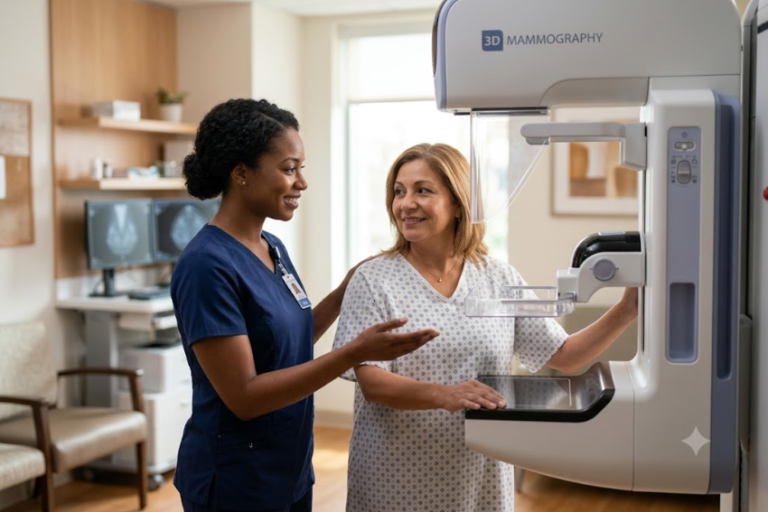
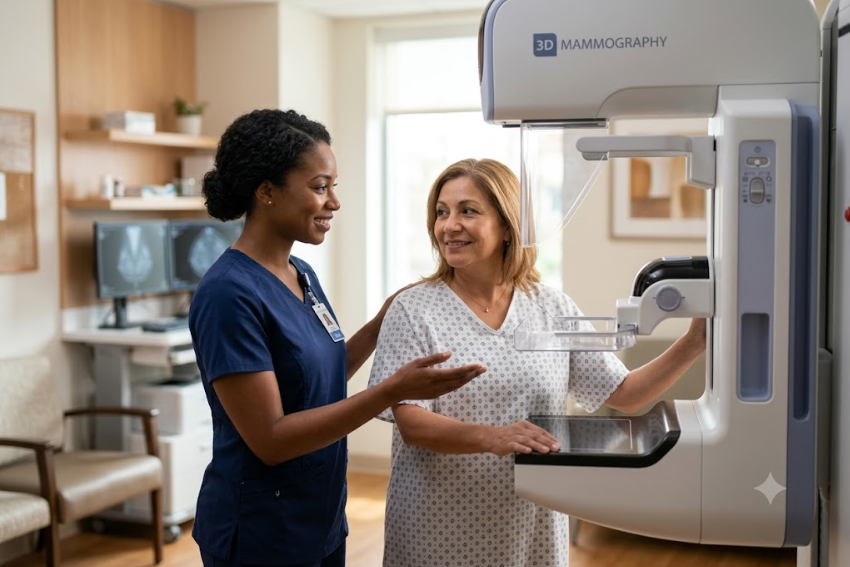
You’ll check in and then be asked to remove your clothing above the waist. You’ll get a gown to wear during the test. A specially trained technologist will guide you through every step.
The Imaging Process
You’ll stand in front of a mammography machine designed specifically for breast imaging. The technologist will place one of your breasts on a flat plastic platform. Then, a clear plastic compression paddle will come down and press firmly against your breast, flattening the tissue.
Compression is necessary—it spreads the breast tissue out so the X-rays can get a clear image with less radiation. It also holds your breast still to prevent blurring. The compression lasts only a few seconds while the machine takes the image. You’ll be asked to hold your breath during that time. Then the pressure releases.
The technologist will adjust the machine’s angle and repeat the process to get images from a different view. This is done for each breast. For a 3D mammogram, the machine moves in an arc over your breast, taking multiple images in a matter of seconds.
After the Images Are Taken
Once the technologist confirms the images are clear, you’re done. You can get dressed and go about your day. Some mild bruising or soreness is possible, but it usually fades quickly.
Understanding Your Mammogram Results
The radiologists utilize a standardized scoring system called BI-RADS (Breast Imaging Reporting and Data System) that classifies the finding:
- BI-RADS 0: Incomplete test; requires extra imaging views or an ultrasound.
- BI-RADS 1: Negative result; normal breast tissue.
- BI-RADS 2: Benign (non-cancerous) finding such as a cyst or stable fibroadenoma.
- BI-RADS 3: Probably benign finding; suggests a follow-up scan in six months.
- BI-RADS 4 or 5: Suspicious finding; indicates a biopsy to evaluate the tissue directly.
If you get a call-back after a screening exam, this does not necessarily indicate cancer. Radiologists often request additional tests to confirm dense areas or for unclear overlapping shadows.
Key Benefits of Mammogram Screening
The benefits of regular mammograms are well-documented and life-changing. Let’s break them down.
Early Detection Saves Lives
This is the big one. Mammograms may be able to spot cancers two years before they can be felt by the person or her doctor. If breast cancer is caught early, a 99% survival rate is achieved after five years. Women with average risk have been found to have about a 20% lower risk of dying from breast cancer when they get screening mammograms regularly. Others have reported that as many as 40% of women who undergo a previous screening mammogram are at less risk of dying from breast cancer.
Less Aggressive Treatment
Early diagnosis may lead to less extensive surgery and more gentle treatments. The women with cancers detected by screening are more likely to have a small tumor and the tumor is not spread to other parts of the body. It could mean the difference between having a lumpectomy done and a mastectomy performed, or between receiving radiation for a few weeks or chemotherapy for months.
Peace of Mind
For many women, a normal mammogram result offers reassurance. If they do receive a diagnosis, early diagnosis means having time to plan, make decisions and improves their prognosis.
Reduced Risk of Late-Stage Cancer
According to a study, women who had regular mammograms lowered their chances of having late stage breast cancer. Those who had previously had a mammogram seemed to have about half the likelihood of being diagnosed with a later-stage cancer.
Proven Mortality Reduction
The evidence is clear. Routine screening mammography has been shown over the years in clinical trials and observational studies to save breast cancer-related deaths. Based on this evidence of mortality reduction, the U.S. Preventive Services Task Force suggests that women aged 40 to 74 should be screened for breast cancer every two years.
Understanding the Risks
It’s only fair to talk about the risks too. A mammogram does involve a small dose of radiation. However, the amount is very low—comparable to a single cross-country flight. The benefits of early detection outweigh the small risk of radiation exposure, according to experts.
Other potential risks include:
- False positives: This happens when a mammogram shows an abnormality that turns out not to be cancer. It can lead to additional testing and anxiety.
- Overdiagnosis: Sometimes, screening finds cancers that would never have caused symptoms or harmed the patient. This can lead to unnecessary treatment.
- Patient anxiety: Waiting for results or undergoing additional tests can be stressful.
These risks are real, but they must be weighed against the proven, lifesaving benefits. It is important to discuss your individual risk factors and what is right for you with your health care provider.
Current Screening Guidelines
Guidelines can vary, so it helps to know what the major organizations recommend.
U.S. Preventive Services Task Force (USPSTF)
Recommends biennial screening mammography for women aged 40 to 74 who are at average risk.
American Cancer Society (ACS):
- Women ages 40 to 44 should have the choice to start annual screening if they wish.
- Women ages 45 to 54 should get mammograms every year.
- Women ages 55 and older should switch to mammograms every two years or may continue yearly screening.
CDC
Encourages women aged 50-74 to have a mammogram every other year. For women, ages 40 to 49, discuss the timing and frequency of testing with their health care provider.
The most important takeaway? Don’t wait. Talk to your doctor. If you are 40 or older, it is time to have a discussion with you about screening for mammograms. You might need to be screened more often or at a younger age because of your risk factors (such as breast density, family history, or genetic mutations).
Fresh Perspectives and Final Thoughts
Here’s something you might not hear often: mammograms aren’t just for women in their 50s and 60s. Recent research shows that older women well into their 80s can also benefit from regular mammograms. One UCLA study found that screened women had a 55% lower risk of their cancer returning and a 74% lower risk of dying compared to women who were not screened.
The other new thing is the increasing contribution of AI to mammography. AI is being created to identify high-risk mammograms that require immediate attention. This could allow the screening to become even more precise and efficient in the coming years.
For the time being, the easy answer is this one. A mammogram is a quick, low-risk procedure that can have a lot of benefits. It’s one of the best investments you can make in your long-term health. Don’t be afraid or confused. Make an appointment for your mammogram, ask questions and take control of your breast health. Early detection is not only a medical term, it’s a lifeline!