









Buying contact lenses requires careful evaluation of your eye structure, daily routine, and overall visual health. Millions of people choose contact lenses to free themselves from frame pressure, widen their peripheral vision, and simplify active routines. However, placing a small piece of polymer directly onto your cornea demands more thought than buying standard accessories. Selecting the wrong type leads to irritation, chronic dryness, impaired vision, or serious corneal infections.
This comprehensive guide breaks down the essential factors you need to know before making a purchase, ensuring your switch to contacts remains safe, comfortable, and visually crisp.
Top 10 Factors to Consider Before Buying Contact Lenses
Below are the top factors to consider before buying contact lenses. Learn about materials, prescriptions, and hygiene for optimal eye health.
Get a Dedicated Contact Lens Prescription
Many people assume a standard eyeglasses prescription allows them to buy contact lenses immediately. Eyeglasses sit roughly 12 millimeters away from your eyes, whereas contact lenses rest directly on your corneas. This distance change alters the corrective power required to focus light correctly onto your retina.
A contact lens fitting includes precise physical measurements of your eyeball:
- Base Curve (BC): Indicates the curvature of the back surface of the lens. A curve that is too flat causes the lens to slip, while a curve that is too steep starves the eye of tear flow.
- Diameter (DIA): Determines the overall width of the lens, ensuring proper coverage of the cornea without pinching sensitive tissue.
- Brand Specification: Contact lens prescriptions often specify exact brand materials because different polymers interact uniquely with your tear film.
Schedule a fitting with an optometrist or ophthalmologist to get these measurements before browsing online or retail stores.
Understand Lens Materials and Oxygen Permeability
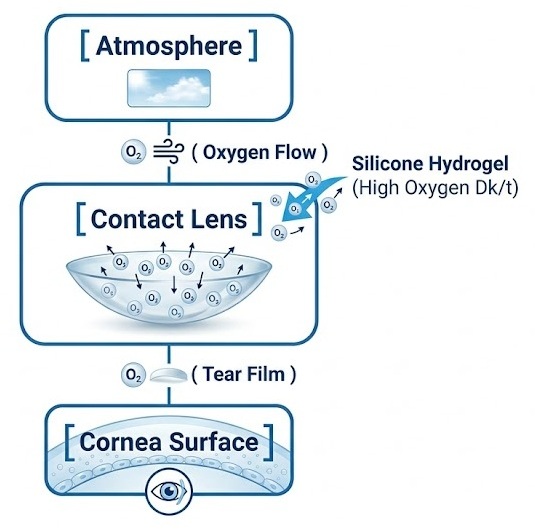
Modern contact lenses use advanced polymers designed to let oxygen pass directly to your cornea. Your cornea lacks blood vessels, relying entirely on atmospheric oxygen to stay clear and healthy. When a lens blocks this air flow, the cornea swells, leading to blurry vision and blood vessel growth into the clear corneal tissue.
- Soft Hydrogel Lenses: Traditional hydrogel lenses rely on water content to transport oxygen. They offer immediate comfort and flexibility, making them popular for first-time wearers. However, low oxygen transmissibility can restrict wear time during long days.
- Silicone Hydrogel Lenses: Silicone hydrogel represents the gold standard for soft lenses. The addition of silicone allows significantly higher oxygen transmission ($Dk/t$) regardless of water content. Wearers experience less eye fatigue, reduced redness, and better long-term corneal health.
- Rigid Gas Permeable (RGP) Lenses: RGP lenses feature a firm material that maintains its shape over the cornea. While they require an initial adjustment period, they deliver sharper visual optics for complex prescriptions and allow high oxygen flow to the eye.
Select the Right Replacement Schedule
Match your replacement schedule to your hygiene habits, schedule, and budget. Contact lenses come in distinct wear durations that dictate when you must throw them away.
| Replacement Schedule | Key Benefits | Best For | Care Requirements |
|---|---|---|---|
| Daily Disposables | Maximum hygiene, zero maintenance, low risk of deposit build-up | Travelers, allergy sufferers, busy routines | None (Dispose after single use) |
| Bi-Weekly Lenses | Lower ongoing cost than daily lenses, comfortable materials | Regular wearers with established routines | Nightly cleaning and storage in fresh solution |
| Monthly Lenses | Most economical option for daily wearers, wide prescription range | Budget-conscious wearers, complex prescriptions | Rigorous nightly cleaning, protein removal, monthly case replacement |
Never extend the life of your lenses beyond their intended design. Wearing a monthly lens for six weeks introduces microscopic tears and heavy protein deposits that increase your infection risks.
Identify Specialized Needs (Astigmatism and Presbyopia)
Standard spherical contacts correct simple nearsightedness (myopia) or farsightedness (hyperopia). If your eyes have irregular shapes or age-related focusing needs, you must buy specialized designs.
- Toric Lenses for Astigmatism: Astigmatism occurs when your cornea resembles a football rather than a basketball. Toric lenses feature specific optical zones and weighted ballast zones at the bottom. This weighting keeps the lens orientation stable when you blink, ensuring your prescription stays aligned.
- Multifocal Lenses for Presbyopia: Presbyopia affects people over age 40, reducing their ability to focus on close objects. Multifocal contact lenses contain multiple power zones across the lens surface. Your brain learns to select the visual zone you need, allowing smooth transitions between reading a phone screen and looking down the road.
- Scleral Lenses: For individuals with severe dry eye or keratoconus (an irregular, cone-shaped cornea), scleral lenses arch over the delicate corneal surface and rest on the white part of the eye (sclera). They create a liquid reservoir over the eye, providing superior visual stability and constant hydration.
Balance Water Content with Dry Eye Symptoms
People often assume high water content automatically equals maximum lens moisture. In practice, high-water soft lenses behave like sponges. When they sit on your eye, environmental heat causes the water inside the lens to evaporate. The lens then draws moisture out of your natural tear film to maintain its structural shape.
- Low Water Content (under 45%): Ideal for individuals prone to dry eyes. These lenses hold their shape and draw minimal moisture away from the cornea.
- High Water Content (above 55%): Great for short wear times and immediate initial comfort, but may worsen dry eye symptoms during extended workdays.
If you spend long hours in air-conditioned offices or working on laptops, consult your optometrist about low-water silicone hydrogel options embedded with wetting agents like hyaluronic acid.
Evaluate Your Daily Environment and Active Lifestyle
Your work surroundings and recreational activities shape which contacts perform best for you.
- Digital Screen Workers: Staring at screens reduces your natural blink rate by nearly 50%. This habit dries out lenses quickly. Look for materials optimized for moisture retention or consider daily disposables that stay smooth all day.
- Athletes and Active Wearers: Contacts provide unobstructed peripheral vision, eliminate frame bounce, and fit under helmets. Soft daily lenses work best here because sweat or dust will not ruin a lens you toss out at night.
- Dry or Dusty Climates: Dusty environments catch micro-particles under soft contacts, causing scratches. RGP or daily disposable soft lenses reduce dust collection and make cleanup simple.
Account for Maintenance Products and Cleaning Systems
The price tag on the lens box only tells half the story. Unless you choose daily disposables, you must invest in appropriate cleaning systems to protect your eyes from bacterial keratitis.
- Multipurpose Solutions: Multipurpose solutions clean, rinse, disinfect, and store soft contact lenses. They offer convenience in a single bottle. Always use fresh solution every night; never top off yesterday’s leftover liquid in your lens case.
- Hydrogen Peroxide Cleaning Systems: Hydrogen peroxide systems use a special lens case containing a neutralizing disc. Over six hours, the peroxide breaks down micro-organisms and converts into a simple, preservative-free saline solution.
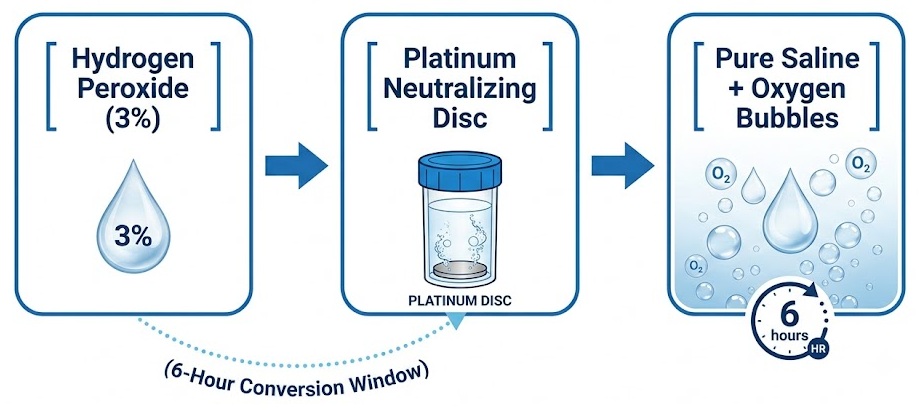
Peroxide cleaning works well for wearers sensitive to solution preservatives or those prone to heavy lipid deposits. Never place unneutralized hydrogen peroxide solution directly into your eye.
Prioritize Safety with Cosmetic and Colored Lenses
Colored contact lenses offer an easy way to change your look, but cosmetic designs carry the exact same medical risks as clear corrective lenses.
- Prescription Mandate: Under US federal law, all contact lenses require a valid prescription, even decorative ones with no power. Vendors selling contacts without asking for a prescription operate illegally.
- Pigment Sandwich Technology: Quality manufacturers sandwich tint layers inside the polymer material so raw dyes never touch your corneal surface. Cheap, unapproved cosmetic lenses often feature surface-printed pigments that scrape the eye.
- Fit Concerns: Standard one-size-fits-all novelty lenses can block oxygen flow or scratch your cornea, opening the door to sight-threatening infections.
Buy cosmetic lenses exclusively through verified optical outlets using a prescription that includes your specific corneal curvature metrics.
Check for Integrated UV Protection Filters
Sunlight emits harmful ultraviolet rays that contribute to cataracts, pterygium growth, and macular damage over time. While contacts never replace full-coverage sunglasses, built-in UV blockers add a second line of defense by covering the cornea and internal lens structure.
Contact lens UV filters fall into two categories:
- Class 1 UV Blockers: Block at least 90% of UVA rays and 99% of UVB rays. Recommended for bright outdoor environments, water activities, and high-altitude locations.
- Class 2 UV Blockers: Block at least 70% of UVA rays and 95% of UVB rays. Ideal for everyday general protection.
Because contact lenses leave your sclera and eyelids exposed, pair your UV-blocking contacts with broad-spectrum sunglasses for full eye safety outdoors.
Purchase From Authorized Retailers and Verify Expiration Dates
Once you possess a valid prescription, choose your retailer wisely. Online sellers offer convenience and competitive prices, but buying from unauthorized sources presents real risks.
- Prescription Verification: Legitimate retailers verify your prescription details directly with your prescribing doctor before shipping orders.
- Packaging Integrity: Inspect the blister packs upon arrival. The foil seals must remain intact with zero fluid leaks. Ensure the expiration dates extend well past your planned usage window.
- Return and Exchange Policies: Choose vendors that allow you to exchange unopened lens boxes if your doctor updates your prescription power midway through the year.
Conclusion
Making the transition to contact lenses offers freedom, flexibility, and unobstructed vision, but it requires prioritizing long-term corneal health over quick convenience. By taking the time to secure a precise prescription, selecting the right lens material for your lifestyle, and committing to strict hygiene practices, you ensure your vision stays crisp and comfortable.
Always treat contact lenses as the medical devices they are. Consult your optometrist whenever you experience discomfort, stick to your authorized replacement schedule, and buy exclusively from verified sources. Investing in your eye safety today keeps your vision sharp and clear for years to come.
Frequently Asked Questions
Can I use my glasses prescription to order contact lenses?
No. Glasses sit away from the face, whereas contacts sit directly on your cornea. Contact prescriptions also include curvature metrics (Base Curve and Diameter) that glasses prescriptions omit.
Are daily disposable contact lenses better for sensitive eyes?
Yes. Daily disposables minimize deposit build-up and eliminate exposure to solution preservatives, making them the safest, most comfortable choice for sensitive or allergy-prone eyes.
Can a contact lens slide behind my eye?
No. A thin membrane called the conjunctiva lines the inner surface of your eyelids and folds back to cover the white part of your eyeball, creating a physical barrier that prevents anything from slipping behind the eye.