







Self-paced learning has exploded in popularity over the last few years, and for good reason. Whether you are a working professional trying to upskill, a busy parent looking to finish a degree, or simply someone who prefers to learn on your own terms, this approach offers a level of freedom that traditional classrooms just cannot match.
But let’s be real for a second. While the idea of setting your own schedule sounds amazing, the reality can be tricky. Research consistently shows that self-paced online courses achieve completion rates of between 3 and 15 percent. That means a huge number of people start with great intentions but never actually cross the finish line.
So, how do you beat the odds? How do you harness the flexibility of self-paced learning without falling into the trap of procrastination?
In this guide, we will break down everything you need to know. We will explore the real benefits, confront the honest challenges, and give you practical, actionable tips to actually succeed.
What Is Self-Paced Learning?
At its core, self-paced learning is an educational approach where the learner controls the timing, speed, and often the sequence of their coursework. There are no fixed class times, no live lectures you have to attend at 8 AM, and no requirement to keep up with a group of peers.
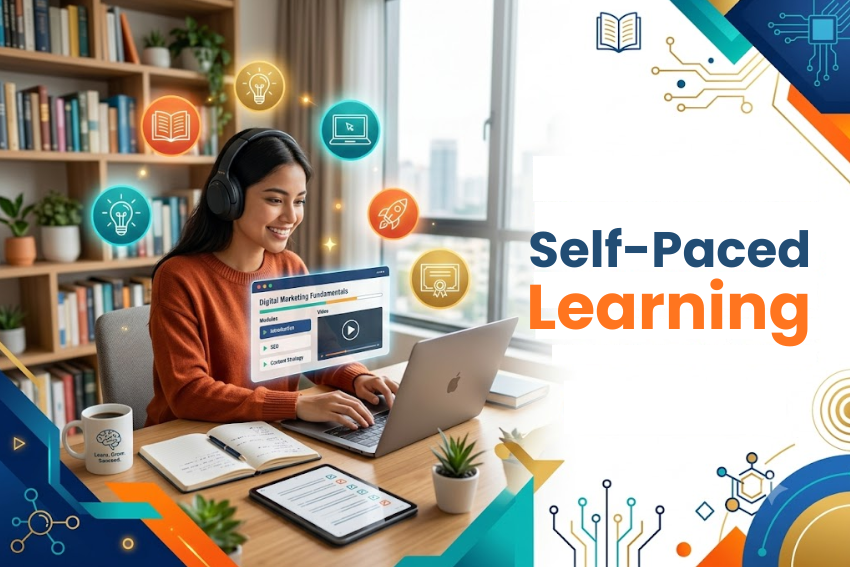
You might be watching pre-recorded video lessons, working through interactive modules, or reading materials on your own schedule. It is the ultimate form of flexibility. However, it is important to note that self-paced does not mean “no deadlines.” Many programs still operate within a set timeframe—like a 12-week session—but within that window, you decide when the work gets done.
Self-Paced vs. Traditional Learning
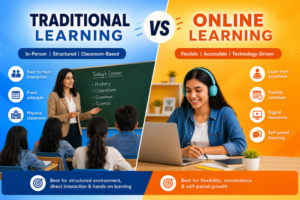
The core difference isn’t just about speed; it is about who holds the control. In a traditional classroom, the institution and instructor dictate the rhythm. In a self-paced model, you are the captain of your own ship. Here is a quick side-by-side look at the key differences.
| Feature | Self-Paced Learning | Traditional Learning |
|---|---|---|
| Schedule | You control when and where you study. Perfect for busy adults. | Fixed class times and locations. Little room for flexibility. |
| Pace | You set the speed. Move fast through easy topics, slow down on hard ones. | Instructor sets one pace for everyone. You either keep up or fall behind. |
| Feedback | Often delayed. You email questions and wait for replies. | Real-time. Raise your hand and get instant answers. |
| Responsibility | You plan everything. Set your own deadlines and stay motivated alone. | Institution provides structure. External pressure keeps you on track. |
| Social Interaction | Mostly solitary. You learn alone, though forums may exist. | Highly collaborative. Group projects, debates, and peer support are common. |
| Cost | Generally, more affordable. Scales easily to thousands of students. | Typically, more expensive. Requires physical space and live instructors. |
The Major Benefits of Self-Paced Learning
Why are so many people and companies flocking to this model? The advantages go far beyond just “going at your own speed.”
Ultimate Flexibility and Schedule Control
This is the headline benefit, and it is a big one. According to the OECD, one in four adults cite a lack of time as their top barrier to workplace learning. Self-paced learning solves this problem directly.
You are not forced to fit your life around a rigid class schedule. Instead, the learning fits around you. You can study after a late shift, between client calls, or during the only quiet hour of your day. This flexibility is a game-changer for working adults, parents, and anyone juggling multiple responsibilities.
Personalized Learning Paths
Everyone learns differently. In a traditional classroom, the instructor teaches to the middle of the class, leaving some students bored and others lost.
Self-paced learning allows you to customize your experience. You can breeze through material you already know and spend hours on topics that challenge you. It respects your prior knowledge and adapts to your specific needs. As one educator put it, “Self-paced blended learning continues to produce amazing results” because it stops “decelerated teaching” and lets students’ progress naturally.
Improved Knowledge Retention
When you are forced to cram information to meet an arbitrary deadline, you often forget it just as quickly. Self-paced learning allows for better retention because you can revisit material as often as you need.
For example, in asynchronous learning environments, lectures are pre-recorded. You can watch them multiple times, pause to take notes, and rewatch complex sections before an exam. This deep processing leads to a more thorough understanding that sticks with you long after the course ends.
Cost-Effectiveness for Organizations
From a business perspective, self-paced learning is incredibly efficient. It reduces the need for travel, physical classrooms, and repeated live sessions with instructors.
Once a digital course is created, it can be rolled out to thousands of employees without extra cost. This makes it a highly scalable solution for corporate training, allowing companies to upskill their workforce without breaking the bank.
The Real Challenges You Will Face
Let’s be honest: self-paced learning is not easy. The freedom it provides is also its biggest weakness. If you are not prepared for these challenges, you will likely become part of that 85 to 97 percent who do not complete their courses.
The Motivation and Procrastination Trap
Without a teacher looking over your shoulder or a peer group pushing you along, it is incredibly easy to put things off. “I will do it tomorrow” becomes the dangerous mantra of the self-paced learner.
This freedom can lead to excessive procrastination, which is one of the primary reasons for course incompletion. It requires a level of self-discipline that many people simply do not have when they start.
Lack of Immediate Feedback
In a traditional classroom, you can raise your hand and get an answer instantly. In a self-paced course, you are often on your own.
Without immediate feedback, you might spend hours practicing a skill incorrectly or misunderstand a core concept. This lack of real-time interaction can be frustrating and can slow your progress significantly.
Feelings of Isolation
Learning can be a social experience. Discussing ideas, debating concepts, and collaborating on projects are all part of the traditional educational journey.
Self-paced learning often lacks this peer-to-peer interaction. You are working in a silo, which can lead to feelings of loneliness and disengagement. Without a community to lean on, it is easy to lose sight of your goals.
The Responsibility Overload
In a self-paced model, you are not just the student; you are also the project manager. You have to plan your own progress, set your own deadlines, and monitor your own completion against program requirements.
This added responsibility can be overwhelming. If you lack strong organizational skills, you will likely struggle to keep everything on track.
Actionable Tips to Master Self-Paced Learning
Now that we have covered the good and the bad, let’s talk about how to win. Here are practical strategies to help you overcome the challenges and make self-paced learning work for you.
Create a Structure, Even If There Isn’t One
Just because a course is self-paced does not mean it should be unscheduled. You need to bring your own structure to the table.
- Block out specific study times: Treat your study sessions like non-negotiable appointments. Put them on your calendar and protect that time.
- Set mini-deadlines: If your course has a final deadline, break it down. Create weekly goals for yourself. This turns a massive, intimidating project into a series of manageable steps.
Leverage the Pomodoro Technique
Sitting down to study for hours is a recipe for burnout, especially when you are working alone.
- Work in short bursts: Try the Pomodoro Technique. Study for 25 minutes, then take a 5-minute break. After four cycles, take a longer break of 15 to 30 minutes.
- Eliminate distractions: During those 25-minute focus sessions, silence your phone, close unrelated browser tabs, and use a social media blocker if you need to.
Set Clear, Achievable Goals
What do you actually want to achieve? “Finish the course” is too vague.
- Be specific: Set goals like “Complete Module 2 and pass the quiz by Friday”.
- Celebrate small wins: Do not underestimate the power of a reward. When you hit a milestone, treat yourself. This positive reinforcement can keep your motivation high.
Build Your Own Support System
Just because you are learning alone does not mean you have to be isolated.
- Join online forums: Many self-paced courses have discussion boards or online communities. Use them! Ask questions, share your progress, and connect with other learners.
- Find an accountability partner: Tell a friend or colleague about your goals and ask them to check in on you. Sometimes, just knowing someone else is watching can keep you on track.
Designate a Dedicated Workspace
Your environment matters. If you try to study in bed or on the couch while watching TV, you are setting yourself up for failure.
- Create a “study zone”: Find a quiet space where you can focus. It does not have to be a full office, but it should be a place where you can consistently work without interruptions.
Engage Actively with the Material
Passive learning—just watching videos or reading—is not very effective. You need to be an active participant.
- Take notes: Do not just watch a lecture; write down key points in your own words.
- Apply what you learn: Look for ways to use your new knowledge in real life. As one expert noted, self-paced learners who can see progress or clear endpoints are more likely to keep going.
Is Self-Paced Learning Right for You?
Self-paced learning is a powerful tool, but it is not for everyone. It works best for driven individuals who do not need hand-holding or constant group support. If you are comfortable setting your own plan and adjusting as needed, this format can feel incredibly sustainable.
However, if you thrive on structure and are more likely to stay on track when expectations are fixed and visible week to week, a more traditional, cohort-based model might be a better fit.
The key is to be honest with yourself about your own discipline and habits. The flexibility of self-paced learning is a gift, but it is one that requires responsibility to unwrap.
Final Thoughts
Self-paced learning offers an incredible opportunity to take control of your education and career. It provides the flexibility to balance learning with a busy life, the personalization to cater to your unique needs, and the potential for deep, lasting knowledge retention.
But it also demands a lot from you. It requires discipline, organization, and a proactive approach to staying motivated.
By understanding both the benefits and the challenges, and by implementing the practical tips we have shared, you can beat the odds. You can be one of the few who not only starts a self-paced course but actually finishes it, reaping the rewards that come with that achievement. The freedom is yours—go out and use it wisely.