










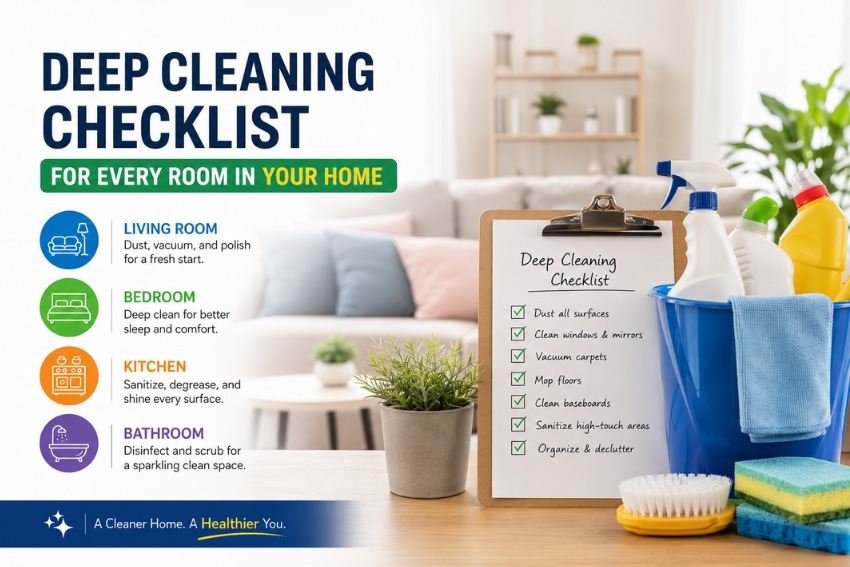
Deep cleaning doesn’t have to feel like a month-long project. You just need a clear plan and a room-by-room checklist. I have learned over years of scrubbing, dusting, and organizing that breaking the work into small chunks makes all the difference. So, grab your microfiber cloths, a bucket, and some good music. Let’s walk through every space in your home and get it truly clean, not just surface tidy.
Why Regular Deep Cleaning Matters
Surface cleaning keeps things looking okay day to day. But deep cleaning attacks the grime you don’t see. Think behind the fridge, inside the oven, under sofa cushions, and along baseboards. You remove allergens, bacteria, and built-up dust that affect your indoor air quality. Plus, a thoroughly cleaned home simply feels better. You sleep better, cook with more joy, and relax without noticing that dusty ceiling fan.
I recommend a full deep clean twice per year, once in spring and again before the holidays. But you can also target one room each month. The key is consistency. So let’s get into the specific checklist for each room.
The Essential Deep Cleaning Toolkit
Before we start, gather your supplies. You don’t need fancy chemicals. Most messes respond to simple solutions.
- Microfiber cloths (at least 6 to 8)
- Scrub brushes with stiff and soft bristles
- Old toothbrush for tight corners
- Extendable duster or microfiber mop
- Vacuum with crevice tool and brush attachment
- Mop and bucket
- Baking soda and white vinegar
- All-purpose cleaner or castile soap
- Glass cleaner
- Rubber gloves
- Trash bags
- Step stool or ladder for high areas
Now that you have your gear ready, let’s tackle each room in a logical order. I like to start from the top and work down, plus dry before wet.
Kitchen Deep Cleaning Checklist
The kitchen harbors hidden grease, crumbs, and bacteria. Set aside three to four hours for this space.
Start with Cabinets and Surfaces
Empty each cabinet one section at a time. Wipe down the interior shelves with warm soapy water. Pay attention to the corners where crumbs collect. While shelves dry, sort through spices, canned goods, and containers. Toss anything expired. Then vacuum cabinet hinges and hardware before wiping them dry.
For exterior cabinet doors, use a degreasing cleaner. Kitchen grease builds up near the stove and along upper cabinets. Scrub gently with a soft brush, then buff with a dry cloth.
Appliances Get Special Attention
- Refrigerator:Pull the fridge away from the wall. Vacuum the condenser coils. Dust and pet hair accumulate there, forcing the appliance to work harder. Then empty the entire fridge. Wipe all shelves, drawers, and door bins with a mild cleaner. Discard old leftovers and expired condiments. Wash removable parts in the sink with hot soapy water. Dry thoroughly before returning food.
- Oven and Stove Top:For a self-cleaning oven, run that cycle according to your manual. For manual cleaning, remove oven racks. Soak them in hot water with dish soap. Scrub the interior with baking soda paste. Let it sit overnight if you have heavy buildup. For glass top stoves, use a dedicated ceramic cleaner. For gas stoves, remove grates and burner caps. Soak and scrub them. Clean the drip pans or replace them if badly corroded.
- Microwave:Place a bowl of water with lemon slices inside. Run it for three minutes. The steam loosens all the dried food. Then simply wipe the interior clean. Don’t forget the turntable and the ceiling of the microwave.
- Dishwasher:These surprises people. Run an empty cycle with a cup of white vinegar on the top rack. Then sprinkle baking soda on the bottom and run a short hot cycle. Wipe the door gasket and around the detergent dispenser.
Sink and Drain
Clean the sink with a scouring powder or baking soda. For stainless steel, scrub in the direction of the grain. Then flush the drain with hot water and baking soda followed by vinegar. Let it fizz for five minutes. Rinse again.
Floors and Baseboards
Move everything you can, including the trash can and smaller furniture. Sweep thoroughly, then mop with a floor cleaner suitable for your surface. Use a toothbrush to scrub baseboards and the bottom of cabinet toe kicks. Don’t forget behind the stove and refrigerator. Those areas collect dust balls and lost food.
Bathroom Deep Cleaning Checklist
Bathrooms need serious attention because of moisture and bacteria. Plan two to three hours per bathroom.
Shower and Tub
Remove all bottles and products. Spray the entire shower with a cleaner containing bleach or a natural alternative like hydrogen peroxide. Let it sit for ten minutes. Then scrub tiles, grout, and the tub surface. For glass doors, use a squeegee and a solution of vinegar and water to remove hard water stains. Rinse everything thoroughly. Wash shower curtains and liners in your washing machine with a towel for scrubbing action.
Toilet Deep Clean
Empty the tank by flushing first. Then add a cup of bleach or a toilet cleaner to the bowl. Let it sit. Scrub the inside of the bowl, paying attention to the rim jets and the siphon hole. Use a separate brush for the exterior. Wipe down the tank, lid, handle, and base. Move the toilet brush holder and clean underneath it. This area often collects dust and splashes.
Vanity and Sink
Empty all drawers and cabinets. Wipe down shelves and discard old makeup, expired medicine, and nearly empty bottles. Clean the sink basin and faucet with a non abrasive cleaner. Use an old toothbrush around the faucet base and drain stopper. Wipe mirrors with glass cleaner until streak free.
Ventilation and Baseboards
Remove the vent cover. Wash it in the sink. Vacuum inside the duct as far as you can reach. Clean baseboards and floor corners. Then mop the floor, moving the trash can and scale. Use a grout brush for tile floors.
Living Room and Common Areas Deep Cleaning Checklist
Living rooms collect dust on every surface. This space often gets overlooked during weekly cleaning. Schedule three hours.
Furniture and Upholstery
Vacuum your sofa and chairs. Lift cushions and vacuum underneath. Use the crevice tool to get into seams and under armrests. For removable cushion covers, check the tag. Many are washable on gentle cycle. Spot clean any stains with upholstery cleaner. Flip and rotate cushions if they are reversible.
For leather furniture, wipe with a damp cloth followed by a leather conditioner. This prevents cracking.
Drapes, Blinds, and Windows
Take down drapes. Check labels for washing or dry cleaning. For blinds, close them one direction and wipe each slat with a microfiber glove or a damp cloth. Then close the other way and repeat. Wash windows inside and out if possible. Use a squeegee for a streak free finish. Clean window sills and tracks with a vacuum and a toothbrush.
Electronics and Entertainment Center
Unplug your TV and sound system. Dust the screens with a dry microfiber cloth, never spray cleaner directly on the screen. Wipe down remotes with a slightly damp cloth. Clean the dust from cable boxes and game consoles using compressed air. Organize cords with Velcro ties.
Ceiling Fans, Lights, and Vents
Use an extendable duster on ceiling fan blades. Hold a pillowcase under each blade and pull it off to trap dust. Remove light fixtures and wash glass shades. Vacuum ceiling vents and return air grilles.
Floors and Rugs
Move all furniture to one side. Vacuum thoroughly, then mop hard floors. For area rugs, take them outside. Beat them or vacuum both sides. Spot clean stains with rug shampoo. For wall-to-wall carpet, consider renting a steam cleaner or hiring a professional.
Bedroom Deep Cleaning Checklist
Your bedroom should feel like a sanctuary. A deep clean helps you sleep better. Allow two hours per bedroom.
Bedding
Strip all bedding. Wash sheets, pillowcases, duvet covers, and mattress protectors in hot water. For pillows, check if they are washable. Most synthetic pillows wash well. Use the gentle cycle and dry with tennis balls to keep them fluffy.
Mattress
Vacuum the mattress surface. Sprinkle baking soda over it. Let it sit for at least an hour. This absorbs odors and moisture. Then vacuum off the baking soda thoroughly. Rotate or flip the mattress according to manufacturer guidelines.
Closets and Drawers
Empty one closet section at a time. Donate clothes you haven’t worn in a year. Vacuum the closet floor and shelves. Wipe down hanging rods. Use storage bins for off season items. For dresser drawers, empty them completely. Vacuum inside each drawer. Line them with fresh drawer liners if desired. Fold and reorganize everything.
Under the Bed
This is a major dust collector. Slide out all bins and boxes. Vacuum under the bed, including the baseboard and the bed frame legs. Use a damp cloth on the floor if it’s hard surface. Consider using risers to lift the bed if you struggle to keep this area clean.
Light Switches and Door Handles
Wipe down every light switch plate, door handle, and closet knob. These surfaces harbor germs but we rarely clean them. Use a disinfecting wipe or a cloth with rubbing alcohol.
Home Office Deep Cleaning Checklist
With more people working from home, the office needs a deep clean. Plan two hours.
Desk and Workstation
Clear your desk completely. Wipe the surface with a gentle cleaner. Clean your keyboard with compressed air and a slightly damp cloth. Wipe down your mouse, monitor stand, and webcam. Organize cords with cable clips. Dust your printer and scanner.
Bookshelves and Paper
Remove all books and decor. Dust each shelf. Flip through books to shake out dust. Shred old documents you no longer need. Set up a filing system for important papers. Use a label maker for clarity.
Chair and Floor
Vacuum your office chair, especially the wheels and base. Those wheels pick up hair and dust. Wipe the armrests. Then clean the floor under the desk. Move the trash can and any floor files.
Entryway and Mudroom Deep Cleaning Checklist
This area gets the first dirt from outside. Give it one hour.
Floor Mats and Shoes
Take all mats outside. Beat them or hose them off. Let them dry completely. Remove every pair of shoes. Wipe down shoe racks or cubbies. Vacuum the floor. For tile or vinyl, mop with a strong cleaner. Disinfect the doorknob and door frame. Wipe down light switches. Clean the inside of your front door, especially if it has glass panels.
Coat Closet
Remove coats, jackets, and bags. Vacuum the closet floor and rod. Wipe shelves. Donate any outerwear you never use. Hang everything back neatly. Store umbrellas in a drip tray.
Laundry Room Deep Cleaning Checklist
This room cleans your clothes but rarely gets cleaned itself. Set aside one hour.
Washing Machine
Run an empty hot cycle with two cups of white vinegar. Then wipe the rubber gasket on front loaders. Remove and scrub the detergent drawer. Wipe the exterior and the control panel. Clean the lint filter on the machine itself (not just the dryer).
Dryer
Remove the lint screen. Wash it with soap and water to remove fabric softener buildup. Vacuum the lint trap housing and the exhaust duct if you can access it. This prevents fires. Wipe the drum with a damp cloth. Clean the exterior and the back of the machine.
Utility Sink and Shelves
Scrub the utility sink with a heavy-duty cleaner. Organize laundry supplies. Throw away nearly empty bottles. Wipe down shelves and the top of the machines.
Porch and Outdoor Entry
Don’t forget the outside. Spend one hour on this area. Sweep the porch or stoop. Wash the front door and its glass. Clean the doorbell and exterior light fixtures. Scrub the doormat. Trim any plants brushing against the house. Wipe down outdoor furniture if you keep it near the entry.
A Simple Deep Cleaning Schedule You Can Follow
You don’t have to do every room in one weekend. That leads to burnout. Instead, spread the work over two weeks.
- Week one: Kitchen and bathrooms.
- Week two: Living room, bedrooms, home office.
- Weekend three: Entry, laundry, and outdoors.
Or assign one room per day for seven days. Either way, the checklist above gives you clear tasks.
Final Tips for Maintaining Between Deep Cleans
Deep cleaning lasts longer when you maintain it. Wipe spills immediately. Vacuum high traffic areas twice a week. Wash sheets weekly. Declutter every month. Put things back where they belong. Those small habits reduce the effort when deep cleaning day arrives.
Also, open windows while you clean. Fresh air moves dust out and helps cleaners dry faster. Use natural light to spot missed areas.
Ready to Get Started
Deep cleaning rewards you with a fresher, healthier home. Use this deep cleaning checklist room by room. Cross off tasks as you go. Do not rush. Enjoy the satisfaction of a truly clean space. Your future self will thank you every time you walk into a sparkling kitchen or sink into a fresh bed. So, pick your first room today. Gather your supplies. Put on some gloves. And give your home the reset it deserves.
Frequently Asked Questions
How often should I deep clean my whole house?
Most homes benefit from a full deep cleaning twice per year, spring and fall. But high traffic homes with kids or pets might need it every four months.
What is the difference between regular cleaning and deep cleaning?
Regular cleaning handles surfaces, floors, and bathrooms weekly. Deep cleaning moves furniture, cleans inside appliances, scrubs grout, and washes windows. It targets hidden dirt.
Can I use natural products for deep cleaning?
Yes. White vinegar, baking soda, castile soap, and lemon juice work well on most surfaces. Avoid vinegar on natural stone like marble or granite.
How long does a whole house deep clean take?
For an average three-bedroom home, expect 12 to 20 hours total. Split across several days makes it manageable.
Should I hire professional deep cleaners?
If you have physical limitations, a large home, or severe allergies, hiring pros is worth the money. They bring industrial equipment and save you a weekend.
What should I do first when deep cleaning a room?
Always start from the top. Dust ceiling fans and light fixtures first. Then clean furniture and surfaces. Finally, vacuum and mop the floor. This prevents dust from falling onto already cleaned floors.