











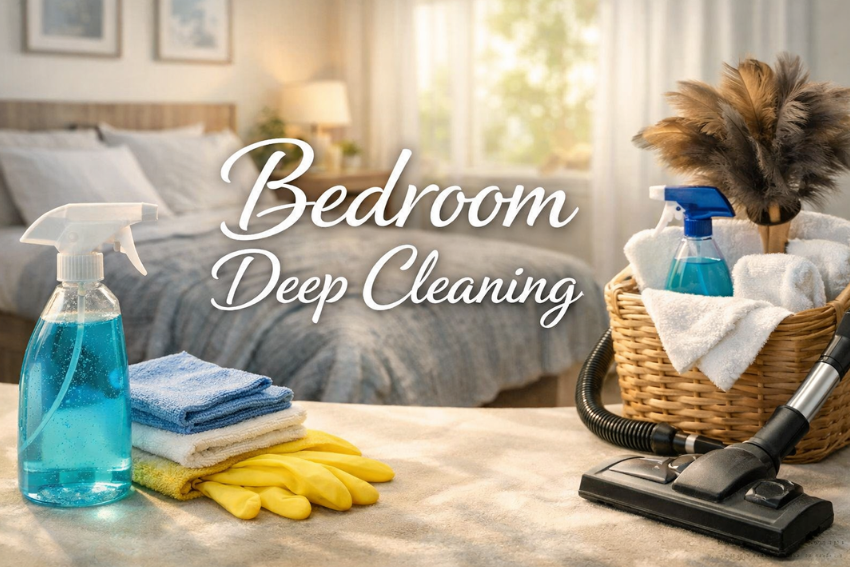
A Bedroom deep cleaning checklist can do more than improve appearance. It can transform how you sleep, breathe, relax, and recover each night. While many people change sheets and vacuum occasionally, a true bedroom deep clean reaches the areas where dust, allergens, hidden grime, and clutter quietly build up over time.
Your bedroom should support rest, not work against it.
Dust on baseboards, allergens trapped in fabrics, cluttered nightstands, and neglected corners can create subtle stress signals that affect comfort and sleep quality. A structured deep cleaning routine helps create an environment that feels calmer, fresher, and easier to unwind in.
This guide walks through a practical and detailed bedroom deep cleaning process designed to improve cleanliness and support better sleep.
Why Bedroom Deep Cleaning Matters for Sleep Quality
Most people connect sleep issues with stress, screen time, or caffeine. Yet the physical environment matters just as much.
Bedrooms collect:
- Dust
- Pet dander
- Dead skin cells
- Fabric fibers
- Airborne pollutants
- Moisture and odors
Over time, these factors can affect air quality and comfort.
A thoroughly cleaned bedroom can help:
- Reduce dust accumulation
- Minimize allergens
- Improve indoor freshness
- Create a calmer atmosphere
- Support more consistent sleep routines
- Make the room feel more restorative
Deep cleaning is not about perfection. It is about removing the invisible distractions that keep your room from feeling restful.
What You Need Before You Start
Gather supplies before beginning.
Cleaning Essentials
- Microfiber cloths
- Vacuum with upholstery attachment
- Mild all-purpose cleaner
- Glass cleaner
- Dusting wand
- Laundry basket
- Warm water bucket
- Baking soda
- Mattress vacuum attachment
- Mop or floor cleaner
- Storage bins
- Garbage bags
Optional additions:
- Essential oil spray
- Air purifier
- Mattress protector
- Under bed organizers
How Often Should You Deep Clean a Bedroom?
Not every task needs weekly attention.
Weekly
- Change bedding
- Vacuum floors
- Dust visible surfaces
- Empty trash
Monthly
- Clean under furniture
- Wash curtains
- Wipe baseboards
Quarterly
- Rotate mattress
- Deep clean upholstery
- Organize storage spaces
Every Six Months
- Complete full bedroom deep clean
Following a schedule prevents buildup and reduces future cleaning effort.
Ultimate Bedroom Deep Cleaning Checklist
Use this step-by-step process for a complete reset.
Remove Everything That Does Not Belong
Start with decluttering.
Take out:
- Dirty laundry
- Empty bottles
- Paper piles
- Dishes
- Random storage items
- Seasonal clutter
Cleaning becomes faster and more effective once surfaces are clear.
Ask simple questions:
- Do I use this?
- Does this belong here?
- Does this support a restful space?
If not, relocate or donate.
Strip and Wash All Bedding
Your bed holds more than blankets and pillows.
Remove:
- Sheets
- Pillowcases
- Comforters
- Duvet covers
- Decorative pillows
- Mattress protectors
Wash according to fabric instructions.
For freshness:
- Use warm water when appropriate
- Dry completely before replacing
- Avoid heavy fragrances if sensitive to scents
Pro tip: Wash bedding earlier in the process so it is ready when cleaning finishes.
Deep Clean the Mattress
A mattress can trap dust and moisture over time.
Mattress Cleaning Steps
- Vacuum entire surface
- Focus on seams and edges
- Spot clean stains carefully
- Sprinkle baking soda
- Let sit for at least 30 minutes
- Vacuum again
If your mattress allows rotation, rotate it after cleaning.
Replace mattresses according to manufacturer recommendations and visible wear.
Dust Every Surface from Top to Bottom
Cleaning top down prevents recontamination.
Dust:
- Ceiling corners
- Light fixtures
- Window frames
- Shelves
- Headboards
- Lamps
- Nightstands
- Picture frames
- Electronics
Microfiber cloths trap particles more effectively than dry paper towels.
Do not forget hidden areas.
Clean Curtains, Blinds, and Windows
Windows affect both appearance and air quality.
- Curtains: Wash or steam depending on fabric.
- Blinds: Dust each slat individually.
- Windows: Clean glass inside and wipe tracks.
Open windows afterward if weather permits to circulate fresh air.
Refresh Bedroom Walls and Baseboards
Walls collect more dust than most people realize.
Wipe:
- Corners
- Trim
- Door frames
- Switch plates
- Baseboards
Use minimal moisture and gentle cleaning products.
This step creates an immediate visual difference.
Empty and Sanitize Nightstands
Nightstands often become catch all storage. Remove everything.
Sort into categories:
- Keep
- Relocate
- Discard
Clean drawers and surfaces.
Return only essentials:
- Reading lamp
- Water bottle
- Book
- Charger
- Sleep essentials
Less visual clutter supports a calmer atmosphere.
Organize Closets and Storage Areas
Closets influence how peaceful a bedroom feel.
Remove unused items.
Group clothing by:
- Season
- Frequency of use
- Type
Vacuum closet floors.
Store rarely used items in labeled containers.
A cleaner closet reduces visual noise.
Vacuum Upholstery and Soft Surfaces
Fabric absorbs dust and odors.
Vacuum:
- Upholstered beds
- Chairs
- Benches
- Cushions
Check seams and folds carefully.
If removable covers exist, wash them.
Clean Under the Bed Thoroughly
This area often becomes hidden storage.
Pull items out.
Vacuum:
- Dust buildup
- Hair
- Dirt
- Corners
Wipe flooring afterward.
Store only necessary items beneath the bed.
Avoid overcrowding.
Deep Clean Bedroom Floors
Floor cleaning depends on material.
- Hardwood Floors: Vacuum first and mop lightly.
- Carpet: Vacuum slowly and thoroughly.
- Rugs: Shake outside if possible and vacuum both sides.
Move furniture when practical.
Pay extra attention to corners.
Sanitize High Touch Surfaces
These areas collect oils and bacteria.
Clean:
- Door handles
- Light switches
- Remote controls
- Drawer pulls
- Charging stations
Use appropriate cleaning products for electronics.
Improve Bedroom Air Quality
A clean room should feel fresh.
Try these habits:
- Open windows regularly
- Replace HVAC filters
- Use an air purifier
- Avoid overloading fragrances
- Keep humidity balanced
Fresh air contributes to a more comfortable sleeping environment.
Reset the Room for Better Sleep
The final stage matters.
Make the bed neatly.
Adjust:
- Lighting
- Temperature
- Furniture placement
- Decorative accents
Keep surfaces simple.
A reset room should feel open and calm.
Bedroom Deep Cleaning Checklist at a Glance
Use this quick reference list:
Bedding
- Wash sheets
- Wash pillows
- Clean mattress
- Rotate mattress
Dust Removal
- Ceiling corners
- Shelves
- Baseboards
- Electronics
Furniture
- Clean nightstands
- Vacuum upholstery
- Organize storage
Floors
- Vacuum
- Mop
- Clean under bed
Air Quality
- Open windows
- Replace filters
- Reduce clutter
Common Bedroom Cleaning Mistakes to Avoid
Even good cleaning routines miss important details.
Avoid:
- Cleaning around clutter
- Skipping mattress maintenance
- Using too much fragrance
- Forgetting light fixtures
- Ignoring closet buildup
- Overwetting wood surfaces
Small corrections create better long-term results.
Seasonal Bedroom Deep Cleaning Tips
- Spring: Focus on allergens and fabric washing.
- Summer: Improve ventilation and reduce humidity.
- Fall: Prepare warmer bedding and clean storage.
- Winter: Refresh indoor air and remove dust buildup.
Adjust your routine based on climate and household habits.
Final Thoughts
Your bedroom should be the easiest place in your home to relax.
A structured bedroom deep cleaning routine does more than make the room look organized. It creates an environment that supports rest, comfort, and better nightly recovery.
Use this bedroom deep cleaning checklist every few months and maintain smaller weekly habits between sessions. Consistency matters more than intensity.
Clean spaces do not guarantee perfect sleep, but they make quality rest easier to support.
Frequently Asked Questions
How long does a bedroom deep clean take?
A complete bedroom deep clean usually takes two to five hours depending on room size and clutter level.
Can bedroom cleaning improve sleep?
A cleaner environment may help reduce distractions, improve comfort, and create conditions that support healthier sleep habits.
Should I wash pillows during deep cleaning?
Yes. Many pillows can be washed according to care instructions. Clean pillows contribute to freshness and comfort.
What is the most overlooked bedroom cleaning task?
Cleaning under the bed and vacuuming mattresses are often skipped but can significantly improve overall cleanliness.
Is deep cleaning necessary if the room already looks clean?
Yes. Deep cleaning targets hidden dust, allergens, and buildup that regular surface cleaning may miss.