








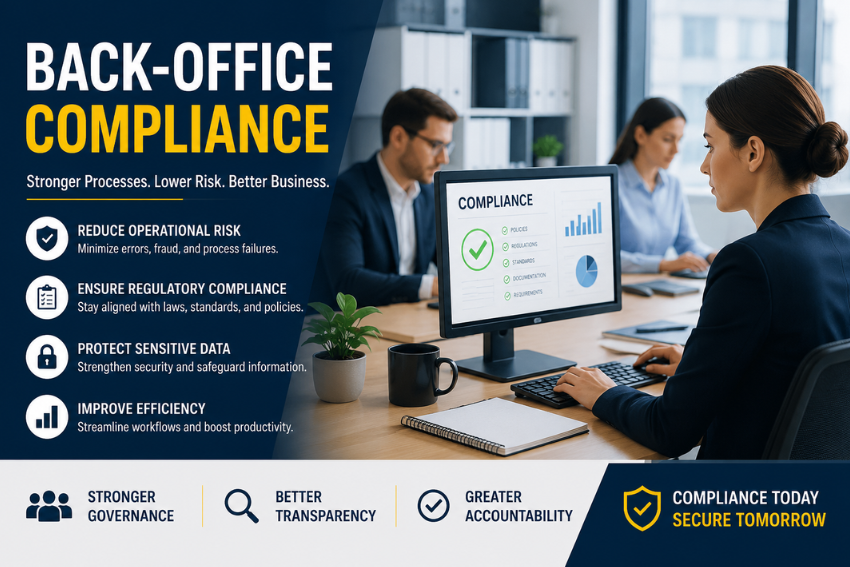
Back office compliance is a key component in enabling organizations to minimize operational risks, uphold regulatory compliance, and establish a solid framework for future success. The back office of your business is the side that’s not visible to your customers, but is nonetheless vital for the smooth running of your business. These processes influence accuracy, security, and compliance in the finance and payroll, data management, procurement, and documentation functions.
Compliance is increasingly complex and cyber risks are constantly changing; businesses simply cannot afford to have weak internal controls. The repercussions of a single non-compliance could cost you money, your reputation, legal troubles, and losing customers.
This guide describes and outlines what back office compliance is, why it is important, common compliance issues, best practices and ways for organizations to develop a compliance culture to reduce operational risk.
What Is Back Office Compliance?
Back office compliance is the policies, procedures, systems and controls that ensure that internal business operations comply with legal requirements, industry regulations, company policies and ethical standards.
Back office compliance differs from the front office compliance, which deals with customer interaction and sales processes, and addresses the behind the scenes processes that support business operations.
These functions often include:
- Financial management
- Accounting
- Human resources
- Payroll administration
- Procurement
- Vendor management
- Data management
- Information security
- Record keeping
- Internal auditing
- Risk management
Every department contributes to ensuring accurate records, secure information handling, and regulatory compliance.
Why Back Office Compliance Matters
A lot of companies neglect internal processes until they result in issues. Compliance systems are very effective in preventing expensive errors. Benefits include:
- Reduces Operational Risk: Standardized procedures reduce errors, fraud, and process failures.
- Improves Regulatory Compliance: Organizations remain compliant with local, national, and international regulations.
- Protects Sensitive Data: Proper controls safeguard employee, customer, and financial information.
- Strengthens Financial Integrity: Accurate reporting builds trust among investors, stakeholders, and regulators.
- Enhances Business Reputation: Companies known for strong governance earn greater confidence from customers and business partners.
- Supports Business Growth: Efficient compliance systems allow organizations to scale while maintaining consistency.
What Is Operational Risk?
Operational risk refers to losses resulting from failed internal processes, human error, system failures, or external events.
Examples include:
- Payroll mistakes
- Accounting errors
- Data breaches
- Regulatory violations
- Vendor fraud
- Poor documentation
- Cyber attacks
- System downtime
- Unauthorized access
- Compliance failures
Unlike market or financial risks, operational risks often originate from internal weaknesses.
Common Sources of Operational Risk
Understanding where risks originate helps organizations build stronger compliance programs.
Human Error
Manual processes increase the likelihood of mistakes.
Examples include:
- Incorrect data entry
- Missing documentation
- Payment errors
- Filing inaccurate reports
Training and standardized procedures significantly reduce these risks.
Poor Documentation
Incomplete records make audits difficult and increase compliance violations.
Businesses should maintain:
- Financial records
- Employee files
- Vendor contracts
- Tax documentation
- Compliance reports
- Policy updates
Weak Internal Controls
Without approval workflows and separation of responsibilities, fraud becomes easier.
Examples include:
- Unauthorized payments
- Duplicate invoices
- Expense fraud
- Inventory manipulation
Strong internal controls reduce these vulnerabilities.
Regulatory Changes
Compliance requirements constantly evolve.
Industries such as healthcare, finance, manufacturing, insurance, and technology face continuous regulatory updates.
Organizations should regularly review compliance policies to stay current.
Cybersecurity Threats
Modern compliance extends beyond paperwork.
Businesses must protect:
- Customer data
- Employee information
- Financial records
- Intellectual property
Cybersecurity compliance reduces exposure to ransomware, phishing attacks, and data breaches.
Key Components of Back Office Compliance
Successful compliance programs combine people, processes, and technology.
Clear Policies
Employees need documented guidelines covering:
- Ethics
- Data privacy
- Procurement
- Financial controls
- Record retention
- Information security
Policies should remain easy to understand and accessible.
Internal Controls
Internal controls help prevent mistakes before they become major problems.
Examples include:
- Approval workflows
- Dual authorization
- Segregation of duties
- Access restrictions
- Automated reconciliations
Employee Training
Compliance is everyone’s responsibility.
Regular training should include:
- Regulatory requirements
- Company policies
- Cybersecurity awareness
- Fraud prevention
- Data protection
- Reporting procedures
Continuous education keeps employees informed about changing requirements.
Monitoring and Auditing
Organizations should regularly review compliance performance.
Audits identify:
- Process gaps
- Policy violations
- Inefficient workflows
- Security weaknesses
Routine monitoring supports continuous improvement.
Risk Assessment
Every organization faces unique compliance risks.
Risk assessments evaluate:
- Process vulnerabilities
- Regulatory exposure
- Technology risks
- Vendor risks
- Employee risks
Organizations can then prioritize improvements based on impact.
Best Practices for Reducing Operational Risk
Standardize Business Processes
Consistency reduces confusion.
Document every major workflow, including:
- Invoice approvals
- Employee onboarding
- Payroll processing
- Procurement
- Financial reporting
Standard operating procedures improve accuracy.
Automate Repetitive Tasks
Automation minimizes manual errors.
Automation works well for:
- Invoice processing
- Payroll
- Expense approvals
- Compliance reporting
- Document management
- Audit trails
Employees spend less time on repetitive work and more time on strategic activities.
Strengthen Access Controls
Not every employee needs access to every system.
Implement:
- Role based permissions
- Multi factor authentication
- Password policies
- User activity monitoring
Access management significantly improves compliance.
Perform Regular Compliance Audits
Internal audits reveal problems before regulators do.
Audit areas include:
- Financial records
- Vendor contracts
- Payroll
- Information security
- Policy compliance
- Regulatory reporting
Corrective actions should follow every audit.
Monitor Third Party Vendors
Vendors can introduce compliance risks.
Evaluate vendors based on:
- Security standards
- Financial stability
- Regulatory compliance
- Data protection
- Contract obligations
Ongoing vendor monitoring reduces exposure.
The Role of Technology in Back Office Compliance
Technology has transformed compliance management.
Modern compliance platforms provide:
- Automated workflows
- Digital document storage
- Real time reporting
- Audit trails
- Risk dashboards
- Compliance reminders
- Policy management
- Secure access controls
Cloud based solutions also improve collaboration while maintaining security.
Compliance Frameworks Businesses Should Understand
Depending on the industry, organizations may follow various compliance standards. Common examples include:
- Financial Regulations: Businesses must maintain accurate accounting records and financial reporting.
- Data Privacy Regulations: Organizations handling personal information must protect customer data through secure collection, storage, and processing practices.
- Information Security Standards: Security frameworks help organizations manage cyber risks while protecting confidential information.
- Industry Specific Regulations: Healthcare, banking, manufacturing, education, and government organizations each face unique compliance requirements.
Challenges in Maintaining Back Office Compliance
Even well managed businesses face obstacles. Common challenges include:
- Frequent Regulatory Changes: Rules evolve quickly. Businesses need ongoing policy updates and employee education.
- Limited Resources: Small organizations often struggle with budget limitations, staff shortages and limited compliance expertise. Automation can help maximize available resources.
- Multiple Business Systems: Disconnected software creates inconsistent data. Integrated systems improve visibility and reporting accuracy.
- Employee Resistance: Employees may view compliance as extra work. Leadership should explain how compliance protects both the company and employees.
- Increasing Cyber Threats: Cyber-attacks continue to grow in sophistication. Organizations should regularly update software, patch vulnerabilities, conduct security awareness training and monitor network activity.
Building a Compliance First Culture
Technology alone cannot create compliance. Successful organizations build a culture where employees understand their responsibilities.
Leadership should:
- Lead by example
- Encourage ethical behavior
- Reward compliance
- Communicate policy updates
- Provide regular training
- Support transparent reporting
Employees should feel comfortable reporting concerns without fear of retaliation.
Measuring Compliance Success
Organizations should monitor key performance indicators such as:
- Audit findings
- Policy violations
- Employee training completion
- Incident response time
- Data breach frequency
- Internal control effectiveness
- Regulatory penalties
- Vendor compliance scores
Regular reporting helps identify trends and improvement opportunities.
Future Trends in Back Office Compliance
Compliance continues to evolve with technology. Emerging trends include:
- Artificial Intelligence: AI assists with fraud detection, risk analysis, compliance monitoring and predictive analytics.
- Process Automation: Robotic Process Automation reduces repetitive manual work while improving consistency.
- Continuous Compliance Monitoring: Instead of relying only on annual audits, organizations increasingly monitor compliance in real time.
- Stronger Data Governance: As businesses collect more information, data governance becomes central to compliance strategies.
- Integrated Risk Management: Organizations increasingly combine compliance, cybersecurity, governance, and operational risk into a unified management approach.
Conclusion
Back office compliance is more than just a regulation. It is one of the key business processes that assist in lowering operational risks, boosting efficiency, enhancing governance and safeguarding valuable assets. Companies with well-defined policies, robust internal controls, well-trained staff, and state-of-the-art technology are more likely to effectively cope with shifting regulations and identify new threats.
Instead of compliance as a cost, progressive companies see it as a competitive edge. A proactive compliance program reduces error, aids in decision making, fosters stakeholder confidence and provides a solid operational structure. With ever-changing regulations and business landscapes, companies that focus on back office compliance will have an edge in sustainable growth, customer trust and long-term success.
Frequently Asked Questions
What is back office compliance?
Back office compliance refers to the policies, procedures, and internal controls that ensure business operations follow legal, regulatory, and organizational requirements.
Why is back office compliance important?
It reduces operational risk, prevents fraud, protects sensitive information, improves regulatory compliance, and strengthens business continuity.
What are examples of operational risk?
Examples include human error, system failures, cyber-attacks, inaccurate financial reporting, vendor fraud, and regulatory violations.
How can businesses improve compliance?
Organizations can improve compliance by standardizing processes, automating workflows, conducting regular audits, training employees, strengthening internal controls, and monitoring regulatory changes.
Which departments are responsible for back office compliance?
Finance, accounting, human resources, procurement, payroll, IT, legal, risk management, and internal audit teams all contribute to maintaining compliance.