









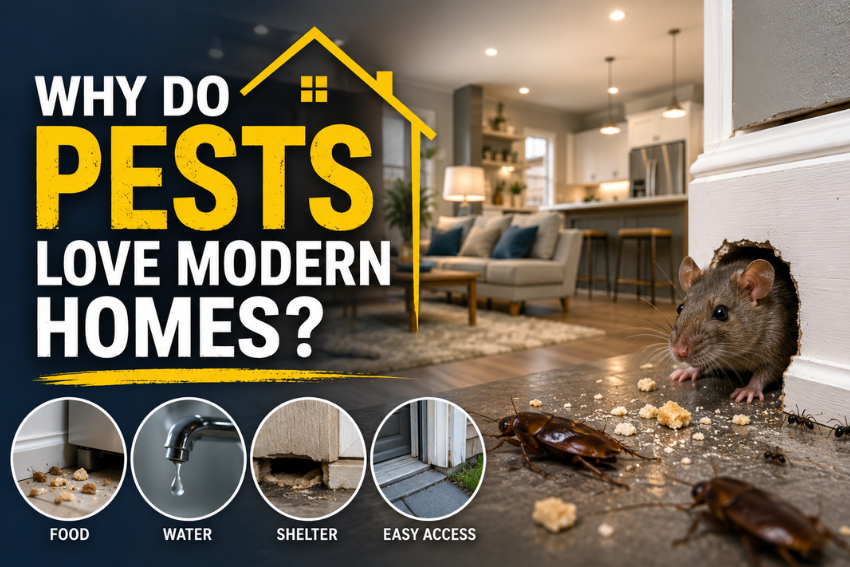
Modern homes are built to be comfortable, efficient, and protected from the outdoors—but those same features can also make them attractive to pests. Warm temperatures, reliable moisture, easy access to food, and hidden shelter create ideal conditions for insects and rodents to survive indoors.
Understanding why pests are drawn to modern homes is the first step toward better pest prevention, more effective pest control, and creating a healthier living environment.
What Attracts Pests to Homes
Food, Water, and Shelter: The Real Reason Pests Move In
Pests are not usually drawn to a home because it is “dirty.” They are drawn in because the home offers three things they need to survive: food, water, and shelter. Modern homes often provide all three in subtle ways. A few crumbs under an appliance, moisture beneath a sink, pet food left out overnight, a warm wall void, or a tiny gap near a utility line can be enough to invite insects or rodents inside.
Modern Homes Create Ideal Pest Conditions
The biggest issue is that today’s homes are designed to be comfortable, climate-controlled, and energy-efficient. Unfortunately, those same qualities also make them attractive to pests. A house that stays warm in winter, cool in summer, and protected from the weather can feel like the perfect nesting site for ants, cockroaches, spiders, mice, rats, silverfish, termites, and other unwanted guests.
Stability Makes Indoor Living More Attractive
The real attraction is not usually a dirty house. It is predictability. Outdoors, pests have to deal with heat, cold, rain, predators, and limited food. Inside a modern home, conditions are more stable. A home offers hidden wall voids, plumbing access, stored food, moisture, and quiet spaces where pests can remain undisturbed. To a pest, that is not just shelter. It is a survival advantage.
Small Weak Points Become Pest Entry Opportunities
This is why pest activity often begins at the edges of daily life, a garage door that does not seal tightly, a damp crawl space, a recycling bin, a dog bowl, a planter near the entryway, or a small opening around a utility line. Pests do not need an invitation. They only need a weakness.
Things That Attract Pests to House Interiors
Hidden Food Sources That Invite Pest Activity
The most common indoor conditions that attract pests are food residue, accessible water, clutter, and hidden shelter. These attractants are not always obvious messes. Many are small, hidden, or part of normal household routines.
Crumbs on the floor, sticky spills, overflowing trash, dirty dishes, open pantry items, pet bowls, a few crumbs behind the toaster, residue inside a trash can, or pet food left out overnight can all draw pests into living spaces. Even small amounts of food are enough for many insects and can support more pest activity than most homeowners realize.
Why Moisture Is Often the Bigger Problem
Moisture is just as important, and water is often the bigger part of the problem. Many pests can survive longer without a reliable food source than without moisture. Leaky pipes, condensation, sweating plumbing, damp basements, wet bath mats, clogged drains, moisture around a dishwasher, overwatered houseplants, and humid basements can attract pests that thrive in humid environments. Cockroaches, silverfish, drain flies, termites, and some ants are especially drawn to moisture.
How Clutter Creates Shelter for Pests
Clutter also matters because it gives pests places to hide. Cardboard boxes, paper stacks, unused storage bins, laundry piles, wall voids, appliance gaps, cabinet spaces, cluttered storage areas, and crowded garage corners can create quiet, hidden, warm, and undisturbed spaces where insects and rodents can nest before anyone notices them.
Clean Homes, Same Pest Problem
Why Clean Homes Still Get Pests
Clean homes can still get pests because pests do not need a messy house to survive. They need opportunity. They are looking for access, moisture, shelter, and survival opportunities.
Cleanliness Does Not Eliminate Risk
A spotless kitchen does not stop ants from entering through a window gap or a gap under the back door. A tidy living room does not prevent mice from squeezing through an opening near the foundation. A well-maintained bathroom can still have enough humidity to attract silverfish or drain flies. A well-kept garage can still attract mice if the weather stripping is worn or bird seed is stored in a thin plastic bag.
Accidental Ways Pests Enter the Home
Pests can also be brought in accidentally. Groceries, delivery boxes, firewood, luggage, used furniture, plants, and storage containers can carry insects or eggs inside. Once pests find warmth, moisture, or a hidden place to shelter, they may settle in even if the home is generally clean.
Prevention Depends on More Than Cleaning
In many cases, a pest problem says less about housekeeping and more about access points, moisture conditions, seasonal pressure, nearby outdoor activity, construction gaps, landscaping choices, and drainage problems. Even luxury and newly built homes can have pest issues because these conditions can all create openings.
Cleanliness helps, but it is not a complete defense. Pest control is less about whether a home looks clean and more about whether pests can enter, hide, drink, feed, and reproduce without being disturbed.
Modern Features, Easier Pest Infestation
Hidden Spaces Create Hidden Pest Activity
Modern homes can unintentionally make hidden pest activity harder to detect. Finished basements, wall voids, drop ceilings, crawl spaces, attached garages, complex rooflines, recessed lighting, utility chases, utility rooms, kitchen islands, built-in cabinetry, and under-cabinet gaps all create hidden pathways and nesting areas. Pests can move behind the scenes for weeks before appearing in visible spaces.
Energy Efficiency Can Create Pest-Friendly Conditions
Energy-efficient construction can also create unexpected pest issues. Tightly sealed homes may hold humidity in certain areas, while small gaps around vents, pipes, cables, doors, windows, and exterior penetrations may be overlooked because they are not obvious to homeowners, but they are large enough for insects and even rodents. Moisture-trapping materials, poorly ventilated bathrooms, and tightly sealed rooms can also create humid pockets that pests love.
Smart Design and Landscaping Can Influence Pest Pressure
Smart homes and modern landscaping can play a role too. Exterior lighting may attract flying insects close to doors and windows. Irrigation systems can keep soil damp near the foundation. Mulch can hold moisture near the foundation. Dense plantings can create shade and cover. Decorative stone, dense shrubs, and outdoor storage close to the house can give pests a bridge from the yard to the structure.
When Comfort Turns Into Pest Opportunity
The result is a home that looks beautiful and functions well for people, but also creates a comfortable transition zone for pests. Over time, that transition zone can turn a small pest issue into a larger pest infestation.
Entry Points That Attract Pests
The Most Common Exterior Entry Points
Pests usually enter through small, overlooked openings around the exterior of the home, especially through the places homeowners rarely inspect closely. Common entry points include gaps under doors, worn garage seals, torn window screens, cracks around windows, cracks in the foundation, spaces around pipes and utility lines, vents, dryer vents, attic openings, crawl space access points, roofline gaps, chimney openings, weep holes, and spaces where different building materials meet.
Small Openings Are Bigger Than They Look
Rodents can squeeze through surprisingly small spaces. Mice can fit through openings about the size of a dime, while insects can enter through gaps that are barely noticeable. Ants, cockroaches, spiders, stink bugs, flies, and other pests often use the path of least resistance, especially during extreme weather, heavy rain, drought, or seasonal temperature changes.
Why Garages Often Become Pest Gateways
Attached garages are one of the most common transition zones and overlooked entry points. They often connect the outdoors to the home and may contain pet food, stored boxes, cardboard, trash bins, tools, pet supplies, or seasonal items. Once pests enter the garage, they may move into wall voids, kitchens, laundry rooms, basements, or utility areas.
Human Activity Can Bring Pests Indoors
Pests also enter through human activity. Delivery boxes, used furniture, luggage, grocery bags, potted plants, firewood, and storage bins can all carry pests indoors. Sometimes the “entry point” is not a crack in the house. It is something brought through the front door.
Habits That Worsen a Pest Problem
Everyday Habits That Feed Pest Activity
Small pest issues often become larger when homeowners unintentionally keep feeding or sheltering the pests. Leaving food out overnight, delaying trash removal, ignoring minor leaks, storing cardboard in garages or basements, letting clutter build up, leaving garage doors open, and leaving pet food accessible can all allow pests to multiply.
Treating Symptoms Instead of Causes
Another common mistake is only treating the pests that are visible. Spraying a few ants on the counter or killing a roach in the bathroom may seem helpful, but it does not address what attracts pests in the first place. A few ants on the counter may be a trail from a larger colony. One cockroach may indicate hidden moisture or activity behind appliances. A scratching sound in the wall may mean rodents have already found shelter. Pests seen in the open are often only the visible part of the problem.
Why Delayed Action Increases Infestation Risk
Delaying action can also make the problem worse. Many pests reproduce quickly. One or two sightings may be the visible part of a much larger issue hidden behind walls, under appliances, in attics, or around plumbing areas.
Temporary Fixes Often Lead to Recurring Problems
Another habit that makes infestations worse is disturbing pests without solving the cause. Spraying, wiping, or trapping may reduce activity temporarily, but if the entry point, food source, moisture problem, or nesting area remains, pests often return. In some cases, they simply move deeper into the structure.
Ways To Keep Bugs Out of House
Simple Nighttime Habits That Reduce Attraction
Homeowners who want to keep bugs out of house interiors can start by focusing on small, consistent habits. The goal is not to overhaul the house. The goal is to remove easy wins and make the home less convenient for them.
Start at night, because many pests are most active when the home is quiet. Store food in sealed containers, wipe counters before bed, do not leave dirty dishes soaking overnight, clean under appliances, rinse recyclables, empty trash regularly, take out trash when it contains food waste, avoid leaving pet food out for long periods, and check that exterior doors are fully closed. These small habits remove the easy food sources and signals that attract insects indoors.
Moisture Control as a Long-Term Strategy
Moisture control is equally important. Fix dripping faucets, dry wet areas quickly, run bathroom fans, clean drains, avoid overwatering indoor plants, and check under appliances that use water. Many pests are far more likely to settle in when water is available, and a dry home is often a less attractive home.
Seal, Block, and Remove Easy Access
Simple exclusion also helps. Replace damaged screens, add door sweeps, seal gaps around pipes, check weather stripping, keep exterior doors closed, keep vegetation off the exterior walls, and move firewood, cardboard, and clutter away from the house and foundation. These are not major renovations, but together they remove many of the easiest pest routes and can make a home far less inviting.
Consistency Is the Key to Prevention
Learning how to keep bugs out of house spaces also means staying consistent. A single cleaning session or one sealed gap can help, but long-term prevention works best when food, moisture, entry points, and shelter are all managed together.
Pest Proofing Modern Homes
Build a Layered Defense Against Pests
Effective pest proofing is not one single product or treatment. It is a layered approach that makes the home harder to enter, harder to hide in, and harder to survive in. The best pest-proofing plans combine exterior exclusion, sanitation, moisture control, storage improvements, and regular inspection.
Exterior Changes That Reduce Pest Pressure
Outside, this means sealing cracks, checking door seals, garage gaps, roofline openings, vents, utility penetrations, foundation cracks, gutters, drainage, landscaping, and lighting. It also means trimming vegetation away from the house, keeping mulch from piling against the foundation, repairing screens, reducing standing water, and keeping outdoor trash areas clean.
Indoor Practices That Prevent Infestations
Inside, pest proofing means keeping food sealed, reducing clutter, managing humidity, organizing storage, monitoring basements and attics, checking under sinks, cleaning hidden crumbs, and watching for early signs like droppings, shed wings, gnaw marks, musty odors, grease trails, or recurring insects in the same area.
Prevention Works Better Than Reaction
For a modern home, the goal is not just to kill pests after they appear. The goal is to remove the conditions that allowed them to get comfortable in the first place. Good pest proofing is proactive. It does not wait until pests are visible in the kitchen or bathroom. It treats the home like a system, where the yard, foundation, garage, attic, plumbing, and living spaces all influence each other.
When those weak points are addressed together, the home becomes much harder for pests to enter and much less rewarding if they do.
When Pest Infestation Needs Help
Signs the Problem Is No Longer Minor
A pest problem is serious enough to call a professional when pests keep coming back, when you see signs of nesting, or when the pest could threaten health, safety, or property. Recurring ants, cockroaches, rodents, termites, bed bugs, fleas, wasps, carpenter ants, or unexplained bites should not be ignored.
Warning Signals of Hidden Infestations
Homeowners should also call a professional if they notice droppings, scratching sounds in walls or ceilings, gnawed wires, damaged wood, mud tubes, discarded wings, strong odors, dead insects in multiple areas, or pests appearing during the day when they are normally nocturnal. These signs can indicate a larger hidden infestation.
Pests That Usually Require Professional Treatment
Some pests should be handled professionally from the beginning. Termites, bed bugs, rodents, cockroaches, wasps, carpenter ants, and fleas can become costly or difficult to control when treatment is delayed. These pests often hide well, reproduce quickly, or create problems that are not fully visible at first.
When DIY Stops Working
Professional pest control is especially important when DIY treatments are not solving the root problem. Store-bought sprays may reduce visible activity for a short time, but they often miss nests, entry points, moisture sources, and hidden pathways. A professional inspection can identify what type of pest is present, where it is entering, why it is staying, and what needs to change to prevent it from returning.
Conclusion
Pests are rarely attracted to a home simply because it is dirty. More often, they are responding to easy access to food, water, shelter, and stable indoor conditions. Small habits, hidden moisture, overlooked entry points, and modern home features can all contribute to pest activity. By identifying these conditions early and focusing on prevention, homeowners can make their homes far less inviting and reduce the risk of long-term infestations.