










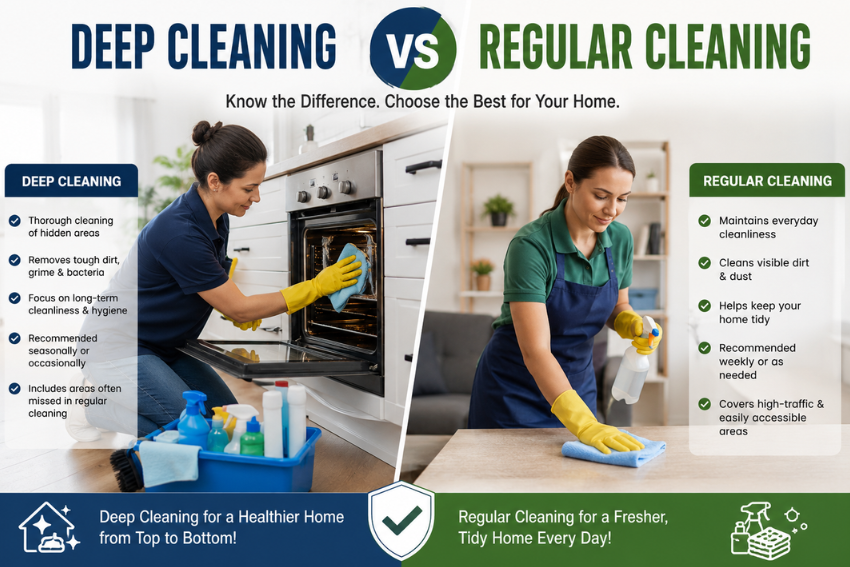
Deep Cleaning vs Regular Cleaning – these two approaches might sound similar, but they serve completely different purposes in keeping your home truly clean. If you have ever scrubbed your kitchen counters on a Tuesday night, you already know regular cleaning. But deep cleaning? That is the heavy lifter your home craves a few times each year. Most people mix them up, thinking a quick vacuum and wipe down counts as a deep clean. It does not.
Let me break down exactly what sets them apart, why both matter, and how to decide which one your space needs right now.
What is Regular Cleaning?
Regular cleaning is the stuff you do every day or every week to keep your home looking tidy and feeling fresh. Think of it as the surface level sweep that prevents mess from piling up. You grab your spray bottle, a microfiber cloth, and maybe the vacuum. You hit the high traffic areas. You wipe down kitchen counters after cooking. You scrub the bathroom sink. You make the bed. You take out the trash.
Here is what regular cleaning typically includes on a weekly basis:
- Vacuuming or sweeping floors in main living areas
- Mopping hard surfaces (once a week or every other week)
- Wiping down kitchen counters and stovetop
- Cleaning bathroom mirrors, sinks, and toilet exteriors
- Dusting visible surfaces like shelves, coffee tables, and TV stands
- Taking out trash and recycling
- Making beds and tidying up throw pillows
Regular cleaning keeps allergens and everyday grime under control. It takes anywhere from 30 minutes to two hours depending on your home size. You can easily do it yourself without special tools or heavy chemicals. The goal is maintenance, not transformation.
What is Deep Cleaning?
Deep cleaning goes way beyond the surface. You move furniture. You scrub grout lines. You clean inside the oven. You pull out the refrigerator and attack the dust bunnies hiding behind it. Deep cleaning targets the spots that regular cleaning never touches. It is the difference between wiping down a counter and sanitizing every crack and crevice in your kitchen.
A full deep clean includes everything from regular cleaning, plus these extra tasks:
- Moving appliances and furniture to clean underneath and behind
- Scrubbing grout, tile lines, and caulking in bathrooms and kitchens
- Cleaning inside the oven, microwave, and refrigerator
- Washing baseboards, door frames, and light switches
- Dusting blinds, ceiling fans, and light fixtures
- Vacuuming upholstery and flipping or rotating mattresses
- Degreasing kitchen cabinets and backsplashes
- Sanitizing trash cans and recycling bins
- Washing windows inside and out (or at least interior tracks and sills)
You typically need three to six hours for a deep clean, sometimes longer for larger homes. Many people hire professionals for this job because it requires serious elbow grease, specialized tools like steam cleaners, and a whole lot of patience.
Also Read – Deep Cleaning Checklist for Every Room in Your Home
Deep Cleaning vs Regular Cleaning: Quick Comparison
Below is a detailed comparison that breaks down deep cleaning vs regular cleaning across every important category. No fluff, just the facts.
| Feature | Regular Cleaning | Deep Cleaning |
|---|---|---|
| Primary goal | Maintain daily tidiness and remove visible dirt | Eliminate hidden grime, bacteria, and buildup from overlooked areas |
| Frequency | Weekly or daily (e.g., vacuuming every other day) | Quarterly, biannually, or seasonally (every 3–6 months) |
| Time required | 30 minutes to 2 hours per session | 3 to 6+ hours (sometimes a full day for larger homes) |
| Tools needed | Broom, mop, vacuum, multi surface spray, sponges, trash bags | Grout brush, steam cleaner, extendable duster, degreaser, appliance cleaner, microfiber cloths, carpet cleaner |
| Effort level | Low to moderate; feels like a quick chore routine | High; physically demanding, requires bending, scrubbing, and moving furniture |
| Tasks included | Sweep floors, wipe counters, clean mirrors, take out trash, make beds, scrub sink | All regular tasks plus: move appliances, scrub grout, clean inside oven/fridge, wash baseboards, dust blinds, sanitize trash cans, vacuum upholstery |
| Cost (DIY) | Almost free (only basic supplies you already own) | $20–$50 for specialty products (grout brush, degreaser, steam cleaner rental) |
| Cost (professional) | $100–$200 per visit (weekly or biweekly service) | $200–$450 per session (one time, depending on home size and condition) |
| Best for | Homes with low traffic, no pets, or daily upkeep routines | Homes with kids, pets, allergies, or before/after major events like holidays or moving |
| Visible results | Surfaces look tidy, floors feel clean, no obvious dust | Surfaces shine, air smells fresher, hidden areas spotless, grout returns to original color |
| Health impact | Reduces daily allergen exposure from surface dust | Dramatically improves indoor air quality, kills mold spores and bacteria in crevices |
| Who performs it | Homeowner easily does it alone | Often requires professionals or a dedicated DIY weekend warrior |
The Core Differences Between Deep Cleaning vs Regular Cleaning
Let me put the deep cleaning vs regular cleaning debate. Regular cleaning handles the obvious dirt you see every day. Deep cleaning hunts down the hidden grime you forget exists. One keeps your home looking good. The other makes your home actually clean.
Frequency matters most. You do regular cleaning weekly or even daily. Deep cleaning happens quarterly, biannually, or seasonally. Some people deep clean before holiday guests arrive. Others schedule it when spring hits. If you have pets, kids, or allergies, you might deep clean every two months instead.
The effort level changes completely. Regular cleaning feels like a quick workout. Deep cleaning feels like moving day. You will sweat. You will discover lost toys and ancient dust. You might need a mask if you have serious allergies. Deep cleaning exposes what regular cleaning leaves behind.
Your tools differ too. For regular cleaning, a multi surface spray, a sponge, a vacuum, and a mop work fine. For deep cleaning, you want a grout brush, a steam cleaner, microfiber cloths, degreaser, a extendable duster, and maybe a carpet cleaner. You might rent a machine or buy attachments for your vacuum.
Cost adds up differently. Doing regular cleaning yourself costs almost nothing beyond basic supplies. Hiring a weekly cleaner might run you $100 to $200 per visit depending on home size and location. Deep cleaning from a professional service typically costs $200 to $400 for a standard home, sometimes more for larger spaces or heavy buildup. DIY deep cleaning only costs your time and a few specialty products.
When to Choose Regular Cleaning
Stick with regular cleaning when you already maintain your home week to week. If you do not see visible dust on surfaces, if your floors look decent after a quick sweep, if your bathroom does not have soap scum buildup, then regular cleaning works fine. Most households do just fine with weekly regular cleaning and a deeper session every three to six months.
Regular cleaning suits you best when:
- You clean up spills immediately so they do not harden
- You vacuum high traffic areas twice a week
- You wipe down kitchen surfaces after every meal
- You do not have pets shedding heavily
- No one in your home suffers from severe allergies or asthma
When to Schedule a Deep Clean
You need deep cleaning when the regular stuff stops cutting it. Look for these telltale signs:
- You notice a musty odor even after vacuuming
- Grout lines have turned dark or gray instead of their original color
- Dust collects on ceiling fans and blinds within days of wiping
- Your refrigerator has mysterious smells or sticky spills inside
- Baseboards show a visible line of dust and dirt
- You cannot remember the last time you moved the couch
- Allergy symptoms flare up when you spend time indoors
Also, deep clean before major events like Thanksgiving dinner, a child’s birthday party, or when listing your home for sale. New parents often schedule a deep clean before bringing a baby home. Landlords require deep cleaning between tenants. Spring and fall serve as natural deep cleaning seasons for many US households.
Benefits of Both Approaches in Your Routine
You actually need both. Regular cleaning stops dirt from becoming grime. Deep cleaning resets your home so regular cleaning stays effective. Think of it like brushing your teeth versus going to the dentist. You brush daily to prevent cavities. You see the dentist twice a year to remove what your toothbrush misses. Same logic applies to your floors, your kitchen, and your bathroom.
Benefits of regular cleaning:
- Reduces daily stress because your space looks tidy
- Prevents pest problems by removing crumbs and debris
- Cuts down on allergens like dust and pet dander week to week
- Saves you time because you never face overwhelming buildup
- Makes deep cleaning faster and cheaper when you finally do it
Benefits of deep cleaning:
- Eliminates bacteria and mold hiding in grout and crevices
- Extends the life of carpets, upholstery, and appliances
- Improves indoor air quality dramatically
- Reveals hidden issues like water damage or pest droppings early
- Gives you that fresh, brand new home feeling again
DIY Deep Cleaning vs Hiring a Pro
You can absolutely deep clean your own home. Many people do. But be honest about your schedule and physical limits. A full deep clean requires bending, reaching, scrubbing, and sometimes climbing ladders. If you have back problems or limited time, hire a professional.
Professional cleaners bring industrial grade equipment. They use steamers that kill bacteria without harsh chemicals. They have HEPA vacuums that trap microscopic allergens. They also work faster because two or three people tag team your home. Expect to pay $250 to $450 for a standard three-bedroom, two-bathroom house in most US cities. That price usually includes everything from oven cleaning to baseboard scrubbing.
If you go the DIY route, break the job into weekend chunks. Do the kitchen one Saturday. Tackle bathrooms the next weekend. Save windows and blinds for another day. Trying to do everything in one day will exhaust you, and you might rush through important steps.
How Often Should You Deep Clean Your Home?
Most homes benefit from a full deep clean every three to six months. But your mileage varies based on these factors:
- Pets: Two shedding dogs means deep clean every two to three months
- Kids: Toddlers spread mess everywhere. Deep clean quarterly or more.
- Allergies: If anyone uses an inhaler, deep clean every season change
- Cooking habits: Daily frying or roasting creates grease buildup. Deep clean kitchen every two months.
- Square footage: Larger homes hide more dust. Break deep cleaning into zones.
- Location: Desert areas have fine dust. Humid regions grow mold faster. Adjust accordingly.
Final Takeaway: Build a Schedule That Works
Stop treating regular and deep cleaning like rivals. They work as teammates. Here is a simple rhythm that works for real families: Do light regular cleaning tasks daily. Wipe counters, sweep the kitchen, make beds. Set aside two hours every weekend for deeper regular cleaning like mopping and dusting. Then block out one full Saturday every season for deep cleaning. Rotate focus areas. Spring tackle the kitchen. Summer does bathrooms. Fall focus on bedrooms and windows. Winter hit the living room and hidden corners.
That schedule keeps your home genuinely clean without burning you out. You spend less time scrubbing and more time actually enjoying your space.