








One of the most searched weight loss topics is healthy weight loss timeline because people want to know how fast they can lose weight without hurting themselves. Social media is full of before and after pictures but losing weight sustainably isn’t a quick process. In order to make real progress, there must be consistent habits, balanced nutrition, regular physical activity, quality sleep and patience.
A lot of people start a weight loss program with the expectation that they will see results in the form of lost weight within a couple of weeks. As results become slower, frustration can and does creep in, resulting in restrictive diet, excessive exercise or just not bothering. But the reality is that healthy weight loss isn’t a race. This is a slow process, which helps your body get used to the treatment, and keeps you looking good in the long run.
Studies have repeatedly demonstrated that slow weight loss results in better weight loss success than fast weight loss. Those who set realistic targets will more often be able to keep the weight off, as they will be developing habits which they can sustain for years or even decades.
In this guide, you will learn:
- What a healthy weight loss timeline looks like
- How much weight you can safely lose each week
- Why weight loss varies from person to person
- Factors that influence your progress
- What to expect during each stage of your journey
- Tips to lose weight safely and maintain your results
No matter your fitness aspiration is, whether it’s to feel better, to be more confident or to gain more energy, knowing what is realistic will keep you on your feet for the entire trip.
Healthy Weight Loss Timeline at a Glance
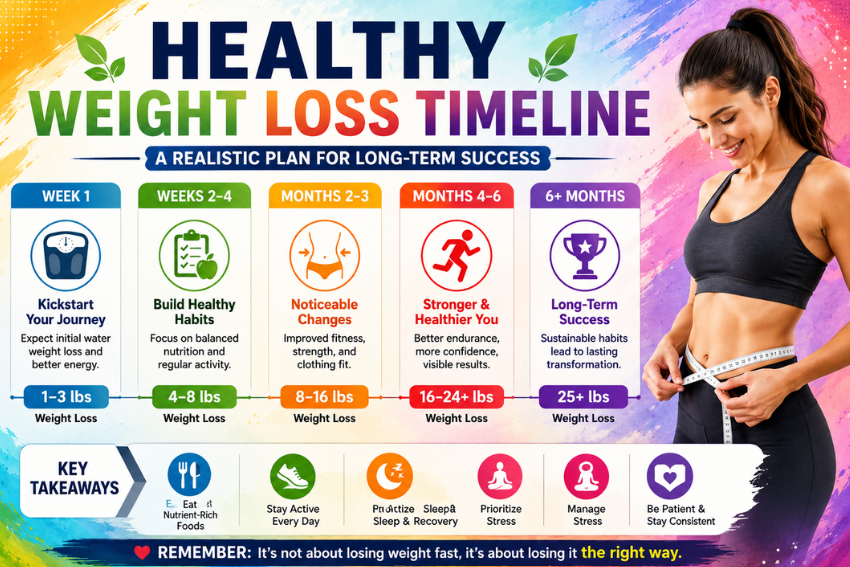
A healthy weight loss timeline typically involves losing 1 to 2 pounds per week, or about 4 to 8 pounds per month, through a balanced diet, regular exercise, adequate sleep, and healthy lifestyle habits. While some people experience faster weight loss during the first week due to water loss, sustainable fat loss occurs gradually over several months.
Why Losing Weight Slowly Is Better Than Losing It Quickly
Everyone would love to lose weight quickly but unfortunately there is a price to that. Many crash diets lead to a short term weight loss, losing water and muscle weight instead of fat weight.
If you shed pounds too fast, your body will respond by slowing down your metabolism. This is more difficult to maintain weight loss and increases the likelihood of post-gaining weight.
The important thing to remember about healthy weight loss is that you are trying to lower the amount of body fat and maintain lean muscle. This method will lead to better body composition and long term health as opposed to just a lower number on the scale.
Benefits of gradual weight loss include:
- Better fat loss instead of muscle loss
- Improved metabolism
- More sustainable eating habits
- Increased energy levels
- Better athletic performance
- Lower risk of nutritional deficiencies
- Reduced likelihood of regaining lost weight
- Improved heart health
- Better blood sugar control
- Long lasting lifestyle changes
Instead of searching for quick fixes, focus on creating habits you can continue for years.
What Is Healthy Weight Loss?
The general guideline for weight loss is to shed 1-2 pounds per week. This rate will help the body burn fat without losing muscle mass. It also alleviates the load on the metabolism.
In order to lose one pound of body weight you should have a calorie deficit of about 3,500 calories. This typically involves the combination of healthy eating and exercise to create a daily shortfall of approximately 500-1,000 calories.
That doesn’t mean that every week will be exactly the same. You can lose 3 pounds some weeks. Other weeks, you might not change your weight.
Weight changes on a daily basis are completely normal, as they are caused by:
- Water retention
- Sodium intake
- Hormonal changes
- Digestive contents
- Exercise recovery
- Hydration levels
This is why tracking weekly trends is more meaningful than weighing yourself several times each day.
What Does a Healthy Weight Loss Timeline Look Like?
Every person’s journey is different, but the following timeline represents realistic expectations for many adults.
Week 1
Many people notice the biggest drop during the first week.
Most of this early weight loss comes from:
- Water loss
- Reduced glycogen stores
- Lower sodium intake
- Healthier eating habits
This rapid change is encouraging, but it should not become your expectation for future weeks.
Weeks 2 Through 4
Fat loss becomes the primary source of weight reduction.
You may lose around:
- 1 to 2 pounds per week
- 4 to 8 pounds during the first month
During this stage, your body begins adapting to healthier routines.
You may also notice:
- Better digestion
- Improved sleep
- Higher energy
- Less bloating
- Better mood
Many people experience noticeable improvements in how their clothes fit before dramatic changes appear on the scale.
Months 2 Through 3
By this point, healthy habits become easier to maintain.
You may notice:
- Improved endurance
- Stronger muscles
- Better posture
- Smaller waist circumference
- Increased confidence
Physical changes can start to be noticed by friends or family as well. Celebrate the improvement not just the pounds lost but strength, stamina and wellbeing.
Months 4 Through 6
Significant body composition changes often become visible.
Many people report:
- Reduced body fat percentage
- Leaner appearance
- Better fitness performance
- Healthier blood pressure
- Improved cholesterol levels
- Better blood sugar control
These health improvements are often more important than the number displayed on the scale.
Why Everyone Loses Weight at a Different Speed
Even two different people do not lose weight at the same rate. There are a few factors that affect your healthy weight loss timeline.
Starting Weight
During the first few weeks, people with more weight tend to shed pounds at a more rapid rate since their bodies need more calories to sustain a normal level of activity. As weight loss occurs, the rate of weight loss decreases automatically. This is all normal.
Age
As one gets older, metabolism tends to slow down. Strength training and protein intake may need to be emphasized more in older adults to maintain muscle mass during fat loss. While it might take longer, the results are still fantastic when habits are followed.
Gender
Men often lose weight faster initially because they typically have:
- More muscle mass
- Higher metabolic rates
- Greater calorie requirements
Women are prone to hormonal changes which can cause a temporary drop in scale weight and water retention. Changes in these do not all correspond to changes in body fat.
Muscle Mass
Muscle burns more calories than fat, even while your body is at rest.
People with greater muscle mass generally experience:
- Higher calorie burns
- Better metabolism
- Easier weight maintenance
This is one reason why strength training plays such an important role in successful weight loss.
Diet Quality
Calories matter, but food quality matters just as much.
A diet rich in:
- Lean protein
- Vegetables
- Fruits
- Whole grains
- Healthy fats
helps support steady fat loss while keeping you satisfied. Highly processed foods often increase hunger, making it more difficult to maintain a calorie deficit.
Physical Activity
Exercise helps maintain a healthy weight loss regime by burning more calories, which helps maintain good cardiovascular health and keeps muscle intact.
The most effective routines usually combine:
- Strength training
- Walking
- Cardio exercise
- Daily movement
It’s more important to be consistent than perfect. The results of these actions can be significant over time, even if the action is performed on a daily basis.
Sleep
Sleep is often overlooked during weight loss.
Poor sleep can:
- Increase hunger hormones
- Reduce fullness hormones
- Lower energy
- Increase cravings
- Reduce exercise performance
Most adults benefit from seven to nine hours of quality sleep each night.
Stress
Chronic stress causes a rise in cortisol, which can affect a person’s appetite and lead to emotional eating. Stress management techniques like walking, meditation, journaling or being outside can increase long-term success through healthy lifestyle.
How Fast Can You Safely Lose Weight?
The best and most sustainable rate of weight loss is 1-2 pounds per week by eating a healthy diet, exercising regularly, and making lifestyle changes.
Weight loss can happen faster in the early days, but a rapid rate of weight loss for several months is rarely sustainable and may lead to a loss of muscle mass, low nutrients, tiredness and weight gain.
Keep in mind that you don’t have to lose weight fast to be successful. It is determined by the ability to sustain healthy lifestyle and losing the weight and keeping it off for a number of years.
Healthy Weight Loss Timeline by Month
Knowing what you can and can’t expect during each month can help you stay motivated and not have any false expectations. Weight loss is not straight-forward. There are weeks when you may expect to lose more weight and weeks when you may only lose a little. The important thing is to concentrate on long-term growth rather than on the daily ups and downs.
Month 1
The first month is a time for establishing healthy habits. The body begins to adjust to the changes in diet, exercise and routine. Some of the body fat may also be lost during this phase, which can lead to rapid results.
Expected results:
- Lose 4 to 8 pounds
- Feel more energetic
- Experience less bloating
- Improve digestion
- Sleep better
- Develop healthier eating habits
Instead of chasing rapid weight loss, concentrate on creating a routine that feels sustainable.
Month 2
By the second month, your body becomes more efficient. The excitement of starting something new may begin to fade, making consistency even more important.
At this point, you may notice that:
- Clothes fit more comfortably.
- Walking becomes easier.
- Workouts feel less challenging.
- Daily energy improves.
- Cravings become easier to manage.
Many people lose another 4 to 8 pounds during this stage.
Month 3
Noticeable changes in the body are typically more obvious after three months of regular exercise. Even if the numbers on the scale aren’t spectacular, friends and family may start noticing your appearance.
You might notice:
- Reduced waist size
- Better muscle definition
- Improved posture
- Increased confidence
- Better cardiovascular fitness
By now, healthy habits often feel like part of your daily lifestyle instead of temporary changes.
Months 4 Through 6
This stage often produces significant health improvements beyond weight loss.
Benefits may include:
- Lower blood pressure
- Improved cholesterol levels
- Better blood sugar management
- Increased strength
- Better endurance
- Reduced body fat percentage
- Improved mental health
People that remain consistent throughout these months are far more likely to reach a result that will last for a number of years.
Healthy Weight Loss Timeline Based on Your Goal
The time required for weight loss varies, depending on personal weight loss goals. If they have reasonable expectations, they are less likely to become frustrated and will stay motivated.
How Long Does It Take to Lose 10 Pounds?
The safe rate of losing weight for most adults is about 5 to 10 weeks at a time, losing 10 pounds each time. Those who have a higher starting weight might achieve this goal a little sooner, while those who are already near their ideal weight may need more time to reach it. Do not rush but concentrate on consistency.
How Long Does It Take to Lose 20 Pounds?
It takes around 10-20 weeks to lose 20 pounds. This enables you to burn off fat slowly and maintain muscle. Losing 20 pounds in a month is typically a crash diet and therefore hard to sustain and could be unhealthy.
How Long Does It Take to Lose 30 Pounds?
This will take about 4-8 months to accomplish. Many people see the benefits of improved fitness, better sleep and healthier eating habits over this period of time that support their long term success.
How Long Does It Take to Lose 50 Pounds?
It can take anywhere from 6 to 12 months or more to lose 50 pounds. Instead of just the final number, applaud the achievements of smaller numbers such as:
- First 5 pounds
- First clothing size lost
- First month of consistency
- Improved stamina
- Lower blood pressure
- Better laboratory results
Small victories build long term motivation.
Common Weight Loss Mistakes That Slow Progress
Many people unknowingly make mistakes that prevent them from achieving steady results.
Understanding these common pitfalls can help you stay on track.
Eating Too Little
Drastically cutting calories may seem like the fastest solution.
However, eating too little can:
- Slow metabolism
- Increase fatigue
- Cause muscle loss
- Trigger overeating later
- Reduce workout performance
Choose a moderate calorie deficit instead of extreme restriction.
Skipping Protein
Protein helps preserve muscle while increasing feelings of fullness. Without enough protein, your body may lose muscle instead of fat.
Good protein sources include:
- Chicken
- Fish
- Eggs
- Greek yogurt
- Cottage cheese
- Lentils
- Beans
- Tofu
Aim to include protein with every meal.
Ignoring Strength Training
Many people rely only on cardio. While cardio burns calories, strength training builds muscle that supports a healthy metabolism. Try strength training at least two or three times each week.
Exercises include:
- Squats
- Push ups
- Lunges
- Dumbbell exercises
- Resistance band workouts
Building muscle improves body composition even if the scale changes slowly.
Drinking Extra Calories
Many beverages contain hidden calories.
Examples include:
- Soft drinks
- Sweetened coffee drinks
- Energy drinks
- Alcohol
- Fruit juices
Replacing these with water or unsweetened beverages can reduce calorie intake without making major dietary changes.
Expecting Perfect Progress
- No one loses weight every single week.
- Temporary plateaus happen to almost everyone.
- Instead of giving up, continue following healthy habits.
- Long term consistency always beats short term perfection.
What Is a Weight Loss Plateau?
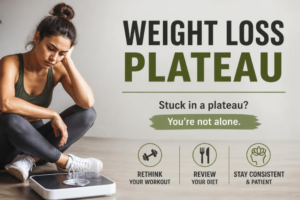
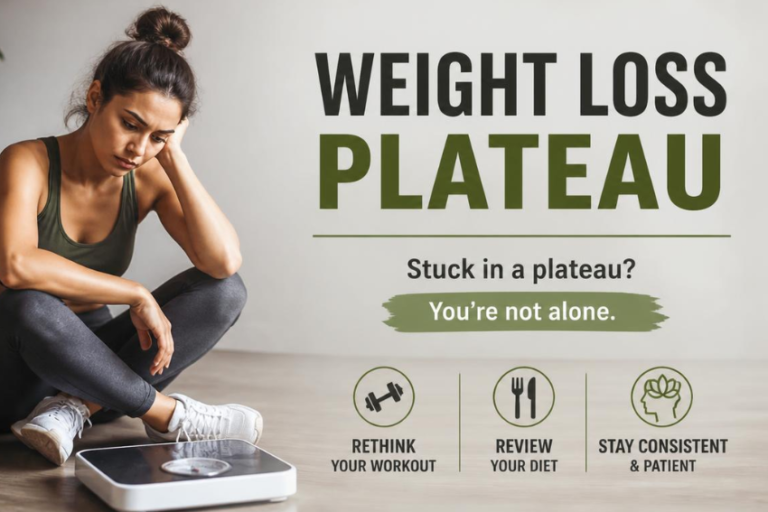
A weight loss plateau occurs when your weight remains unchanged for several weeks despite maintaining healthy habits. This happens because your body gradually adapts to its lower weight. Your calorie needs decrease as you lose weight, making further progress slower. Plateaus are completely normal and do not mean your efforts have failed.
How to Break Through a Weight Loss Plateau
If your progress has stalled for several weeks, consider these strategies.
Review Portion Sizes
As your body becomes lighter, your calorie needs decrease. Measuring portions occasionally can help ensure your intake still matches your goals.
Increase Daily Movement
Exercise is important, but everyday movement also matters.
Simple ways to stay active include:
- Taking the stairs
- Walking after meals
- Parking farther away
- Standing more often
- Doing household chores
Small changes throughout the day can significantly increase calorie expenditure.
Add Strength Training
Building muscle helps support metabolism. If your workouts only include cardio, adding resistance training may help restart progress.
Improve Sleep
Poor sleep affects hormones that regulate hunger and fullness. Aim for seven to nine hours of sleep each night whenever possible.
Manage Stress
High stress levels often lead to emotional eating. Healthy stress management techniques include:
- Meditation
- Deep breathing
- Yoga
- Reading
- Spending time outdoors
- Talking with supportive friends or family
Reducing stress benefits both physical and mental health.
Best Eating Habits for Sustainable Weight Loss
Instead of following restrictive diets, focus on building eating habits you can maintain.
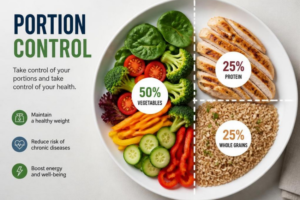
Fill Half Your Plate with Vegetables
Vegetables provide nutrients and fiber while keeping calories relatively low. Colorful vegetables also support overall health.
Choose Whole Foods Most of the Time
Prioritize foods such as:
- Fresh fruits
- Vegetables
- Lean proteins
- Whole grains
- Nuts
- Seeds
- Healthy oils
Whole foods generally keep you full longer than highly processed options.
Stay Hydrated
Drinking enough water supports digestion, exercise performance, and appetite control. Sometimes thirst is mistaken for hunger. Keeping a reusable water bottle nearby can help increase daily water intake.
Practice Mindful Eating
Avoid eating while watching television or scrolling through your phone.
Instead:
- Eat slowly.
- Chew thoroughly.
- Notice hunger cues.
- Stop when comfortably satisfied.
Mindful eating often reduces overeating without requiring strict food rules.
The Best Exercise Plan for Healthy Weight Loss
Exercise works best when combined with healthy eating. A balanced weekly routine may include:
Cardio
Examples:
- Brisk walking
- Cycling
- Swimming
- Jogging
- Dancing
Aim for at least 150 minutes of moderate intensity activity each week.
Strength Training
Include resistance exercises at least two or three times weekly.
Benefits include:
- Increased muscle mass
- Better metabolism
- Stronger bones
- Improved posture
- Better balance
Flexibility and Recovery
Recovery is just as important as exercise.
Consider:
- Stretching
- Yoga
- Foam rolling
- Rest days
Recovery helps reduce injury risk and improves long term consistency.
Non Scale Victories That Matter
The scale tells only part of your story. Many positive changes happen before dramatic weight loss becomes visible.
Celebrate improvements such as:
- More energy throughout the day
- Better sleep quality
- Lower blood pressure
- Increased confidence
- Improved mood
- Smaller clothing size
- Better endurance
- Stronger muscles
- Healthier eating habits
- Greater self-discipline
These victories often predict long term success more accurately than scale weight alone.
Expert Tips to Stay on Track
Maintaining motivation can be challenging, especially when progress slows. These practical strategies can help you stay focused on your goals.
- Set realistic weekly and monthly targets.
- Track your progress with photos and body measurements, not just the scale.
- Prepare healthy meals ahead of time.
- Keep nutritious snacks available to avoid impulsive eating.
- Exercise consistently, even on days when motivation is low.
- Find an activity you genuinely enjoy.
- Stay accountable by working with a friend, coach, or support group.
- Celebrate milestones without using food as a reward.
- Focus on building lifelong habits instead of chasing quick results.
Remember that sustainable weight loss is a marathon, not a sprint. Every healthy choice you make today contributes to lasting success.
Healthy Weight Loss Myths vs Facts
| Myth | Fact |
|---|---|
| Faster weight loss is always better. | Gradual weight loss is easier to maintain and healthier. |
| Carbs should be completely eliminated. | Whole grain carbohydrates provide energy and important nutrients. |
| You must exercise every day. | Consistency matters more than exercising daily. |
| Skipping meals helps burn more fat. | Skipping meals often increases hunger and overeating later. |
| The scale tells the whole story. | Body composition and health improvements matter just as much. |
| Fat burning supplements are necessary. | Healthy eating and regular exercise remain the most effective approach. |
| Weight loss should happen every week. | Temporary plateaus are a normal part of the process. |
Signs Your Weight Loss Plan Is Working
Sometimes people become discouraged because they focus only on the scale.
Here are positive signs that indicate your plan is working:
- Your clothes fit more comfortably.
- You have more energy throughout the day.
- You recover faster after exercise.
- You feel less hungry between meals.
- Your sleep quality improves.
- You crave processed foods less often.
- Your endurance increases.
- You feel stronger during workouts.
- Your mood improves.
- Your medical test results show healthier numbers.
Every one of these changes represents progress.
Long Term Habits That Help Maintain Weight Loss
Reaching your goal is only part of the journey. Maintaining your results requires continuing the healthy habits that helped you lose weight in the first place.
Focus on these long term strategies:
Keep Moving Every Day
You do not need intense workouts every day, but regular movement is essential.
Choose activities you enjoy, such as:
- Walking
- Hiking
- Swimming
- Cycling
- Dancing
- Strength training
- Recreational sports
The best exercise is the one you will continue doing.
Continue Eating Balanced Meals
Avoid returning to old eating habits once you reach your goal.
Instead:
- Eat plenty of vegetables.
- Choose lean proteins.
- Include healthy fats.
- Enjoy whole grains.
- Allow occasional treats without guilt.
Balance is more sustainable than perfection.
Monitor Your Progress
Checking in regularly helps you catch small weight gains before they become larger setbacks.
You can monitor your progress through:
- Weekly weigh ins
- Body measurements
- Progress photos
- Fitness performance
- Energy levels
Small adjustments are easier than major corrections.
Prioritize Sleep and Stress Management
Healthy eating and exercise are important, but so are recovery and mental wellbeing.
Continue practicing:
- Consistent sleep schedules
- Relaxation techniques
- Mindfulness
- Deep breathing
- Time outdoors
- Strong social connections
These habits support both physical and emotional health.
Final Thoughts
A healthy weight loss timeline isn’t about the quickest way to lose weight. It is about living a healthier way that you can enjoy and live it long-term. It’s okay to want quick results, but patience, consistency, and realistic expectations are key to any successful outcome.
The most successful are not the quickest to lose weight. They are the ones who keep on making healthy choices, even when things are not going well. Each balanced meal, every workout, every walk, every good night’s sleep will get you closer to your goal.
Do not compare yourself to another person but rather become better than you were last day. When losing weight, it is important to stick to the process and celebrate all the small achievements along the way, such as fitting into smaller clothes, losing five pounds, or becoming more fit.
Weight loss isn’t simply a matter of changing the body. It’s about self-confidence, health, improving your quality of life and establishing lifelong habits.
Be patient, be consistent and trust in the process and the results will follow. Progress may be slower, but it’s the kind of progress that lasts.