










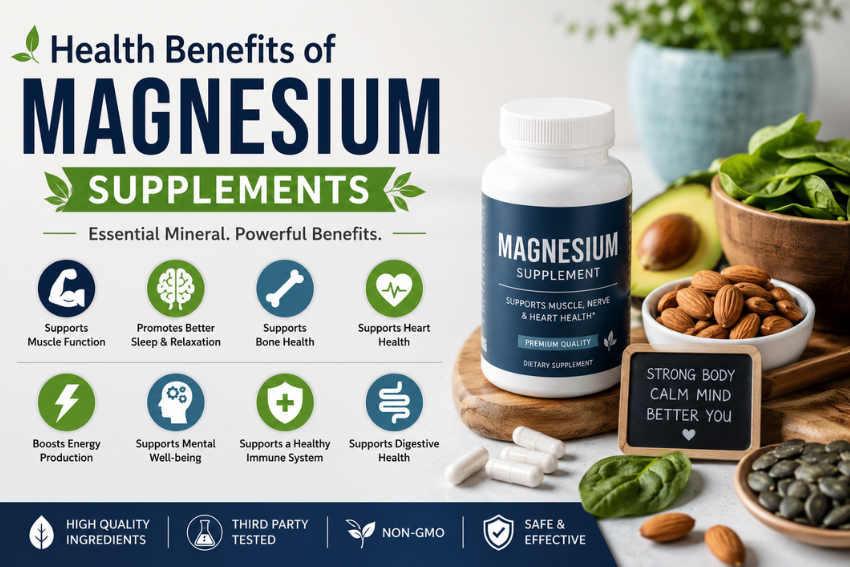
When someone asks me what are the benefits of magnesium supplements, I will typically begin by saying this: Magnesium is the silent worker in your body. This essential mineral doesn’t get the attention of vitamin C or calcium, but it’s responsible for over 300 enzymatic reactions that keep you alive and functioning without it. Magnesium is involved in nearly all functions of your body, from your heart to your brain.
But this is where it gets tricky: up to 50% of Americans are consuming less than they need of it through food intake. Our intake of magnesium has been reduced by processed foods, soil depletion and some medicines. Hence, the popularity of supplements and a good reason.
Let’s take a look at the research evidence for the health benefits of magnesium supplements, the type of magnesium to choose, and precautions to consider.
12 Science-Backed Health Benefits of Magnesium Supplements
These are the top benefits of magnesium supplements, including improved sleep, stress reduction, muscle recovery and bone support. Get the perfect one for your needs.
Supports Better Sleep and Relaxation
For anyone who has ever had trouble sleeping at night, magnesium may be the answer. Magnesium helps to balance your internal sleep-wake cycle (circadian rhythm). It also provides other nervous system calming effects through modulation of neurotransmitters that facilitate relaxation.
Doctors often prescribe magnesium glycinate to people who are having difficulty sleeping or experiencing restless legs syndrome. One patient I talked to said that it was “nature’s chill pill” not because it puts you to sleep but because it quiets the chatter in your mind that keeps you awake at night.
Key takeaway: Magnesium glycinate and magnesium L-threonate are particularly well-suited for sleep and stress relief because they cross the blood-brain barrier more effectively.
Eases Anxiety and Lifts Mood
Anxiety is not just a psychological state; it is one that has a physiological basis and magnesium is a leading character in keeping this root in good condition. A shortage of magnesium has been associated with higher rates of anxiety, depression and even ADHD.
Magnesium is essential for nerve transmission and helps to regulate your stress response (hypothalamic-pituitary-adrenal (HPA) axis). Based on a review of 18 studies, magnesium intake could be beneficial for anxiety symptoms, and many patients find that they feel a lot calmer after just a few weeks of regular magnesium supplementation.
Key takeaway: A supplement of magnesium, particularly magnesium glycinate, may be a low-risk, drug-free treatment to consider if stress and anxiety are weighing you down.
Relaxes Muscles and Prevents Cramps
All who have experienced a charley horse are familiar with the pain of muscle cramps. Magnesium is necessary for muscle contraction and relaxation because it is a natural calcium inhibitor which helps muscles relax.
People with leg cramps, exercise-induced spasms and restless leg syndrome often report that their symptoms are lessened when they get magnesium. One 2025 Mayo Clinic guide noted that magnesium supplementation is generally safe and effective for people whose sleep is disrupted by cramping.
Key takeaway: If a person has muscle cramps, magnesium citrate or glycinate can help alleviate muscle cramps without some of the side effects of certain prescribed muscle relaxants.
Supports a Healthy Heart and Blood Pressure
Magnesium is a muscle relaxant for your heart. Magnesium relaxes blood vessels, decreases vascular tone, and blocks the renin-angiotensin system which can increase blood pressure.
A 2025 meta-analysis of 38 RCTs concluded that magnesium supplementation had a modest effect in reducing blood pressure, particularly in those with hypertension and/or low magnesium levels. Instead, the FDA has approved a qualified health claim suggesting that magnesium is important for blood pressure.
In addition to blood pressure, magnesium helps maintain normal heart rhythms and could lower the risk of stroke and ischemic heart disease.
Key takeaway: Magnesium may not be the sole answer to heart health, but it’s a reliable supporting actor, particularly if you have high blood pressure or a family history of heart disease.
Helps Control Blood Sugar and Reduce Diabetes Risk
Magnesium has a direct effect on the body’s utilization of glucose. It is related to the action of insulin and its sensitivity in the cell (how well the cell reacts to insulin).
Magnesium levels are lower and urinary losses of magnesium are higher in people with type 2 diabetes. In some studies, supplementation has been seen to have a modest effect on improving fasting glucose, hemoglobin A1C, and insulin sensitivity.
Key takeaway: If you are prediabetic or suffer from type 2 diabetes, discuss the possibility of taking magnesium with your doctor to see if it can be used along with your medication.
Strengthens Bones and Prevents Osteoporosis
One would think that calcium and vitamin D are the stars of the show when it comes to bone health. Magnesium is also essential. It aids in the control of parathyroid hormone and vitamin D metabolism which are key factors in bone formation.
Increased magnesium intake has been linked to increased bone mineral density. Individuals with low magnesium levels are more prone to osteopenia and osteoporosis, especially post-menopausal women.
Key takeaway: Magnesium works synergistically with calcium and vitamin D. Taking all three together—but spacing them out by a few hours—may optimize bone health.
Relieves Constipation and Supports Digestion
It may not sound very appealing, but it is highly beneficial. Magnesium draws water into the intestines, which softens the stool, makes bowel movements easier, and improves digestion.
Magnesium citrate and magnesium oxide are used as mild laxatives and are even used to cleanse patients for colonoscopies. Magnesium citrate may help relieve constipation when it occurs, without causing cramping like stimulant laxatives do.
Key takeaway: Begin at lower doses (200-300 mg) and drink lots of water. If you get too much, it can lead to diarrhea, so find the right amount.
May Reduce Frequency of Migraines
For those who suffer from migraine, it’s a common routine: a warning sign, or aura, followed by a pounding headache and sensitivity to light. Magnesium could be a true lifeline! According to the American Headache Society and American Academy of Neurology, magnesium is “probably” effective at preventing migraines.
Magnesium seems to relax blood vessels and balance neurotransmitters that cause migraine headaches. Regular supplementation can be seen to reduce the number and severity of migraines in some studies.
Key takeaway: If you suffer from migraines, you may consider taking a daily dose of magnesium (usually 400-500 mg) – check with your neurologist.
Boosts Energy and Reduces Fatigue
Feeling constantly drained? Magnesium is a key component in ATP, the energy molecule of your cells. It is important that your body has adequate magnesium or it won’t be able to use food properly for energy.
There are many patients who have made an improvement in their energy level and fatigue after taking magnesium for a while, particularly after magnesium deficiency is known. It’s not a caffeine kick; it’s more of taking the brakes off that were slowing you down.
Key takeaway: If you’re feeling tired even though you sleep well and eat well, a low magnesium level may be the cause.
Eases Premenstrual Syndrome (PMS) and Menstrual Cramps
Stabilize hormone levels and decrease water retention with magnesium, which can help alleviate the downside of PMS. It also helps to relax the uterine muscles, which can help to reduce cramping during menstruation.
Magnesium also appears to have a few benefits for women at other stages of their lives, such as helping to alleviate postmenopausal symptoms.
Key takeaway: Magnesium glycinate or citrate taken every day for the week leading up to your period can help with anxiety and other symptoms of PMS.
Supports Brain Health and Cognitive Function
New studies indicate that magnesium could have a positive impact on brain health, especially for women. The L-threonate form of magnesium in particular is being researched for its role in enhancing cognitive performance, as it is able to pass the blood-brain barrier.
The evidence is still emerging, but there are clues of potential memory and learning-enhancing effects, as well as possible age-related cognitive-declining protection.
Key takeaway: For anyone wanting to improve brain health, magnesium L-threonate is the most brain-friendly form of magnesium.
Reduces Inflammation
Many of the diseases of today are linked together by a common thread: chronic inflammation and the heart disease, diabetes, arthritis and more all fall under the umbrella of chronic inflammation. Long-term magnesium supplementation has been shown to effectively reduce C-reactive protein (CRP), a key marker of inflammation.
These effects seem to occur best after 12-16 weeks, and tablets and capsules are the preferred format.
Key takeaway: Magnesium is a powerful anti-inflammatory complement, but not a replacement for an anti-inflammatory diet.
Which Form of Magnesium Should You Take?
Magnesium supplements come in a variety of forms. Here is a speedy cheat sheet that is based on the expert recommendations:
| Form | Best For | Notes |
|---|---|---|
| Magnesium Glycinate | Sleep, anxiety, muscle cramps | Highly absorbable, gentle on stomach |
| Magnesium Citrate | Constipation, general supplementation | Well-absorbed, mild laxative effect at higher doses |
| Magnesium Oxide | Constipation, heartburn | Poorly absorbed, good for bowel prep |
| Magnesium L-Threonate | Brain health, cognitive function | Crosses blood-brain barrier |
| Magnesium Malate | Energy, muscle pain | Good for fibromyalgia and chronic fatigue |
How Much Should You Take and When?
The suggested daily recommendations for adults are 420 mg for men and 320 mg for women. But the maximum dose of supplements for magnesium is 350 mg per day, excluding the amount you get from food.
The dosage of magnesium glycinate is 200–300 mg, depending on your experience. If using for sleep, take at night and use with food to reduce upset stomach.
Safety and Side Effects
Magnesium supplements are safe for most people with healthy kidneys. Too much, however, will lead to diarrhea, nausea and abdominal cramps. High levels of magnesium can cause irregular heart rhythms and hypotension, especially when severe.
Be sure to talk to your doctor before beginning a supplement, particularly if you are taking any medications such as diuretics, antibiotics, and proton pump inhibitors.
The Bottom Line
There are many benefits of magnesium supplements, and they’re backed by science—including improved sleep, reduced anxiety, and enhanced bone health and heart health. Food is always the first line of defense (leafy greens, nuts, seeds and dark chocolate) but a good food supplement can bridge the gaps that diets are failing to fill.
Begin low and start slow and choose the form that is best for your main goal. But never forget, magnesium is not a magic pill and for many, one of the most underrated supplements they can take to help them daily.
Disclaimer: This article is for information purposes only and is not a medical advice. Before taking any new supplement, talk to a health care professional.