






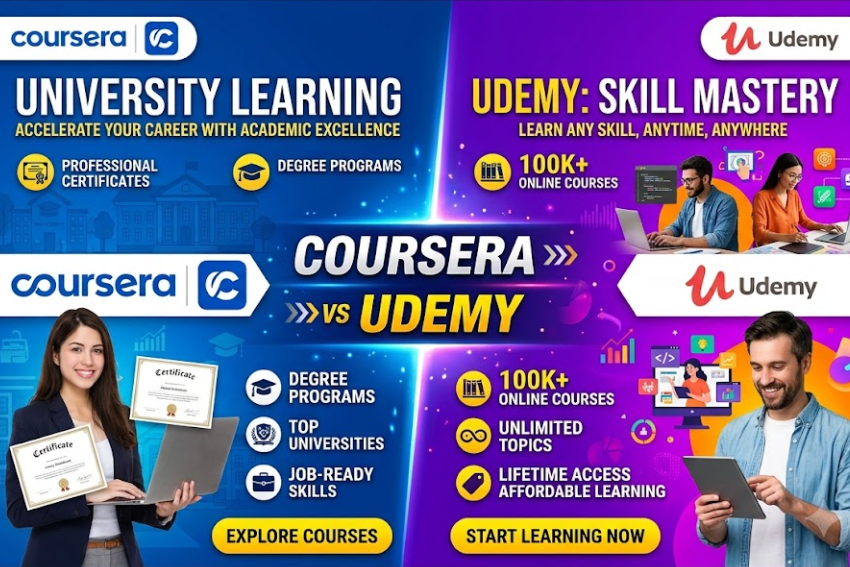
Coursera vs Udemy stands out as the ultimate comparison for anyone seeking to upgrade their skills online. Both platforms host millions of active learners, yet they operate on entirely different education models. Coursera collaborates with top global universities and Fortune 500 companies to deliver structured, academic-grade programs. Udemy acts as a massive open marketplace where experts, practitioners, and passionate instructors teach virtually any topic imaginable.
Choosing between these two elearning platforms comes down to your personal goals, budget, and learning style. Are you looking for an accredited credential from Yale to put on your resume? Or do you want a quick, hands-on tutorial to master Python or video editing over the weekend? This guide breaks down everything you need to know about Coursera vs Udemy so you can invest your time and money wisely.
Coursera vs Udemy at a Glance
| Feature | Coursera | Udemy |
|---|---|---|
| Primary Focus | Academic education, career certificates, degrees | Practical skills, hobbies, specialized tools |
| Instructors | University professors, industry leaders (Google, IBM) | Anyone with expertise (practitioners, freelancers) |
| Pricing Model | Subscriptions, per-course fees, degree tuition | One-time course purchases, personal subscription plan |
| Certificate Credibility | High (University & Enterprise accredited) | Low to Moderate (Certificate of completion) |
| Course Count | 10,000+ courses and specializations | 210,000+ courses |
| Content Quality Control | Strict academic and institutional vetting | Open marketplace with peer ratings and reviews |
| Access Duration | Monthly/annual subscription or course duration | Lifetime access for individual course purchases |
Course Library and Quality Control
Coursera: Structured Academic Quality
Coursera prioritizes quality over sheer volume. The platform partners with over 300 world-class universities and institutions, including Stanford, Duke, Google, and IBM. University faculty or corporate specialists design every course on Coursera.
Lessons follow traditional academic structures. You get structured syllabi, mandatory deadlines, peer-reviewed assignments, and academic quizzes. Coursera enforces strict vetting standards, ensuring that content remains rigorous, up-to-date, and authoritative.
Coursera organizes content into distinct tracks:
- Individual Courses: Single skill modules lasting 4 to 6 weeks.
- Specializations: Bundles of 3 to 6 courses focused on a specific career domain.
- Professional Certificates: Job-ready training programs designed by industry leaders like Meta and Google.
- Full Degrees: Accredited Bachelor’s and Master’s degrees from accredited universities.
Udemy: A Vast Marketplace for Practical Skills
Udemy operates as a broad educational marketplace. Anyone can create and publish a course on Udemy, which results in an enormous library of over 210,000 courses.
Because Udemy lacks a strict gatekeeping process, course quality varies significantly. You can find masterclasses from top software engineers alongside poorly produced lectures from beginners. However, this open model yields incredible diversity. You can find hyper-specific technical tutorials, obscure software guides, personal growth courses, and niche hobbies that traditional universities never touch.
Udemy relies on student ratings and reviews to filter quality. Popular courses on Udemy often feature hundreds of thousands of reviews, detailed video previews, and active instructor Q&A forums.
Pricing, Subscriptions, and Value for Money
Coursera Cost Breakdown
Coursera follows a flexible pricing model depending on your educational goals:
- Free Audit Option: You can audit almost any individual course on Coursera for free, giving you access to all video materials and readings without a certificate.
- Single Courses: Individual course certificates range from $49 to $99.
- Specializations & Certificates: These carry monthly subscription costs ranging between $39 and $79 per month until completion.
- Coursera Plus: Coursera offers an all-access pass for $59 per month or $399 per year, granting unlimited access to over 7,000 courses and certificates.
- Online Degrees: Full university degrees range from $9,000 to $50,000+.
Udemy Cost Breakdown
Udemy primarily operates on a pay-per-course model:
- Individual Purchases: List prices range from $19.99 to $199.99. However, Udemy runs massive discounts almost every week, dropping prices on top courses to $10 to $20.
- Lifetime Access: Purchasing an individual course grants lifetime access to all future updates and video materials.
- Udemy Personal Plan: Udemy provides a monthly subscription option at around $32 per month, giving access to a curated catalog of 26,000+ top-rated courses.
If you want single-skill topics and lifetime updates without monthly fees, Udemy offers exceptional value during sales. If you plan to complete multiple structured credentials, Coursera Plus offers better overall value.
Also Read – Best Free Education Sites for Students & Teachers
Certificates and Career Impact
Coursera Certificates Carry Resume Power
Coursera credentials hold significant weight with employers, recruiters, and hiring managers. Certificates display official logos from partner universities (like Duke or Imperial College London) or major corporations (like Google or IBM).
Coursera certificates validate real-world skills through rigorous testing, graded assignments, and hands-on capstone projects. You can easily attach Coursera certificates to your LinkedIn profile or resume to show concrete proof of professional development.
Udemy Certificates Validate Completion
Udemy provides a Certificate of Completion whenever you finish a course. However, these certificates lack third-party accreditation. Employers generally view Udemy certificates as proof of personal effort and initiative rather than verified academic qualification.
Udemy excels at skill acquisition rather than resume building. What you build using the knowledge from Udemy—such as a portfolio project, app, or website—holds far more value to an employer than the certificate itself.
Learning Experience and Platform Features
Coursera Learning Experience
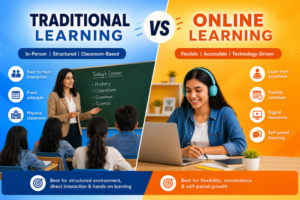
Coursera delivers a structured, classroom-like learning environment. You work through structured weekly modules, complete peer-graded essays, complete hands-on labs, and take timed quizzes. Coursera provides strict deadlines to keep you on track, though you can adjust schedules to fit your workload.
Coursera’s interactive platform features integrated coding environments, downloadable reading notes, subtitle options in dozens of languages, and high-definition video streaming.
Udemy Learning Experience
Udemy offers a flexible, self-paced learning environment. You consume content entirely on your schedule without deadlines, peer grading, or cohort pressure.
The player interface includes speed controls, auto-generated captions, bookmarking tools, and downloadable resource files. Udemy’s mobile app stands out for offline viewing, letting you download entire courses onto your device for offline learning on the go.
Coursera vs Udemy: Which Should You Choose?
Choose Coursera If:
- You want recognized credentials from accredited universities or corporate leaders.
- You are making a career pivot into data science, tech, or business administration.
- You prefer structured learning with defined deadlines, assignments, and academic rigor.
- You want to pursue a full online undergraduate or graduate degree.
Choose Udemy If:
- You want to learn a specific, practical skill quickly (e.g., learning a specific software tool).
- You prefer paying a low, one-time fee for lifetime access to course content.
- You want to learn non-academic topics, creative hobbies, or niche skills.
- You thrive in self-paced environments without rigid assignment deadlines.
Final Verdict
The battle between Coursera vs Udemy comes down to your ultimate goal.
Choose Coursera when you need structured, high-value credentials that boost your resume and open doors with corporate employers. Its university partnerships and rigorous standards ensure deep professional growth.
Choose Udemy when you need fast, affordable, practical knowledge to solve an immediate problem or build a hands-on project. Its vast library and frequent discounts make it the ultimate playground for lifelong learners.