

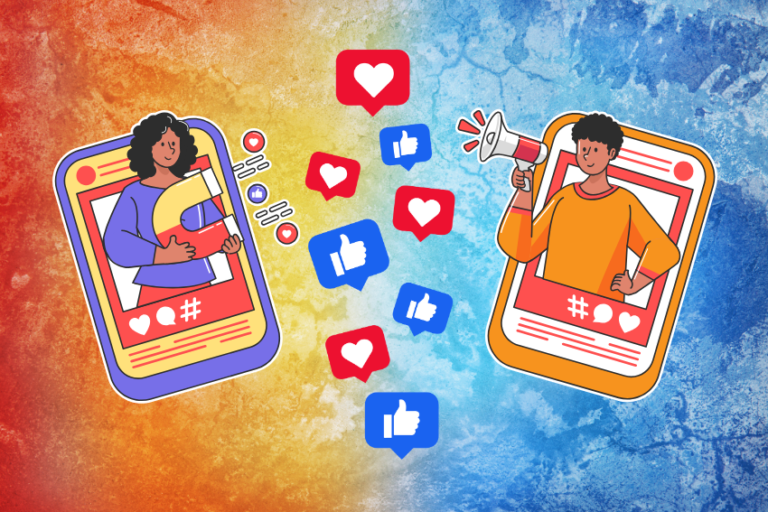




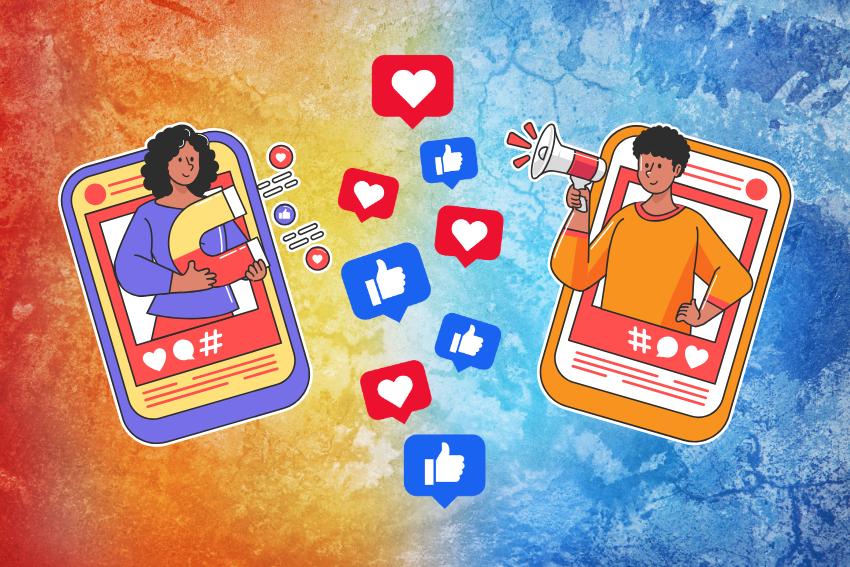
Organic vs paid social media remains the central debate for every digital marketer trying to build a dominant online presence. Years ago, you could post a catchy image on Facebook or Instagram, add a few hashtags, and watch thousands of potential customers discover your brand for free. Today, social media platforms operate on complex algorithm updates that prioritize paid advertisers and user retention over raw, unpromoted business posts.
This reality leaves business owners with a critical question: Should you invest time and creative energy into organic growth, or should you spend your budget on targeted ads? The short answer is that both channels serve entirely different purposes within your sales funnel. Choosing between them isn’t about finding a single winner. It is about understanding how to leverage both to build trust, attract qualified leads, and consistently generate sales.
What Is Organic Social Media?
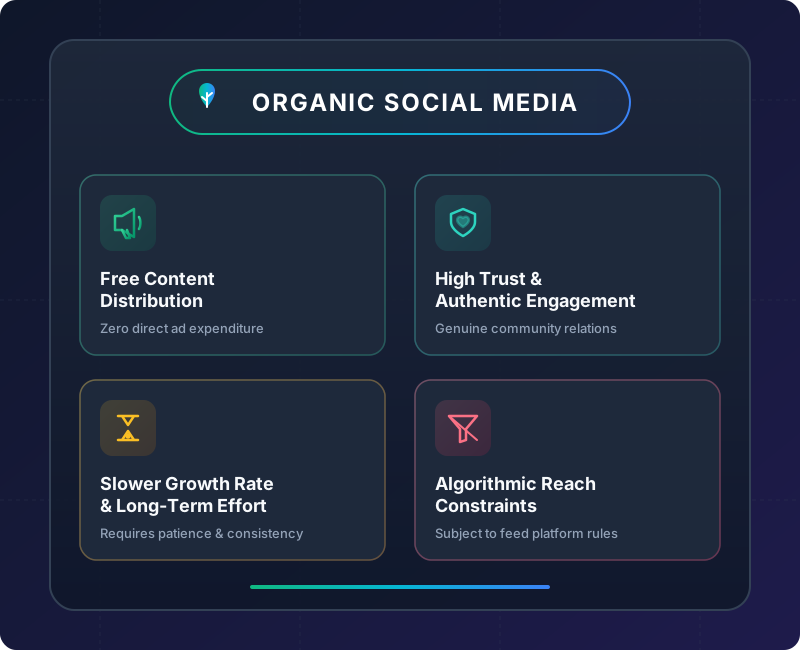
Organic social media refers to every free action you take on social platforms. This includes sharing text posts, photos, videos, stories, and carousels, as well as responding to comments and direct messages. When you post organically, you rely on the platform’s algorithm to distribute your content to your current followers and a small percentage of new users.
The core purpose of organic social media centers around brand personality and trust. It functions as the digital storefront of your business. When a potential buyer hears about your company, they often check your social profiles before visiting your website. A vivid, active organic channel proves that your business lives, breathes, and values its community.
Core Benefits of Organic Social
- Zero Direct Distribution Cost: Publishing content costs nothing, making it accessible for businesses at any stage.
- Authentic Community Connection: Direct interactions in comment sections foster genuine customer loyalty and feedback.
- Long-Term Brand Equity: Helpful, educational content positions your brand as an industry authority over time.
- Social Proof: Active profiles with regular engagement reassure potential buyers that your brand is credible.
Key Limitations of Organic Social
- Restricted Reach: Average organic reach on major platforms often hovers between 1% and 5% of your total follower count.
- Slow Results: Building a dedicated audience organically requires months or even years of consistent effort.
- Algorithm Dependence: Sudden platform algorithm shifts can instantly slash your visibility overnight.
What Is Paid Social Media?
Paid social media involves spending money to place sponsored content, native ads, or boosted posts directly in front of a targeted audience. Instead of waiting for users to discover your brand through search or shares, you buy direct placement in their news feeds, stories, or search results across platforms like Meta, LinkedIn, TikTok, and Pinterest.
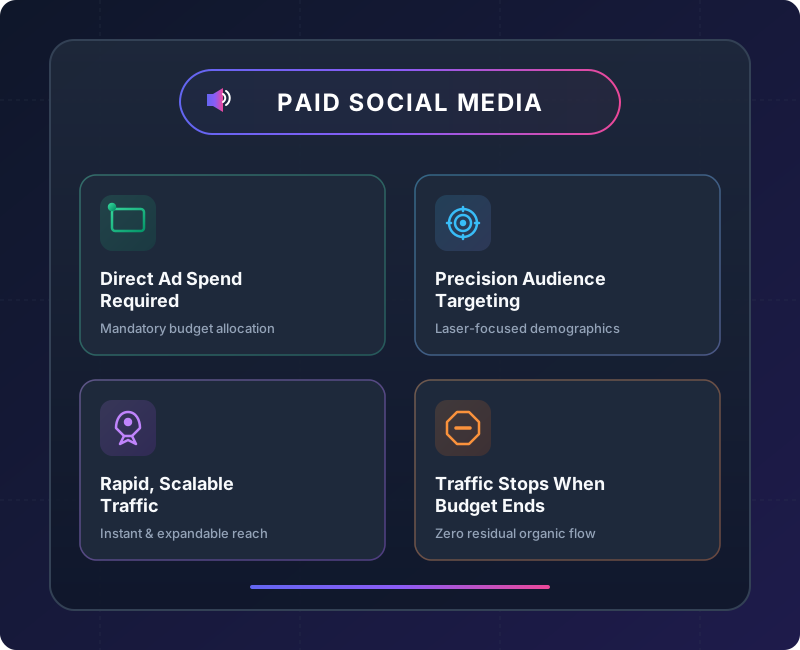
Paid social functions as an engine for rapid acquisition. Modern ad managers allow you to target users based on precise parameters, including age, geographic location, interests, job titles, online behaviors, and even lookalike profiles of your current top customers.
Core Benefits of Paid Social
- Instant Visibility: Your content hits the screens of thousands of potential buyers within minutes of campaign launch.
- Laser-Focused Targeting: You control exactly who sees your message based on rich demographic and behavioral data.
- Predictable Scaling: Increasing your ad budget translates directly to higher impressions, traffic, and sales opportunities.
- Advanced Retargeting: You can display specific ads to people who abandoned their shopping carts or visited key pages on your site.
Key Limitations of Paid Social
- Continuous Cost: As soon as you pause your ad budget, your traffic and lead flow drop to zero.
- Ad Fatigue: Users quickly tire of seeing the same promotional creatives, forcing you to design fresh ad variations regularly.
- Rising Costs: Ad auction prices increase constantly as more competitors bid for the same target audiences.
Organic vs Paid Social Media: The Direct Comparison
To build a clear strategy, you need to understand how these two methods compare across fundamental marketing metrics.
| Feature | Organic Social Media | Paid Social Media |
|---|---|---|
| Primary Goal | Build community, trust, and brand identity | Drive conversions, sales, and fast traffic |
| Upfront Cost | Free (excluding content creation costs) | Requires a dedicated advertising budget |
| Speed of Results | Slow, cumulative, long-term | Fast, instantaneous visibility |
| Audience Control | Limited to existing followers and algorithm picks | Complete control over demographic targeting |
| Content Lifespan | Long (posts remain on profile indefinitely) | Short (active only while campaign budget runs) |
| Trust Factor | High (perceived as genuine and unpaid) | Medium (users know it is a paid promotion) |
When Should You Choose Organic Social Media?
Organic social media shines best when your goal involves building long-term relationships rather than making quick, hard-sell pitches.
Nurturing Customer Relationships and Support
Modern consumers treat social media comment sections and direct messages like customer service hotlines. Answering questions quickly on organic posts shows prospective buyers that you care about their experience.
Establishing Authority and Expertise
Publishing deeply detailed tutorials, industry insights, and behind-the-scenes glimpses showcases your experience. This content builds credibility that paid ads simply cannot buy.
Testing Content Ideas Before Paying to Scale
Your organic channel serves as a low-risk test lab. Post different content ideas, hooks, and graphics for free. When an organic post gets an unusually high level of engagement, you know that concept resonates with your audience. You can then comfortably invest ad dollars behind that exact concept.
When Should You Choose Paid Social Media?
Paid social media is the proper lever to pull when speed, scale, and immediate revenue are top priorities.
Launching New Products or Time-Sensitive Offers
When launching a brand-new product line or hosting a flash sale, you cannot wait weeks for organic algorithms to slowly spread the word. Paid ads guarantee that thousands of people see your launch offer on day one.
Re-Engaging Warm Leads (Retargeting)
Most people who visit your website for the first time will leave without buying. Retargeting campaigns show customized ads to these past visitors, reminding them of items left in their cart or offering a limited-time discount to complete their purchase.
Expanding into Unfamiliar Markets
If you are expanding your service area or shipping products internationally, you likely have zero organic presence in those new regions. Paid campaigns allow you to bypass years of gradual brand building and immediately capture market share.
The Power of the Hybrid Model: How to Combine Both for Maximum ROI
The most successful brands do not view this choice as a binary battle. Instead, they use a hybrid approach that lets organic and paid efforts feed each other.
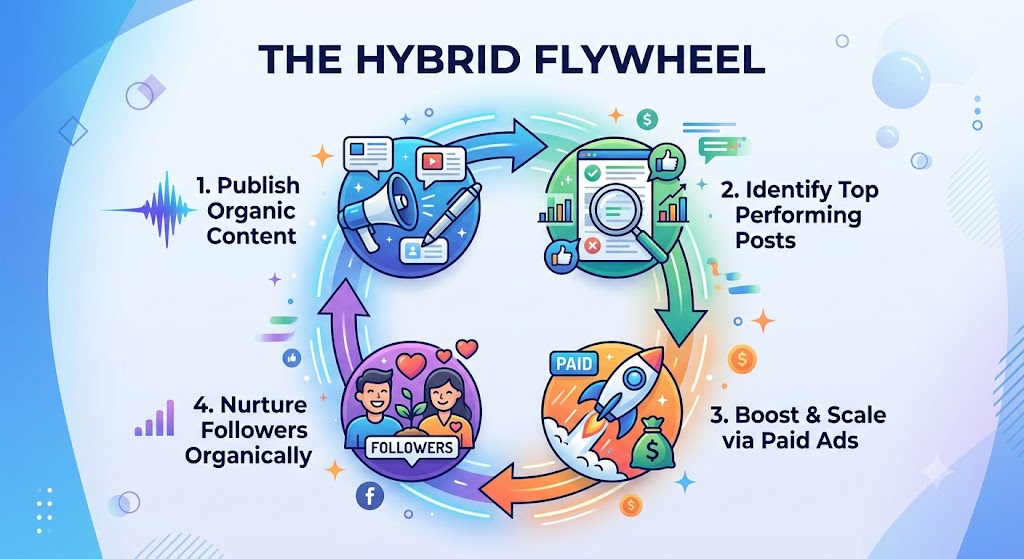
Here is a practical roadmap to implement a hybrid social media model:
- Use Organic Posts as Creative Testing Grounds: Share multiple posts weekly. Track metrics like saves, shares, and comment volume to identify clear winners.
- Amplify Top Organic Winners with Ad Spend: Take the top 5% performing organic posts and transform them into paid ad campaigns or boosted posts. You already know the message works, so ad dollars go much further.
- Capture Paid Traffic into Your Organic Ecosystem: When users click your paid ads, ensure your profile feed looks active, polished, and full of valuable organic posts. A strong profile converts one-off ad clickers into permanent social followers.
- Build Custom Audiences from Organic Engagement: Ad platforms let you show targeted ads specifically to users who engaged with your organic posts or videos over the past 90 days. These warm audiences yield significantly lower customer acquisition costs.
Future Trends: GEO, AEO, and AI Search Optimization
Social media optimization is no longer limited to human feeds. AI search engines, answer engines, and generative platforms increasingly scan social conversations to evaluate real-time brand reputation and answer user queries.
Generative Engine Optimization (GEO)
Generative AI tools collect facts, product reviews, and brand discussions from public social media profiles. When consumers ask AI engines for product recommendations, those engines prioritize brands with high organic social engagement and positive community feedback.
Answer Engine Optimization (AEO)
Modern buyers frequently bypass traditional search bars, choosing instead to ask AI voice assistants or answer engines direct questions like, “What is the difference between organic and paid social strategies?” Answer engines extract direct, authoritative summaries from clear content structures. Using clear headings, concise bullet points, and explicit definitions increases the chance that AI systems quote your brand directly in their answers.
Key Takeaways for Marketers
To build a sustainable social media strategy that delivers real ROI, keep these fundamental principles in mind:
- Organic builds the relationship; paid closes the sale. You need organic content to prove credibility and paid ads to drive predictable growth.
- Never run ads on an empty feed. Always maintain an active organic presence so paid visitors trust your business when they click through.
- Let data drive your ad spending. Boost only the organic posts that have already proved their performance with your real audience.
- Optimize content for both humans and AI engines. Use clear headings, direct answers, and structured formats to ensure both human readers and AI systems surface your content easily.
Conclusion
Winning on social media in today’s competitive digital landscape is rarely an either-or proposition. Organic social media remains the foundation of your brand identity, providing the authenticity, community trust, and customer service that convert casual visitors into loyal brand advocates. However, relying solely on organic reach means navigating restrictive platform algorithms and accepting slow, incremental growth.
Paid social media acts as the engine that accelerates your business goals. It provides the precision targeting, immediate visibility, and rapid scalability required to capture market share, promote launches, and drive revenue on demand. Yet, without a strong organic foundation to validate your credibility, paid traffic often suffers from lower conversion rates and inflated acquisition costs.
The most effective digital marketing strategy merges both approaches into a unified flywheel. By using organic channels to test creative ideas and nurture your audience, and paid campaigns to amplify proven content and capture warm leads, you maximize the impact of every dollar spent. Align your budget with your immediate objectives, leverage data to guide your decisions, and maintain a consistent presence across both paid and unpaid touchpoints to build a scalable, resilient growth model.