











Achieving financial stability starts with taking full control of your money instead of letting your money control your daily choices. Most people assume that building financial security requires an advanced finance degree, luck in the stock market, or a six-figure salary. In reality, real financial peace depends on simple, repeatable daily habits.
Financial stability does not mean you possess endless wealth. It means you have enough cash flow, savings, and assets to absorb life’s unexpected emergencies without falling into debt. You cover your essential bills comfortably, plan for future goals, and sleep soundly at night without worrying about your bank balance.
If you feel stuck in a paycheck-to-paycheck loop or want a clear roadmap to secure your household’s future, follow these seven actionable rules.
What Does Financial Stability Really Mean?
Before jumping into the core rules, you must define the end goal. Financial stability is a state of control, predictability, and resilience.
| Financial Instability | Financial Stability |
|---|---|
| Living paycheck to paycheck | Keeping a multi-month cash cushion |
| Relying on high-interest credit cards for emergencies | Paying cash for unexpected expenses |
| Having no clear record of monthly spending | Tracking cash flow with deliberate budgets |
| Reacting to financial shocks with panic | Managing risk through insurance and diversification |
Rule 1: Build a Cash Cushion Before You Touch Investments
Many people attempt to start investing in individual stocks or cryptocurrency before they possess a basic emergency fund. This path creates a fragile foundation. When an unexpected car repair, medical bill, or job interruption occurs, you face two bad options: sell your investments at an unfavorable time or take on high-interest credit card debt.
An emergency fund serves as shock absorber for your life.
How to Build Your Emergency Fund
- Calculate your baseline survival burn rate. Add up mandatory monthly bills including rent or mortgage, utilities, food, basic transport, and minimum debt payments. Ignore discretionary spending like dining out or streaming services.
- Target 3 to 6 months of expenses. Keep 3 months of cash if you have a stable job with low overhead. Target 6 months if you work on commission, run a business, or support multiple dependents.
- Store money in a High-Yield Savings Account (HYSA). Keep your emergency reserves separate from your primary checking account. Choose an FDIC-insured account that earns competitive interest while offering quick, penalty-free access.
Having liquid reserves eliminates money stress faster than almost any other financial move. Once you build this cash cushion, you gain the confidence to pursue long-term growth strategies without fear of short-term shocks.
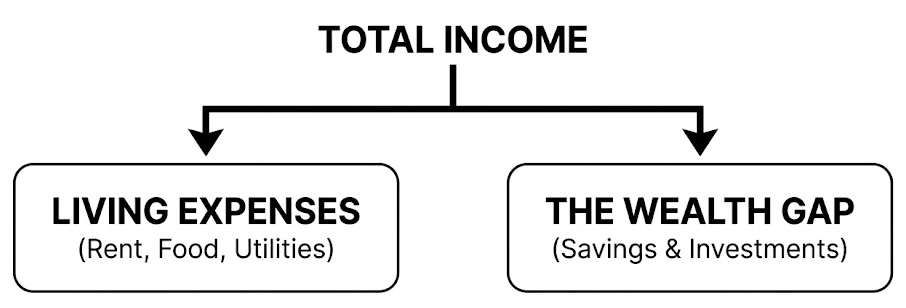
Rule 2: Master the Gap (Earn More Than You Spend)
The foundational equation of personal finance remains unchanged:
Wealth Accumulation = Income – Expenses
To achieve long term stability, you must intentionally maintain a wide gap between what you bring in and what you spend out.
Ditch Strict Budgets for Intentional Cash-Flow Tracking
Traditional budgeting fails because people create overly rigid rules that feel punitive. Instead of tracking every single penny, practice intentional cash-flow allocation.
- Use the 50/30/20 Framework. Allocate 50% of your take-home pay to true needs, 30% to wants, and 20% to debt paydown and wealth building.
- Identify lifestyle creep. When your earnings increase through raises or bonuses, direct at least half of that new income into savings and investments before upgrading your lifestyle.
- Cut spending aggressively on items you do not care about. Keep spending comfortably on things that truly bring you value, but eliminate hidden subscriptions, unread memberships, and impulsive small purchases.
Living beneath your means gives you leverage. It gives you the freedom to change careers, start businesses, or weather unexpected economic shifts without falling apart.
Rule 3: Eradicate High-Interest Debt Systematically
High-interest debt functions like reverse compound interest. It steals your future earning potential and transfers your wealth to financial institutions. If you carry credit card balances with annual percentage rates (APRs) above 7%, eliminating that debt offers a guaranteed return equal to that interest rate.
High-Interest Consumer Debt (15-30% APR) >> Destroys Cash Flow & Stifles Savings
Low-Interest Mortgage / Student Debt (<4% APR) >> Manageable Strategic Liabilities
Pick Your Debt Payoff Framework
Choose one of two proven methods and execute it without stopping:
- The Debt Avalanche (Best for Pure Math): List all debts by interest rate from highest to lowest. Pay minimums on everything, but throw every available extra dollar at the balance with the highest APR. This strategy saves you the maximum amount of money in interest fees.
- The Debt Snowball (Best for Psychology): List your balances from smallest dollar amount to largest dollar amount, regardless of interest rates. Pay off the smallest balance first to score quick psychological wins. Use that momentum to crush larger balances down the line.
Debt Destruction Roadmap
- Stop adding new balances to credit cards.
- Maintain minimum payments across all active accounts.
- Throw all surplus monthly cash at target account #1.
- Roll target #1’s payment into target #2 once target #1 reaches $0.
Never treat consumer credit card limits as extensions of your bank account. Pay your monthly balance in full every single statement cycle.
Rule 4: Automate Wealth Accumulation (Pay Yourself First)
Relying on daily willpower to save money guarantees inconsistency. You encounter too many daily buying opportunities, aggressive corporate marketing campaigns, and convenient spending triggers.
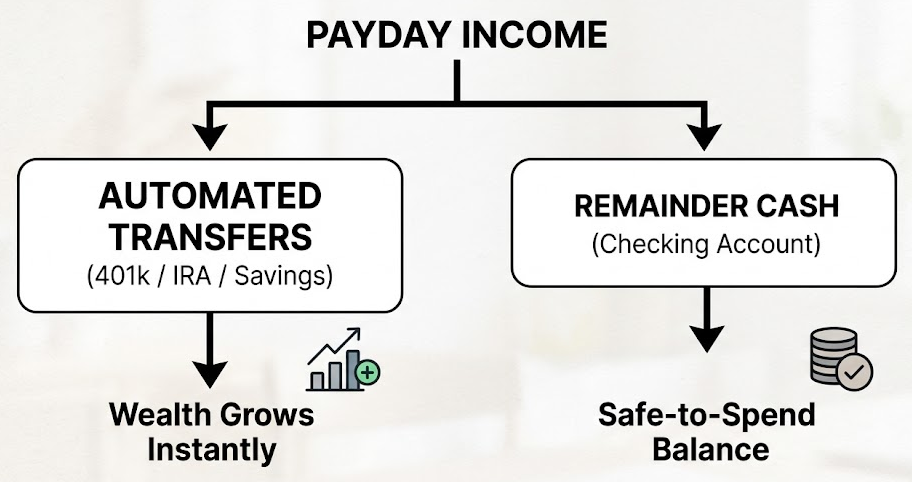
To build lasting security, automate your saving and investing so it happens before you spend your paycheck.
Setting Up Your Wealth Automation System
- Employer Retirement Accounts: Contribute enough to your employer 401(k) or 403(b) plan to collect 100% of any company match. That match is immediate, tax-advantaged income.
- Automated Bank Transfers: Schedule recurring transfers on payday that move money from checking directly into your High-Yield Savings Account and Roth IRA.
- Broad-Market Index Funds: Invest your long-term funds in low-cost, broad-market index funds (such as funds tracking the S&P 500 or Total Stock Market). These funds deliver reliable market-matching returns over decades with minimal annual fees.
When you treat your savings goal like an unskippable bill, you build wealth on autopilot without feeling deprived.
Rule 5: Protect Your Assets Against Sudden Catastrophes
Building a strong net worth means very little if a single lawsuit, health issue, or disability can destroy it overnight. Financial stability requires defensive risk management just as much as aggressive asset growth.
Essential Insurance Policies You Need
- Health Insurance: A single major medical emergency can cause sudden bankruptcy. Maintain comprehensive health coverage regardless of age or job status.
- Term Life Insurance: If anyone depends on your income, buy simple, low-cost term life insurance equal to 10–12 times your annual income. Skip expensive, low-yield whole life or permanent policies unless you run specialized estate planning structures.
- Disability Insurance: Your ability to earn an income is your most valuable financial asset. Long term disability coverage protects that earning potential if an illness or accident leaves you unable to work.
- Umbrella Liability Insurance: Once your net worth reaches significant levels, add an inexpensive personal umbrella policy over your auto and home coverage to protect your savings against major legal judgments.
Rule 6: Expand Earning Capacity Continuously
Cutting costs helps you survive, but increasing your income builds substantial wealth. Frugality has a natural floor because your expenses can never fall below zero. However, your earning capacity has no ceiling.
Frugality Limit >> [$0 Minimal Monthly Expenses]
Income Growth >> [Uncapped Potential Upside]
Strategic Ways to Increase Your Income
- Upgrade High-Value Skills: Focus on learning technical, strategic, or managerial skills that markets value highly. Master data analysis, project management, software systems, or sales leadership.
- Negotiate Pay Regularly: Research industry standards for your position every 12 to 18 months. Present clear metrics showing your contributions to company growth when asking for raises.
- Explore Strategic Job Changes: Staying with the same company long term often results in standard 3% annual cost-of-living raises. Changing employers strategically every few years often nets 15% to 30% salary increases.
- Build Side Income Streams: Offer specialized freelance consulting, create digital resources, or monetize unique domain knowledge outside of your primary work hours.
Reinvest a meaningful percentage of your surplus earnings directly into cash-flowing assets to compound your progress over time.
Rule 7: Audit and Rebalance Your Finances Annually
Financial planning is not a one-time project. Your career shifts, your family responsibilities change, and markets cycle through up and down phases. Schedule a yearly financial audit to keep your money aligned with your actual life goals.
Your Annual Financial Checklist
- Calculate Your Net Worth: Subtract your total liabilities (debts) from your total assets (cash, investments, home equity). Track this number yearly to confirm your wealth is moving forward.
- Review Asset Allocation: If stock gains made your portfolio heavy in one sector, rebalance your holdings back to your target asset mix.
- Cancel Forgotten Recurring Costs: Look over twelve months of bank and credit statements. Cancel unused software, gym memberships, and service subscriptions.
- Update Beneficiaries and Estate Documents: Ensure your retirement accounts, insurance policies, and wills list the correct beneficiaries after major life changes like marriage, births, or divorces.
- Adjust Savings Targets for Inflation: Raise your automated savings contributions each year to match inflation rates and keep up with your career progress.
Essential Metrics for Financial Tracking
To evaluate your progress toward stable finances, keep a close watch on these key indicators:
| Metric | Formula | Ideal Target |
|---|---|---|
| Emergency Reserve | Savings / Monthly Expenses | 3 to 6 Months |
| Savings Rate | (Saved Cash / Gross Income) * 100 | 15% to 20%+ |
| Debt-to-Income (DTI) | Monthly Debt / Gross Income | Below 36% (0% for consumer debt) |
| Net Worth Growth | Current Assets – Total Debts | Positive trend line year-over-year |
Action Plan: Steps You Can Take Today
Getting back on track financially can feel overwhelming, but you can build momentum with small, steady steps. Follow this sequence to transform your financial life over the next 90 days:
Days 1 to 30: Establish Clarity & Security
- Open a high-yield savings account dedicated solely to emergency funds.
- Calculate your monthly survival baseline to figure out your target cash balance.
- Pull your credit reports and check for errors or fraudulent activity.
Days 31 to 60: Stop the Drain & Automate
- List all outstanding debts by interest rate and set up your payment strategy.
- Enroll in your employer’s 401(k) program to capture any available matching funds.
- Set up automated recurring transfers on payday to move money into savings.
Days 61 to 90: Build Long-Term Momentum
- Establish a Roth IRA or taxable brokerage account to buy low-cost index funds.
- Review your insurance coverage to eliminate gaps in term life or disability policies.
- Identify one core workplace skill to develop over the next six months to boost your earning power.
Final Thoughts
Achieving true financial stability requires consistency, not perfection. You will make mistakes along the way, encounter unexpected expenses, and deal with economic shifts you cannot control. The goal is to build a resilient personal finance system that absorbs life’s challenges without knocking you off track.
Focus on mastering one rule at a time. Secure your emergency reserve, eliminate high-interest debt, automate your investments, and build your earning potential. As these habits take root, financial anxiety gives way to confidence, independence, and long-term peace of mind.