






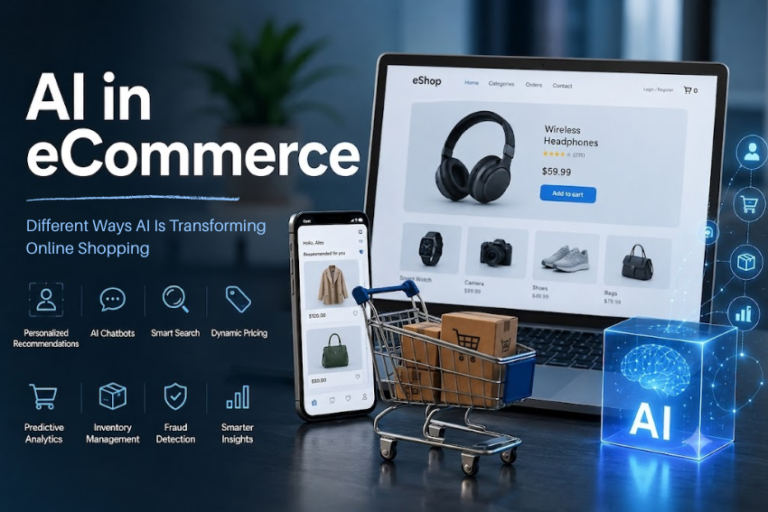



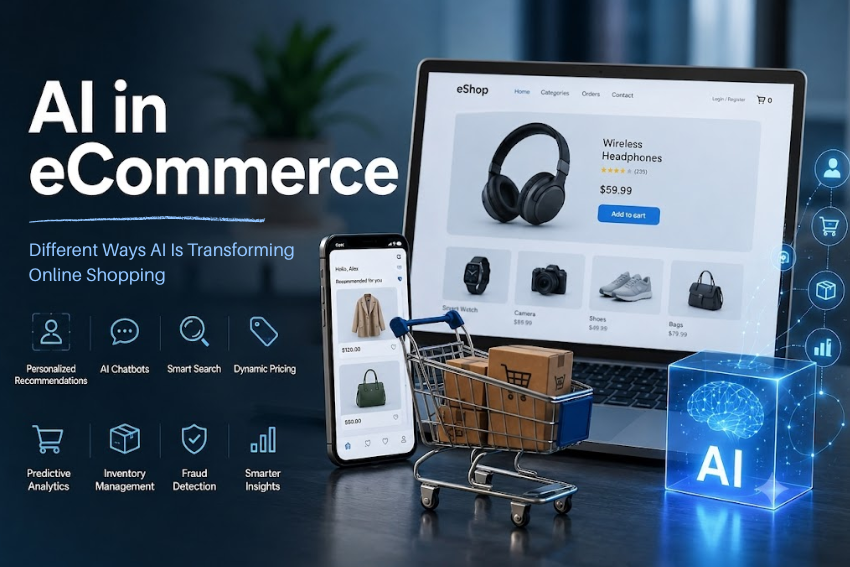
AI in eCommerce is revolutionizing how brands interact with shoppers, optimize backend logistics, and boost online conversions. Modern online stores no longer rely on static catalogs or generic promotion banners. Instead, machine learning algorithms analyze buyer behavior in real time to create personalized experiences that convert casual browsers into loyal customers.
As digital retail grows more competitive, adopting artificial intelligence has transitioned from a nice-to-have upgrade to an essential operational necessity. Retailers who integrate smart algorithms into their workflows increase average order values, cut supply chain costs, and improve customer retention rates. Here are fifteen practical ways artificial intelligence is actively changing online shopping today.
15 Ways AI Is Transforming eCommerce
Discover how AI in eCommerce is transforming online shopping with powerful ways boosting sales, personalization, and customer experiences.
Hyper-Personalized Product Recommendations
Traditional recommendation widgets rely on basic rules, such as showing items from the same category. Modern machine learning models track every touchpoint on your storefront, including click histories, scroll speeds, item dwell times, and past purchases.
By processing these behavioral signals instantly, the platform builds custom product feeds for individual visitors. If a customer browses running shoes during wet weather seasons, the algorithm prioritizes waterproof footwear and moisture-wicking socks over standard trainers. This tailored approach boosts cross-selling success and elevates the overall average order value.
Smarter Site Search with Natural Language Processing
Standard keyword search engines often fail when customers use descriptive phrases or make typos. Natural Language Processing (NLP) enables search bars to comprehend human intent rather than matching literal letters.
When a user searches for “lightweight red jacket for rainy spring mornings,” vector search engines analyze the intent behind the query. The algorithm matches water-resistant light coats in red, ignoring heavy winter parkas or unrelated red accessories. Correcting typos automatically and understanding contextual intent drastically reduces search abandonment rates.
Visual Search and Camera-Based Discovery
Many online shoppers struggle to describe a specific product design using text alone. Computer vision technology allows users to upload a photo, screenshot, or social media image directly into the search bar.
The underlying model breaks the image down into visual markers like pattern, texture, color, and silhouette. It scans your inventory to find exact matches or visually similar alternatives within seconds. This capability bridges the gap between offline inspiration and online purchasing, helping consumers source items they see in everyday life.
Generative AI Shopping Assistants
Static FAQ pages and basic scripted bots often frustrate shoppers who have complex product questions. Generative AI shopping assistants act like knowledgeable in-store sales associates, answering complex queries in natural language.
A shopper planning a weekend camping trip can ask the assistant to recommend a complete gear setup tailored to sub-zero temperatures. The AI reads product manuals, customer reviews, and spec sheets to deliver a curated kit list with direct checkout links.
Shopper: “I need a durable backpack for a 3-day rainy hike under $150.”
AI Assistant: Evaluates inventory specs, weather ratings, and prices -> Delivers top 3 matching options with highlighted pros and cons.
Real-Time Dynamic Pricing Strategies
Setting fixed product prices limits your revenue potential in fast-moving digital marketplaces. Dynamic pricing algorithms monitor shifts in market demand, competitor pricing adjustments, inventory levels, and customer location data.
When a competitor sells out of a popular item, your store can automatically raise prices slightly to capture higher profit margins without losing sales velocity. Conversely, if seasonal stock moves too slowly, the system applies targeted discounts to clear shelf space before items become obsolete.
Predictive Inventory and Demand Forecasting
Overstocking eats up capital in warehouse storage fees, while stockouts lead directly to lost revenue and unhappy customers. Machine learning models analyze historical sales cycles, macro-economic conditions, localized weather patterns, and social media trends to predict demand.
Store managers receive automated alerts detailing exactly when and how much stock to reorder. This automated inventory balancing ensures popular products stay in stock while minimizing waste from unsold goods.
Automated Fraud Detection and Prevention
E-commerce businesses face constant threats from chargebacks, account takeovers, and fraudulent transactions. Manual fraud reviews create operational bottlenecks that delay order fulfillment.
Machine learning models screen transactions in milliseconds by analyzing hundreds of signals, including device fingerprints, IP locations, buying habits, and velocity metrics. The system flags high-risk orders automatically while allowing legitimate customers to check out seamlessly without unnecessary security friction.
Virtual Try-Ons and Augmented Reality
High return rates present a costly challenge for online apparel and home decor brands. Computer vision paired with augmented reality (AR) gives shoppers a realistic preview of products before they buy.
Virtual try-on tools map clothes onto a user’s smartphone photo or live video feed, accounting for body proportions and fabric drape. Similarly, furniture retailers let customers place 3D product models into their living spaces using phone cameras. Providing accurate previews increases purchasing confidence and slashes product return rates.
AI-Driven Customer Support and Chatbots
Modern conversational platforms handle routine post-purchase inquiries, such as tracking order updates, initiating returns, or updating shipping addresses, without human intervention.
These platforms operate 24/7 across multiple communication channels, including web chat, SMS, and messaging apps. By automating standard resolution flows, support teams reduce ticket backlogs, lower operational expenses, and give human agents time to focus on complex service cases.
Automated Product Description and Content Creation
Managing thousands of Stock Keeping Units (SKUs) requires immense content creation effort. Generative AI tools draft search-optimized product titles, detailed descriptions, and social captions from raw spec tables.
Retailers enter product specifications into the system, which generates engaging, brand-consistent copy optimized for organic search engines. Brands can create unique descriptions for huge product catalogs in hours rather than weeks, speeding up launch timelines for new inventory.
Predictive Customer Churn Analysis
Retaining existing customers costs significantly less than acquiring new ones. Predictive analytics tools monitor buyer engagement indicators, such as decreasing login frequencies, unclicked emails, or longer gaps between purchases.
When the system detects a customer at risk of churning, it triggers automated retention campaigns. The platform sends personalized win-back emails containing special discounts on previously viewed products, re-engaging buyers before they switch to a competitor.
Optimized Supply Chain Logistics
Delivering orders on time requires efficient warehouse routing and smart shipping choices. Logistics algorithms evaluate real-time traffic conditions, courier shipping rates, and warehouse package locations to streamline fulfillment.
Within warehouses, autonomous robots guided by vision models pull items off shelves via optimized picking paths. On the delivery side, routing algorithms assign shipments to regional fulfillment centers closest to the end consumer, cutting shipping transit times and fuel costs.
Voice Commerce and Smart Home Integration
As smart speakers and voice assistants become ubiquitous in modern homes, voice shopping continues to expand. Voice commerce software converts spoken phrases into accurate platform commands.
Shoppers reorder household staples simply by stating, “Order more laundry detergent.” The system cross-references past buying histories to select the customer’s preferred brand and processes the order through saved payment credentials, offering an effortless shopping experience.
Automated Review Summaries and Sentiment Analysis
Popular products often collect hundreds or thousands of customer reviews, making it hard for prospective buyers to read through them all. AI tools scan customer feedback to generate concise sentiment summaries.
These summaries highlight recurring comments regarding product sizing, material durability, and usability directly at the top of the review section. Furthermore, sentiment analysis alerts brand managers when multiple reviews cite the same product defect, enabling fast quality control responses.
Hyper-Targeted Marketing and Ad Creation
Marketing campaigns deliver maximum return on ad spend when messages align with consumer preferences. Algorithms segment customer databases into granular micro-audiences based on browsing habits, lifetime value, and brand interactions.
Automated ad generators then produce custom ad creative, headlines, and call-to-action buttons for each specific audience segment. The system tests variations continuously, shifting budget toward top-performing ad designs to maximize conversion rates.
Key Benefits of AI Integration in E-Commerce
Implementing smart automation across your digital storefront yields measurable performance improvements:
| Core Operational Area | Primary Impact | Measurable Benefit |
| Product Discovery | Intelligent search and custom recommendations | Higher conversion rates and larger basket sizes |
| Customer Support | Instant, 24/7 automated inquiry resolutions | Lower support ticket costs and faster resolutions |
| Inventory Control | Demand forecasting and dynamic reordering | Fewer stockouts and lower holding expenses |
| Order Security | Real-time payment screening and risk scoring | Lower chargeback rates and reduced fraud losses |
The Bottom Line
AI in eCommerce is no longer experimental. It’s operational, it’s scalable, and it’s delivering measurable results. From personalized recommendations to autonomous shopping agents, AI is transforming every stage of the customer journey.
The retailers who embrace these technologies now will be the ones leading the market tomorrow. The data is clear—consumers are ready, the technology is mature, and the competitive advantage is substantial.
Whether you’re a small business owner or a retail executive, the question isn’t whether to adopt AI in eCommerce. It’s how quickly you can implement it.