








If you want to stop living paycheck to paycheck, you have to start by acknowledging a hard truth: it is not always about how much you make. In fact, roughly two-thirds of American consumers continue to live paycheck to paycheck in early 2026, with little sustained improvement. Even more striking, the share of people living this way out of necessity has spiked to about 42%, meaning more households report they are on the financial edge than ever before. This is not just a problem for low-income earners. As we earn more, we subconsciously raise our standard of living until we are back in the same trap, regardless of income level.
The good news is that breaking free is entirely possible. You do not need a windfall or a miracle. You need a plan. This guide provides a realistic, step-by-step roadmap to help you stop living paycheck to paycheck, build a buffer, and finally gain control of your financial future.
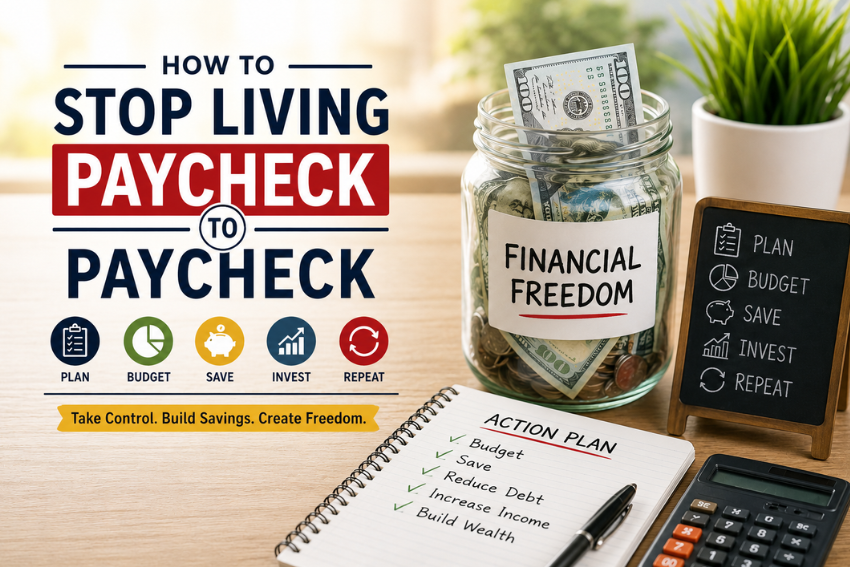
6 Steps to Stop Living Paycheck to Paycheck
Here is a breakdown of the six practical steps to stop living paycheck to paycheck, each one designed to build momentum and create lasting change.
Step 1: Find Your Real Cash Flow Gap
You cannot fix what you do not measure. The first and most critical step to stop living paycheck to paycheck is to understand exactly where your money goes. Most people living paycheck to paycheck have some spending that could be reduced, not necessarily dramatically, but enough to free up $50 to $200 per month.
How to do it:
- Track every dollar for one month. This is the gold standard. Write down every coffee, subscription, and grocery run. You might be surprised to find that those small, daily purchases add up to a significant sum.
- Review your bank and credit card statements. Look for patterns. Are you spending more on dining out than you realized? Are there subscriptions you forgot you had?
- Identify your “money leaks.” These are the recurring, often invisible expenses that drain your account. According to financial experts, it is often the quiet, invisible ones—like the 25% “reward points” you pay for on your credit card—that sink you.
Once you have a clear picture, you can find the gap between your income and your expenses. This gap is your starting point for change.
Step 2: Create a Budget That Actually Works for You
Many people hear the word “budget” and think of restriction and deprivation. But a budget is simply a spending plan. It is a tool that tells your money where to go, instead of wondering where it went.
Forget the complicated spreadsheets. If money is tight, a detailed budgeting app can feel overwhelming. Instead, try a simpler approach.
- The 70/10/10/10 Rule: This formula can be a game-changer. Allocate 70% of your income for living expenses, 10% for savings, 10% for investments, and 10% for guilt-free spending. This structure ensures that saving is not an afterthought but a mandatory part of your financial plan.
- The 50/30/20 Rule: Another classic approach is to spend 50% of your income on needs (rent, groceries, utilities), 30% on wants, and 20% on savings and debt repayment.
The key is to pick a system and stick with it. A budget is not about punishing yourself; it is about empowering yourself to make conscious choices with your money.
Step 3: Close the Three Biggest Budget Leaks
Once you have a budget, it is time to plug the holes. These are the areas where your money is quietly leaking away.
- The “Convenience” Trap
Suze Orman, a renowned personal finance expert, advises people to ditch the “convenience” buys. This includes daily coffee runs, frequent takeout, and convenience store snacks. These small purchases might seem insignificant, but they can easily eat up hundreds of dollars a month.
The Fix: Challenge yourself to make coffee at home for a month. Plan your meals and cook in bulk. You will be amazed at how much you save.
- Rarely Used Subscriptions
Streaming services, gym memberships, and app subscriptions can add up quickly. How many of them do you actually use?
The Fix: Cancel anything you do not use regularly. This is a quick and painless way to free up cash.
- High-Interest Debt
Credit card debt is one of the biggest obstacles to financial freedom. The interest charges alone can keep you trapped in the cycle.
The Fix: Tackle high-interest debt fast. Focus on the balance with the highest interest rate first, attack it aggressively, and make minimum payments on the rest. This is known as the avalanche method and it will save you the most money in the long run.
Step 4: Boost Your Income, Even Slightly
Sometimes, cutting expenses is not enough. If you have trimmed your budget to the bone and still cannot get ahead, it is time to focus on the other side of the equation: your income.
According to financial educator Bernadette Joy, the fastest way out of the paycheck-to-paycheck trap is to create a cash flow cushion. This means finding ways to bring in more money.
Ways to increase your income:
- Ask for a raise. If you have been in your role for a while and consistently perform well, it might be time to negotiate.
- Start a side gig. In 2026, companies prefer freelancers. Skills like design, video editing, writing, and social media management are in high demand. You can do this after work or on weekends.
- Sell unused items. Look around your house. Is there anything you no longer need that could be sold online?
- Reduce your tax refund. Use a W-4 calculator to adjust your withholding. This puts more money in your paycheck throughout the year instead of giving the government an interest-free loan.
Even an extra $100 to $200 a month can make a significant difference. Most people can find between $200 and $500 per month in unnecessary spending or by boosting their income. Reallocating that money can help break the cycle.
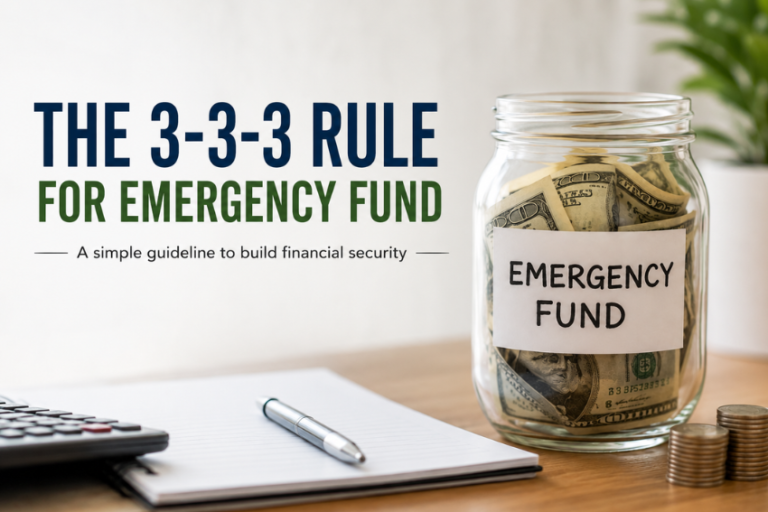
Step 5: Build a $1,000 Emergency Buffer
Without an emergency fund, any unexpected expense—a car repair, a medical bill, or a job loss—will send you right back to square one. This is why building a financial safety net is so crucial.
The idea of saving three to six months of expenses can feel daunting when you are living paycheck to paycheck. So do not start there. Start small.
Here is a realistic plan:
- Set a micro-goal: Aim to save a $1,000 buffer. This is a manageable and achievable first step.
- Automate your savings: Set up an automatic transfer from your checking account to a separate savings account on payday. Even if it is just $20 or $50 per paycheck, the consistency builds a financial habit. This is what financial coach Michael Foguth calls “giving money a purpose on payday”.
- Use a high-yield savings account: Keep your emergency fund in a separate, high-yield savings account so it is not too easy to access and it earns a bit of interest.
- Bank windfalls: If you get a tax refund, a bonus, or a gift, split it in half. Put one half into your emergency fund and use the other half to pay down debt.
Step 6: Shift Your Mindset from Survival to Growth
Perhaps the most important step to stop living paycheck to paycheck is a mental one. You have to shift your identity from a victim of your circumstances to the architect of your future.
- Freeze lifestyle creep: As your income increases, resist the urge to immediately upgrade your lifestyle. Instead, direct that extra money toward your savings and debt.
- Live below your means: This is the cornerstone of financial independence. It is not about being cheap; it is about being intentional.
- Make yourself a priority: Suze Orman advises people to “make yourself your No. 1 financial priority”. This means paying yourself first (through savings) before you pay anyone else.
Breaking the paycheck-to-paycheck cycle is about more than just your bank account balance. It is about gaining peace of mind, reducing stress, and creating a life where money is a tool, not a source of anxiety.
Your Action Plan for Today
You do not have to do everything at once. Change is a process. Here is your action plan to get started today:
- This week: Track every single expense. Write it down or use a notes app on your phone.
- Next week: Review your spending and identify one budget leak to plug. Cancel that unused subscription or commit to making coffee at home.
- By the end of the month: Set up an automatic transfer of $20 to a savings account on your next payday.
- Ongoing: Revisit your budget monthly. As your financial situation improves, adjust your plan.
Conclusion: Your Financial Freedom Starts Now
Living paycheck to paycheck is a stressful and exhausting way to live. But it does not have to be your permanent reality. By understanding your cash flow, creating a realistic budget, cutting unnecessary expenses, boosting your income, and building an emergency fund, you can break the cycle for good.
Remember, the journey to financial freedom is a marathon, not a sprint. Start with one small step today. The peace of mind and security you will gain are well worth the effort. You have the power to stop living paycheck to paycheck and start building the life you deserve.