







Retrieval-Augmented Generation (RAG) is transforming how artificial intelligence systems access, use, and deliver knowledge by combining large language models with real‑time information retrieval. Instead of relying only on pre‑trained data, RAG allows AI to pull verified, external content at the moment of response, resulting in answers that are more accurate, relevant, and trustworthy.
This article explores Retrieval-Augmented Generation in depth. You will learn how it works, why it matters, how it differs from traditional AI approaches, real‑world use cases, technical components, benefits, challenges, and future potential. Whether you are a business leader, developer, or product strategist, this guide gives you a practical, easy‑to‑understand perspective on RAG.
What is Retrieval-Augmented Generation (RAG)?
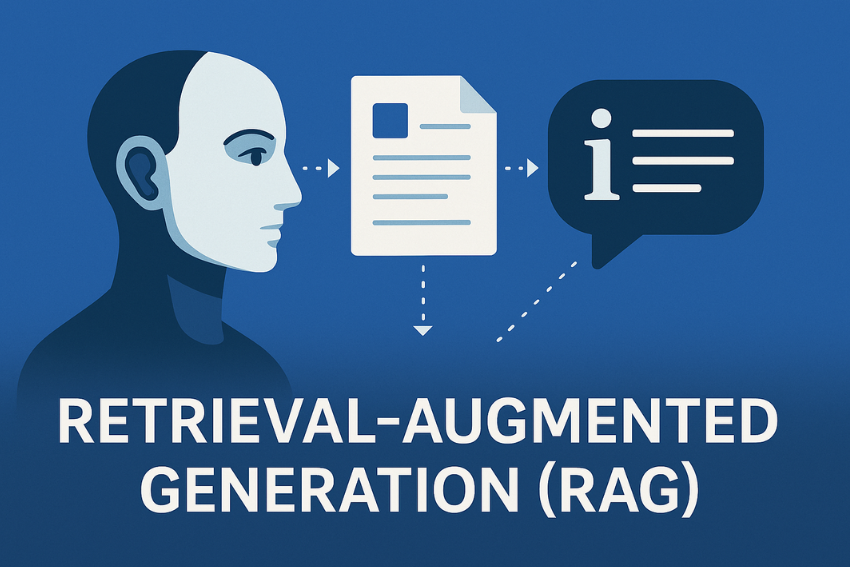
Retrieval-Augmented Generation (RAG) is an AI architecture that enhances large language models by connecting them to an external knowledge source. Instead of generating answers solely from model memory, RAG retrieves relevant documents or data in real time and uses that information to produce accurate responses.
In simpler terms, RAG allows AI to look things up before answering.
Traditional language models rely on training data that becomes outdated. RAG systems overcome this limitation by dynamically retrieving knowledge from databases, documents, APIs, or knowledge bases at query time.
Core Concept Explained Simply
At a high level, a retrieval-augmented generation (RAG) system works like this:
- A user asks a question
- The system retrieves relevant content from trusted sources
- The language model uses that content to generate a response
- The output reflects both language fluency and factual accuracy
This approach significantly reduces hallucinations and improves confidence in AI‑generated answers.
Why Retrieval-Augmented Generation Matters Today
AI adoption continues to grow across industries, but trust remains a major concern. Users expect answers that are accurate, timely, and grounded in reality. RAG addresses these expectations in several powerful ways.
The Limitations of Traditional Language Models
Standard language models face several constraints:
- They rely on static training data
- They lack awareness of recent events
- They struggle with domain‑specific information
- They may generate confident but incorrect answers
These limitations create risk, especially in industries like healthcare, finance, legal services, and enterprise knowledge management.
How RAG Changes the AI Value Equation
Retrieval-Augmented Generation introduces a shift from memory‑based responses to evidence‑based responses. This change delivers:
- Higher factual accuracy
- Improved relevance to user queries
- Better compliance with regulations
- Increased user trust
For organizations, RAG unlocks safer and more practical AI deployment.
How Retrieval-Augmented Generation Works Step by Step
Understanding the workflow behind RAG helps demystify its power. While implementations vary, the underlying process remains consistent.
Step 1: User Query Processing
The system receives a query from a user. This could be a question, request, or prompt.
Step 2: Retrieval Phase
Instead of sending the query directly to the language model, the system first searches a knowledge source such as:
- Vector databases
- Document repositories
- Internal company wikis
- Structured datasets
The retrieval mechanism identifies the most relevant entries using semantic similarity rather than keyword matching.
Step 3: Context Injection
The retrieved information becomes context for the language model. This data joins the original query before generation begins.
Step 4: Generation Phase
The language model produces an answer using both its learned language patterns and the retrieved content.
Step 5: Final Output
The user receives a response that reflects current, grounded, and contextually relevant information.
Key Components of a Retrieval-Augmented Generation (RAG) System
A Retrieval-Augmented Generation system consists of multiple technical components working together seamlessly.
Knowledge Source
This is where factual content lives. Common sources include:
- PDFs and documentation
- Databases and spreadsheets
- Knowledge bases
- Cloud storage systems
Quality matters. Clean, structured data improves retrieval accuracy.
Embedding Model
Embedding models convert text into numerical representations. These embeddings allow systems to measure semantic similarity between queries and documents.
Vector Database
Vector databases store embeddings and allow fast similarity searches. They enable the retrieval engine to find the most relevant content efficiently.
Retriever
The retriever determines which documents best match the user query. It prioritizes relevance, not keyword overlap.
Generator Model
This is the language model responsible for producing the final response. It blends retrieved facts with natural language generation.
RAG vs Traditional Language Models
Understanding the difference between RAG and conventional AI models highlights why RAG has become essential.
Traditional Language Models
- Rely on training data only
- Cannot verify facts
- Do not access external sources
- Risk hallucinations
Retrieval-Augmented Generation Models
- Retrieve real‑time information
- Ground responses in evidence
- Adapt to evolving data
- Reduce incorrect responses
RAG represents a move from static intelligence to adaptive intelligence.
Real World Use Cases of Retrieval-Augmented Generation
RAG works best in scenarios where accuracy and context matter most.
Enterprise Knowledge Management
Employees waste time searching for internal information. RAG enables AI assistants to pull answers from company documents instantly.
Customer Support and Chatbots
Support bots powered by RAG can access product manuals, policies, and FAQs to deliver precise, consistent answers.
Healthcare and Life Sciences
Doctors and researchers use RAG systems to access updated medical literature, clinical guidelines, and structured patient data safely.
Legal and Compliance Tools
RAG helps legal professionals retrieve case law, regulations, and internal policies while maintaining answer traceability.
Financial Services
Banks and analysts use RAG to interpret regulations, analyze reports, and respond to client inquiries with verified information.
Benefits of Using Retrieval-Augmented Generation
RAG offers clear advantages for both businesses and end users.
- Improved Accuracy: Responses rely on factual sources rather than probability alone.
- Reduced Hallucinations: By grounding outputs in retrieved content, RAG minimizes fabricated information.
- Context Awareness: RAG systems understand domain‑specific language and internal terminology.
- Real Time Knowledge Access: Information updates without retraining entire models.
- Greater Trust and Transparency: Users gain confidence knowing replies depending on verifiable sources.
Challenges and Limitations of RAG
While powerful, RAG is not without challenges.
- Data Quality Issues: Poorly curated content leads to weak retrieval and inaccurate outputs.
- Latency Concerns: Retrieval steps increase response time if not optimized.
- Security and Access Control: Sensitive data requires strict permissions and filtering.
- Cost Considerations: Vector storage and retrieval infrastructure add operational cost.
Despite these challenges, thoughtful system design helps mitigate most limitations.
Best Practices for Implementing RAG Successfully
Organizations can maximize value by following proven strategies.
- Start with high‑quality, structured data
- Define clear retrieval boundaries
- Use relevance scoring and filtering
- Monitor outputs continuously
- Regularly data clean and update knowledge sources
RAG works best when treated as a system, not just a model.
The Future of Retrieval-Augmented Generation
RAG represents a foundational shift in AI architecture.
Future developments will likely include:
- Deeper personalization
- Multimodal retrieval using text, images, and audio
- Better reasoning over retrieved data
- More transparent citation mechanisms
As AI evolves, Retrieval-Augmented Generation will play a central role in building responsible, enterprise‑ready intelligence.
Final Thoughts on Retrieval-Augmented Generation (RAG)
Retrieval-Augmented Generation (RAG) redefines how AI systems reason, respond, and remain relevant. By combining the strengths of language models with live knowledge retrieval, RAG delivers solutions that are intelligent, factual, and trustworthy.
As organizations continue to integrate AI into decision‑making and customer experiences, RAG offers a practical path forward. It bridges the gap between fluent language and real‑world truth, making AI systems more useful and responsible than ever before.
FAQs About Retrieval-Augmented Generation (RAG)
What problem does Retrieval-Augmented Generation solve?
RAG solves the problem of outdated, inaccurate AI responses by allowing models to retrieve current, verified information before generating answers.
Is Retrieval-Augmented Generation better than fine‑tuning?
RAG and fine‑tuning serve different goals. Fine‑tuning shapes behavior and tone, while RAG improves factual accuracy using external knowledge.
Does RAG require retraining the model?
No. RAG updates knowledge without retraining, making it faster and more cost‑effective for changing information.
Can RAG work with private company data?
Yes. RAG is ideal for private data when combined with secure access controls and internal knowledge stores.
Is Retrieval-Augmented Generation only for large enterprises?
No. Small teams and startups also benefit from RAG, especially when building AI products with limited training resources.