









One of the most commonly and widely advised methods of personal finance is the 50/30/20 Budget Rule. It is an easy way to manage your money by allocating after tax income to three categories: needs, wants and savings. This simple formula will enable you to weigh vital costs, enjoyment of life and future financial stability.
This guide will discuss the rule and its application in the real world in detail, its strengths and weaknesses, and give practical tips to fit it to the current economic conditions. At the end, you will have a good roadmap to smarter saving and financial liberation.
What Is the 50/30/20 Budget Rule?
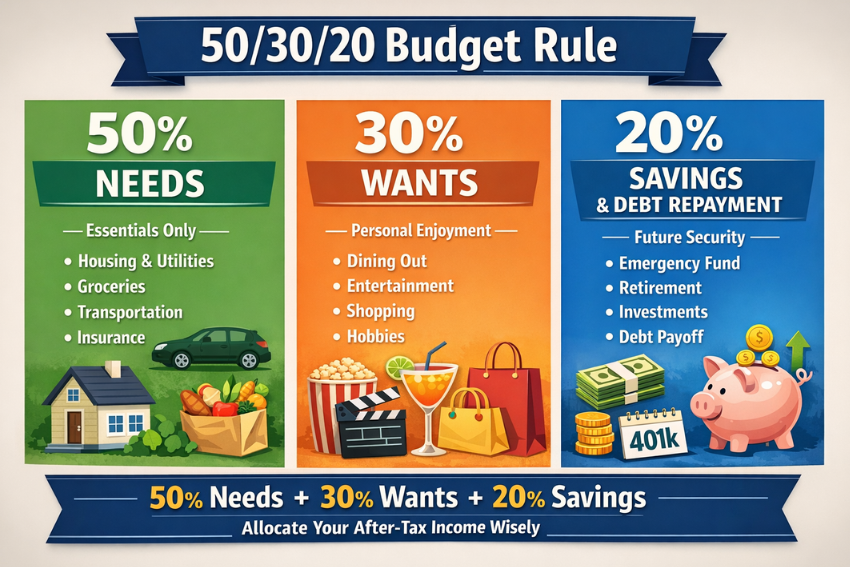
The 50/30/20 budget rule is all about balance. Rather than monitoring all of your group spending in three categories:
- 50 percent for needs: These are unavoidable expenses that keep your life running.
- 30 percent for wants: It is discretionary expenditure that brings in pleasure and comfort.
- 20 percent for savings and debt repayment: Money set aside for future goals and financial resilience.
This design will help you to get the necessities, have a good life and plan towards the future without being confined.
Why the 50/30/20 Budget Rule Works
The rule is effective as it makes it easier to plan finances. Lots of individuals are unable to work with complicated spreadsheets or budgeting software that involves monitoring dozens of categories. With three large buckets in mind, you minimize stress and sustain budgeting.
Key Benefits
- Clarity: Easy to understand and apply.
- Balance: Prevents overspending while allowing enjoyment.
- Flexibility: Works across different income levels.
- Discipline: Encourages consistent saving habits.
It is this balance that has made the rule to stand the test of time and still be popular amongst financial professionals.
Origins of the 50/30/20 Budget Rule
The rule was popularized by Senator Elizabeth Warren and her daughter Amelia Warren Tyagi in their book All Your Worth: The Ultimate Lifetime Money Plan. Their goal was to create a simple framework that everyday people could use without advanced financial knowledge.
Since then, the rule has been adopted by financial educators, advisors, and even budgeting apps as a foundational principle. It is simple and thus accessible and flexible to suit modern challenges.
Breaking Down the Categories in Detail
Needs (50 percent)
Needs are fixed costs which you cannot do away with in order to survive and stay in equilibrium. They include:
- Rent or mortgage payments
- Utilities such as electricity, water, and internet
- Groceries and essential household supplies
- Transportation costs like gas, public transit, or car payments
- Insurance premiums
- Minimum debt payments
Common Pitfalls
- Confusing wants with needs. For example, a basic car is a need, but a luxury car is a want.
- Overspending on housing. Financial experts recommend keeping housing costs below 30 percent of income.
Strategies to Manage Needs
- Negotiate rent or refinance loans.
- Use energy‑saving practices to reduce utility bills.
- Shop smart with grocery lists and discount programs.
Wants (30 percent)
Wants are optional costs that enhance life quality but are not crucial. Examples include:
- Dining out or ordering takeout
- Streaming services and entertainment subscriptions
- Vacations and weekend getaways
- Shopping for clothes, gadgets, or home decor
- Gym memberships or hobbies
Distinguishing Wants from Needs
- Internet access is a need, but premium cable packages are wants.
- A phone is a need, but the latest flagship model is a want.
Strategies to Manage Wants
- Use cash envelopes or prepaid cards for discretionary spending.
- Limit subscriptions by choosing only those you use regularly.
- Plan vacations with budget‑friendly options like road trips or off‑season travel.
Savings and Debt Repayment (20 percent)
This group develops financial stability and sets you up towards the future. It includes:
- Emergency fund contributions
- Retirement savings in 401(k) or IRA accounts
- Investments in stocks, bonds, or mutual funds
- Extra payments toward credit card debt or student loans
Why Savings Matter
Your finances can be derailed because without savings, some unexpected expenses can strike you. Emergency funds will avoid using credit cards and retirement accounts will secure the long term.
Strategies to Boost Savings
- Automate transfers to savings accounts.
- Increase contributions when income grows.
- Use windfalls like bonuses or tax refunds to accelerate debt repayment.
Practical Steps to Apply the 50/30/20 Budget Rule
The 50/30/20 Budget Rule is not simply a number game. It involves a considerate procedure that can enable you to comprehend your monetary practices, priorities, and establish a framework that suits your way of living. It is done in the following way:
Step 1: Calculate Your After‑Tax Income
The first step is you need to calculate your net income or the amount of money you actually bring home after taxes and deductions.
- Include salary, freelance earnings, side hustle, rental income, or bonuses.
- Exclude taxes, retirement contributions already deducted, and employer benefits.
Example: When you earn a gross amount of $5,000/month and taxes and deductions amount to $1000, then your after-tax earnings are $4,000. This is how many you are going to use to apply the rule.
Step 2: Track Current Expenses
You must have an idea of where your money is going before applying for percentages.
- Review bank statements, credit card bills, and digital wallets.
- Categorize expenses into needs, wants, and savings.
- Use budgeting apps or spreadsheets for clarity.
Tip: Observe over a period of at least a month to be able to see the true picture. A lot of individuals do not realize the amount they are paying on unnecessary expenses such as restaurant meals or subscriptions.
Step 3: Assign Percentages
Now use the 50/30/20 breakdown on your income.
- 50 percent for needs: Housing, utilities, groceries, transportation, insurance, and minimum debt payments.
- 30 percent for wants: Entertainment, dining out, hobbies, vacations, and non‑essential shopping.
- 20 percent for savings and debt repayment: Emergency fund, retirement accounts, investments, and extra debt payments.
Example: With $4,000 income:
- Needs = $2,000
- Wants = $1,200
- Savings = $800
Step 4: Adjust for Reality
Most individuals find that they are in need of more than 50 percent, particularly in the high-cost cities. If this happens:
- Reduce wants temporarily.
- Consider downsizing housing or refinancing loans.
- Explore side hustles or negotiate salary increases.
Insight: The rule is flexible. If your needs take 60 percent, you can adjust wants to 20 percent and savings to 20 percent until circumstances improve.
Step 5: Automate Savings
Automation ensures consistency.
- Set up automatic transfers to savings accounts or retirement funds.
- Pay out debts on schedule to evade late charges.
- Use applications that compute the difference and save the round-up.
Why it matters: Automation eliminates temptation and develops discipline. You save without considering.
Step 6: Review Monthly
Budgets are living documents. Review them periodically to keep up with them.
- Compare actual expenses with your 50/30/20 goals.
- Modify categories on changes in income.
- Celebrate small wins, like paying off a credit card or reaching a savings milestone.
Tip: Monthly reviews help to notice trends. When you find yourself going out to eat regularly and it is always above your wants budget, place a limit on how many times you go out to eat each week or prepare more food at home.
Step 7: Build Flexibility
Life is unpredictable. Budgets can be disrupted by emergencies, changes in jobs or inflation.
- Maintain 3-6 months of expenses as an emergency fund.
- Re-review the rule when significant changes take place in life such as moving, marriage, or changes in career.
- Have occasional splurges to prevent burnout.
Fresh Perspective: Think of the rule as a compass, not a cage. It leads you to equilibrium yet is flexible where necessary.
Step 8: Scale With Income Growth
As your income increases, don’t inflate wants disproportionately.
- Keep needs stable or reduce them.
- Increase savings percentage beyond 20 percent.
- Use raises and bonuses to accelerate debt repayment or investments.
Example: If your income grows from $4,000 to $5,000, instead of spending the extra $1,000 on wants, allocate $700 to savings and $300 to lifestyle upgrades.
Step 9: Adapt for Irregular Income
Gig workers and freelancers experience a fluctuating income.
- Base percentages on average monthly income.
- Save extra during high‑earning months to cover lean periods.
- Prioritize building a larger emergency fund.
Tip: You should think of taxes as a “need” group and save up some money each month, so you are not caught off guard.
Step 10: Track Progress Toward Goals
Budgeting is not merely a matter of numbers but accomplishing objectives.
- Define short‑term goals like paying off debt or saving for a vacation.
- Make future plans such as purchasing a house or retiring at an early age.
- Use the 20 percent savings category to be in line with these goals.
Insight: Budgeting becomes inspiring as opposed to constraining when you relate it to individual objectives.
Unique Insights for Today’s Economy
The rule remains relevant, but modern challenges require adaptation.
- Housing costs: Rent in most cities of the US takes over 50 percent of the income. Think of having joint housing, moving, or bargaining rent.
- Student loans: The repayment of the debts might take over 20 percent. Adapt by decreasing desires in the short-term.
- Gig economy income: Freelancers should allocate part of savings toward taxes and irregular income buffers.
- Inflation: The increased prices can drive the needs up to more than 50 percent. Concentrate on reducing unnecessary expenses and locating side jobs.
Advantages of the 50/30/20 Budget Rule
This is a detailed breakdown of the benefits of the 50/30/20 Budget Rule, with practical insights and examples to help you understand why this is such a powerful tool to save smarter.
Simplicity and Clarity
One of the biggest advantages is how easy it is to understand. Instead of juggling dozens of categories, you only focus on three: needs, wants, and savings.
- This reduces overwhelm for beginners.
- It provides a clear roadmap without requiring advanced financial knowledge.
- You can start applying it immediately with minimal setup.
Example: A college graduate earning their first paycheck can quickly divide income into these three buckets without needing complex spreadsheets.
Balanced Lifestyle
The rule ensures you don’t sacrifice enjoyment for financial discipline.
- Needs keep you secure.
- Wants allow you to enjoy life.
- Savings prepare you for the future.
This balance prevents burnout. Most austerity budgeting measures eliminate fun altogether, a factor that tends to frustrate and give up. 50/30/20 is a strategy that appreciates the fact that enjoyment can be a healthy part of financial life.
Encourages Consistent Saving
By dedicating 20 percent to savings and debt repayment, the rule builds financial discipline.
- You develop the habit of saving regularly.
- Over time, this creates wealth and reduces reliance on credit.
- Even small contributions compound into significant results.
Example: Saving $800 per month from a $4,000 income equals $9,600 annually. Over five years, that’s nearly $50,000, not including investment growth.
Flexibility Across Income Levels
The rule adapts to different financial situations.
- High earners can increase savings beyond 20 percent.
- Lower earners can adjust percentages temporarily while still maintaining structure.
- Freelancers can apply the rule to average monthly income.
This flexibility makes it suitable for a wide range of people, from students to professionals.
Prevents Overspending
By capping wants at 30 percent, the rule naturally limits discretionary spending.
- You avoid lifestyle inflation when income grows.
- It creates awareness of how much you spend on non‑essentials.
- It helps identify areas where you can cut back without affecting essentials.
Insight: Many people overspend on dining out or subscriptions. The rule highlights these patterns and encourages moderation.
Builds Financial Security
Savings and debt repayment create a safety net.
- Emergency funds protect against unexpected expenses.
- Retirement accounts secure your future.
- Debt repayment reduces financial stress.
This security allows you to handle challenges without derailing your finances.
Easy to Review and Adjust
The simplicity of the rule makes it easy to review monthly.
- You can quickly see if you’re overspending in one category.
- Adjustments are straightforward.
- It encourages regular financial check‑ins.
Example: If housing costs rise, you can immediately see how it affects the 50 percent needs category and adjust wants or savings accordingly.
Promotes Financial Awareness
The rule compels you to classify the expenses, which enhances consciousness.
- You get to understand how to differentiate needs and wants.
- You know the spending patterns that could be weakening your budget.
- You are more conscious of money decisions.
This awareness is the foundation of financial literacy.
Supports Long‑Term Goals
You can bring yourself closer to long term objectives by continuously saving 20 percent of your income.
- Buying a home
- Retiring comfortably
- Starting a business
- Traveling extensively
The rule makes sure that such goals are not sacrificed to short term pleasures.
Reduces Stress
Financial uncertainty is a major source of stress. The rule provides structure and predictability.
- You have a clear knowledge of how much to spend in each category.
- You do not feel guilty about spending discretionally since you budgeted it.
- You are confident in your financial future.
Limitations of the Rule
- Not able to afford high cost living areas.
- Not suitable for individuals with huge debts.
- Requires discipline to distinguish wants from needs.
- Percentages might require modification to special situations.
Tips to Maximize the Rule
Here’s a detailed tips to maximize the 50/30/20 budget rule, with practical strategies, examples, and fresh insights to help you get the most out of this framework.
Automate Your Savings
Staying consistent is the simplest with automation.
- Set up automatic transfers to savings accounts or retirement funds.
- Schedule debt payments to avoid late fees.
- Use apps that round up purchases and save the difference.
Insight: You eliminate the temptation to use the money in other places when your savings occur automatically.
Reevaluate Wants Regularly
Wants can creep up without notice.
- Audit regularly every few months. Discontinue those which you seldom use.
- Limit dining out by setting a weekly cap.
- Replace costly hobbies with budget‑friendly alternatives.
Example: When streaming services cost more than $100 every month, reduce to one or two services and invest the difference.
Build a Strong Emergency Fund
Emergency funds are important before committing a lot of money.
- Aim for 3–6 months of living expenses.
- Keep it in a high‑yield savings account for easy access.
- Use it in case of a real emergency such as a medical bill or loss of a job.
Why it matters: Emergency funds will save you the hassle of using credit cards and will ensure your budget is not drained in times of emergencies.
Adjust Percentages as Income Changes
The rule is flexible.
- Increase savings to more than 20 percent in case of an increase in income.
- In case of increased expenditure, want, rather than savings, should be curtailed temporarily.
- Re-balance in case of significant life changes such as moving or getting married.
Example: You might increase savings to 25 percent with an increase in your monthly income by $1,000 and still have a higher level of discretionary income.
Use Cash or Prepaid Cards for Wants
Physical cash or prepaid cards create spending awareness.
- Withdraw your monthly wants budget in cash.
- When the cash runs out, you stop spending.
- This prevents overspending on impulse purchases.
Tip: Many people find that using cash makes them more mindful of every dollar spent.
Track Progress Toward Goals
Budgeting is not just about numbers; it’s about achieving goals.
- Define short‑term goals like paying off debt or saving for a vacation.
- Set long‑term goals like buying a home or retiring early.
- Use the 20 percent savings category strategically to align with these goals.
Insight: Connecting budgeting to personal goals makes it motivate rather than restrictive.
Cut Recurring Costs in Needs
Even needs can be optimized.
- Negotiate rent or refinance loans.
- Switch to energy‑efficient appliances to lower utility bills.
- Shop smart with grocery lists and discount programs.
Example: Reducing utility bills by $50 monthly adds $600 annually to your budget.
Review Monthly and Adjust
Budgets are living documents.
- Compare actual spending with your 50/30/20 targets.
- Adjust categories if income changes.
- Celebrate small wins, like paying off a credit card or reaching a savings milestone.
Tip: Monthly reviews help you catch overspending early and keep your budget aligned with your goals.
Avoid Lifestyle Inflation
As income grows, resist the urge to inflate wants disproportionately.
- Keep needs stable or reduce them.
- Increase savings percentage beyond 20 percent.
- Use raises and bonuses to accelerate debt repayment or investments.
Example: Instead of upgrading to a luxury car after a raise, continue driving your current vehicle and invest the extra money.
Adapt for Irregular Income
Freelancers and gig workers face income fluctuations.
- Base percentages on average monthly income.
- Save extra during high‑earning months to cover lean periods.
- Prioritize building a larger emergency fund.
Tip: Treat taxes as a “need” category and set aside money monthly to avoid surprises.
Use Technology Wisely
Budgeting apps and tools can simplify tracking.
- Apps categorize expenses automatically.
- Many provide visual charts to show spending patterns.
- Alerts help you stay within limits.
Insight: Technology makes it easier to stick to the rule without manual effort.
Celebrate Milestones
Budgeting should feel rewarding.
- Celebrate when you reach savings goals.
- Reward yourself with small treats within your wants category.
- Recognize progress to stay motivated.
Example: After saving your first $10,000, treat yourself to a weekend getaway without guilt.
Real‑Life Example in Detail
Imagine you earn $4,000 per month after taxes.
- Needs (50 percent): $2,000 for rent, utilities, groceries, and transportation.
- Wants (30 percent): $1,200 for dining out, entertainment, and shopping.
- Savings (20 percent): $800 for retirement contributions and debt repayment.
This breakdown ensures financial balance. If rent increases, you may need to reduce wants or adjust savings temporarily.
Conclusion
The 50/30/20 Budget Rule is an age-old system of smarter saving. It weighs necessities, lifestyle and security of the future. Although contemporary problems might demand some changes, the rule still is a strong weapon of financial prosperity. Using it regularly can help you eliminate stress, live a better life and become wealthy.
FAQs
What if my needs exceed 50 percent of income?
You might have to cut down on desires or seek means of raising income. Reduction of housing or refinancing loans can assist.
Can I adjust the percentages?
Yes. The rule is not a formula; it is a guideline. Others like 60/20/20 or 40/30/30 are preferred under certain circumstances.
Is the rule suitable for irregular income?
The rule can be applied by freelancers and gig workers by averaging monthly earnings and focusing on saving during lean months.
How does the rule help with debt?
Investing 20 percent towards savings and paying debts, you will always decrease balances and accumulate financial safety.