










If you’ve just completed your BCom degree, you’ve just embarked on a new phase of your life. Congratulations. You now have one of the most flexible undergraduate degree programs in India. But let’s be honest here. The BCom degree is not enough to command a high salary in today’s competitive job market. There have been significant changes in courses after BCom in recent years. Times are different now when you were only stuck with a choice between Chartered Accountancy and a mundane accounting job. Now, commerce graduates can opt for a certification from professional institutions, post graduate courses or skill courses, which fetch starting salaries from ₹6 lakh to ₹25 lakh per annum.
I have seen a lot of BCom graduates who took a job with a pay of ₹3-4 LPA but didn’t know what they had other options. This guide is a change on that. If you’re looking for roles in traditional finance, tech-driven careers, or international certifications, here are the top 10 high-paying courses after BCom that can impact your earning potential.
10 Best Courses after BCom to Get a High-Paying Job
Below is the list of top paying courses after BCom in India. Do a comparison for career options, eligibility, fees and salaries to make a proper decision.
Chartered Accountancy (CA)
Chartered Accountancy is still one of the most respectable and well-paid commerce professions in India. This qualification is provided by the Institute of Chartered Accountants of India (ICAI) and is still highly regarded in the industry.
CA is no choice stakes. It takes about 4-5 years to complete and includes multi-level examinations as well as 3 years of article ship (practical training). However, the reward is great. The salary for freshers with CA qualification ranges from ₹7 lakh to ₹15 lakh per annum. The remuneration for mid-career CAs ranges from ₹15 lakh to ₹20 lakh, whereas experienced CAs in senior positions can fetch salaries of ₹25 lakh to ₹75 lakh or even higher.
What makes CA worth the effort?
The qualification opens the door to various positions such as auditor, tax consultant, financial controller, and chief financial officer. Leading recruiters such as Deloitte, EY, KPMG, PWC, Reliance Industries and ITC actively recruit CA candidates. In addition to working in corporations, numerous CAs find success in their own practice.
Who should choose this?
CA is one of the most rewarding courses after BCom, if you have strong analytical skills, enjoy working with numbers and are willing to spend several years working hard on the course.
Master of Business Administration (MBA)
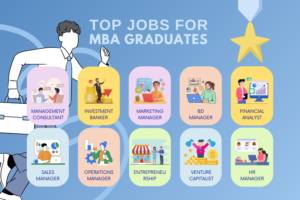
An MBA is undoubtedly the most exclusive postgraduate course after BCom. An MBA can catapult your career path by providing you with a two-year program with specialisations in finance, marketing, human resources, operations, and business analytics.
The salary depends greatly on the institute you take up. The returns at Tier-1 B-schools, such as IIMs, FMS and XLRI are excellent. The average package of top IIMs is more than Rs. 30 Lakhs per annum and for Tier-II IIMs, the average package is between Rs. 10 Lakhs to 15 Lakhs per annum. While the top level salary is ₹30 lakh per annum, MBA graduates usually get a salary ranging from ₹8 lakh to ₹20 lakh per annum in the other levels of the organization.
Here is what makes an MBA attractive:
The degree is an accelerated pathway to leadership and managerial positions. You aren’t just being taught finance or marketing, you’re getting a business mind. MBA graduates are recruited as managers, analysts, consultants and business development heads in various industries. Amazon, Tata, ICICI, Flipkart and global consulting firms are the top recruiters.
The catch?
To get into leading B-schools, students have to take competitive exams such as CAT, XAT or GMAT. Its competition is tough but the benefits are worth the struggle.
Chartered Financial Analyst (CFA)
The CFA designation is the golden ticket to unlock your investment banking, portfolio management, or equity research dreams. This widely accepted investment management, financial analysis, and portfolio strategy certification is offered by the CFA Institute.
The program is divided into three levels and it takes about 2 to 3 years to finish. One thing that makes it very appealing to the BCom graduates is that they have the option of beginning their CFA course during the last year or immediately after.
Salary prospects are impressive.
In India, CFA charterholders can make Rs 7 lakh to Rs 10 lakh per annum with experienced CFA professionals making considerably more than this. The average salary of equity analysts is approximately ₹8.1 lakh, credit analysts approximately ₹12.9 lakh, and portfolio managers can earn even more. Senior level salary can go up to ₹35 lakh per annum.
Who should pursue CFA?
CFA is one of the most rewarding courses after BCom for those who are passionate about financial markets and enjoy research and analysis and wish to pursue a career with global investment banks such as Morgan Stanley, Goldman Sachs, JP Morgan, etc.
Data Science and Business Analytics
This is where traditional commerce meets the digital revolution. Business Analytics and Data Science has become a high demand and one of the highest-paying programs for commerce graduates.
One of the great things about this walk is that you don’t need to be a technical person to start it. Business analytics programs are relatively easy to enter for BCom graduates, who have some knowledge of accounting, finance, and economics. Usually, they can last anywhere from 6 months to 2 years, depending on the level of qualification you pursue (certification, diploma, or degree).
Salary potential is remarkable.
Freshers in data analytics can expect to get the salary range of ₹3 to ₹8 lakh a year, while entry level roles in data science pay in the range of ₹6 to ₹12 lakh a year. Data scientists with 3-5 years of experience make ₹12 lakh – ₹18 lakh per year, senior Data Scientists can make ₹30 lakh – ₹40 lakh per year. Big companies such as Google, TCS, Accenture, and McKinsey actively seek out data professionals.
What skills do you need?
Experience of using Excel, SQL and Python, as well as data visualisation tools such as Power BI or Tableau is essential. It’s a steep learning curve but not too steep and the career have a phenomenal growth potential!
Financial Risk Manager (FRM)
Risk management has emerged as a very critical role for banking, financial or consulting businesses. The Financial Risk Manager (FRM) is the most prestigious qualification in this field and is provided by the Global Association of Risk Professionals (GARP).
As FRM is a very attractive option, it can be done right after BCom. Don’t need to be an MBA or have years of experience to get started. The certification takes place over two parts and candidates are usually certified within 1-2 years.
The salary story is compelling.
In India, Freshers having FRM certification can get a range of salaries from ₹6 lakh to ₹10 lakh per annum. Those who pass Part 1 without the Part 2 qualification may end up earning a higher salary ($10-15 lakh) compared to the basic salary ($6-8 lakh). One can earn ₹14-22 lakh after finishing Part 2. The salary of senior FRM professionals in top banks and consulting firms ranges from ₹20 lakh to ₹30 lakh or higher.
Who should consider FRM?
In case you are interested in market risk, credit risk, operational risk or quantitative analysis, FRM is one of the most specialised and well paid courses after BCom. Major companies like Credit Suisse, JP Morgan, Barclays and the top Indian banks are the major employers.
Association of Chartered Certified Accountants (ACCA)
With ACCA, there is no limits to your global accounting aspirations. This is a certification from the UK that’s recognised in more than 180 countries and highly valued by multinational corporations.
BCom graduates will find ACCA to be an ideal option as many of the subjects covered will be similar to those they have studied before. Students with a BCom qualification may also be exempted from taking 2 or 3 papers which means it can take around 2-3 years to complete ACCA.
Salary prospects are strong both in India and abroad.
The salary of ACCA freshers in India ranges from ₹4 lakh to ₹7 lakh annually, while Big 4 firms pay ₹8 lakh to ₹10 lakh per year. The salaries of the mid-level professionals of the ACCA at multinational organizations range between ₹10 lakh and ₹14 lakh. The salary range for senior-level positions in finance management is between ₹25 lakh and ₹30 lakh. For those planning to work overseas in the UK, UAE, or other countries, packages range from ₹15 lakh to ₹25 lakh per annum.
Why choose ACCA?
ACCA is one of the most flexible courses after BCom to allow the student to work anywhere in the world, gaining knowledge of the international standards of accounting.
US Certified Management Accountant (US CMA)
The US CMA is a certification from the Institute of Management Accountants (IMA) that is centered on management accounting, financial planning, analysis, and strategic decision making.
The attraction of US CMA is that it takes a relatively short time. The certification is divided in two parts and most of the candidates take it within 6 to 12 months. This certification is available to BCom graduates, and this curriculum dovetails in with commerce education.
Salary expectations are encouraging.
The starting salary range for Freshers in US CMA is ₹4 lakh to ₹7 lakh per annum. Financial analyst and management accountant are some of the higher-paid roles, where one can earn from ₹6 lakh to ₹12 lakh, depending on one’s experience. The salary of Financial Planning and Analysis (FP&A) Analyst ranges from ₹8 lakh to ₹15 lakh. Senior professionals working in multinational companies or Big 4 companies can earn between ₹20 lakh to ₹30 lakh or more.
Who should pursue US CMA?
For those who want to pursue a career in Management Accounting, Budgeting, Financial Planning and Strategic Decision Making but are not interested in pure Auditing or Taxation, then US CMA is a good option among courses after BCom.
Company Secretary (CS)
The job of a Company Secretary is a specialised one related to corporate law, governance and compliance. This qualification is provided by the Institute of Company Secretaries of India (ICSAI) and is a requirement for listed companies and big corporations.
The CS program usually takes 2-3 years to complete and has a number of levels of examination. Students who graduate with BCom will be able to go straight into Executive level, which will save time for them compared with those who start at Foundation level.
Compensation is respectable.
Freshers can expect ₹4 lakh to ₹8 lakh per annum. The salary range for mid-career professionals is ₹7 lakh–₹14 lakh and for senior Company Secretaries it could be ₹10 lakh–₹20 lakh or more. The position is well respected and secure, particularly in the business world.
Why consider CS?
In the case of those interested in corporate law, compliance and corporate governance, and prefer a safe, stable and respectable profession to the high risk, high reward options, CS is one of the more secure courses after BCom. HUL, Tata, Hindalco and big banks are just a few of the top recruiters.
Master of Commerce (MCom)
The usual pathway for BCom graduates is a Master’s degree in Commerce (MCom). MCom is a postgraduate course of two years duration that offers the student a more in-depth knowledge of accounting, economics, commerce and finance.
Although not as lucrative as professional qualifications such as CA or CFA, MCom can still be a great stepping stone to an academic career, research, and specialised position in the corporate world.
Salary is notable.
The salary is in the range of ₹4 lakh to ₹10 lakh per annum, which varies according to the institution and specialization. Accountant, Financial analyst, Tax consultant, Lecturer, Research analyst. The leading recruiters are KPMG, Axis Bank, Wipro, P&G and RBI.
Who should choose MCom?
For those who lean towards academics, research or teaching, or are interested in studying for a PhD at a later stage, MCom is the logical next step in courses after BCom.
Digital Marketing
Digital marketing has grown beyond being a buzzword and is now a viable and lucrative profession. It is an alternative and exciting career choice for creative commerce graduates who find accounting to be a chore, yet want to be involved in business.
The best part? A 2-year degree is not required for entry. You can earn certificate courses or diplomas in 3 to 12 months that can give you the skills necessary to get a job. SEO, social media marketing, performance marketing, content strategy and analytics are the areas you’ll acquire the skills to master.
Salary potential is solid.
The salary of freshers in digital marketing ranges from ₹3 lakh to ₹5 lakh per annum, and if they’re doing a good job, then they can get offers of ₹6 lakh or more. The income range for mid-career professionals (5+ years of experience) is ₹10 Lakhs to ₹18 Lakhs. Senior positions and specialised positions such as digital marketing strategist can have even higher packages. Freelancers & consultants can get ₹30,000 to ₹2,00,000 monthly based on their project portfolio.
Why digital marketing?
Digital marketing is one of the most easy-to-follow and lucrative courses after BCom, if you are creative and enjoy working on social media, are aware of customer behaviour and looking for a job that has a lot of possibilities for growth.
Making the Right Choice: A Decision Framework
There are numerous courses after BCom with higher remuneration packages, but how to choose? Here are some ideas to help you make your choice:
- Consider your strengths and interests. Do you like analyzing things and getting into the details? If you’re considering this, you may want to try CA, CFA or FRM. Are you looking for a leadership and strategy position? MBA is your path. Do you have an entrepreneurial spirit and business sense? If you are looking to start a career in digital marketing, it may be the right choice.
- Determine the time requirements. CA takes 4-5 years. MBA takes 2 years. A digital marketing or financial modelling short-term course can be finished after the period of 6-12 months. Decide based on the speed with which you want to see returns.
- Evaluate the cost of investment. Professional certifications such as a CA or CS are fairly inexpensive. The fee for an MBA from a reputed B-school can be as high as ₹20 lakh, or even more. The fee ranges for the short term courses from ₹50000 to several lakhs. Think about your budget and the ROI you can expect to see from it.
- Discuss your future career aspirations. Holding any country nationality, want to work in India or overseas? ACCA, CFA and US CMA provide Global mobility. Are you more of a risk taker or a steady investor? Both are available with CA and CS.
- Research market demand. Industries such as data analytics, fintech and risk management are booming. The traditional finance and accounting functions are steady, but getting automated. Select an area that has a high potential for future employment.
Final Thoughts
The landscape of courses after BCom has never been more diverse or more rewarding. From the prestige of a CA to the global recognition of a CFA or an ACCA, from the leadership opportunities offered by an MBA to the emerging path of data science and digital marketing, each of the above career paths has a very clear path to a lucrative career.
It’s all about choosing something you can do, that you’re interested in, and that you want to do in the future. Don’t do what everyone else is doing. Carefully assess each opportunity, build the appropriate knowledge, and embrace lifelong learning.
Having a BCom degree is a solid foundation. It’s up to you what you create out of it. The opportunities are there. There are wages there. The resolve to make a decision and the sense of discipline to follow it.