









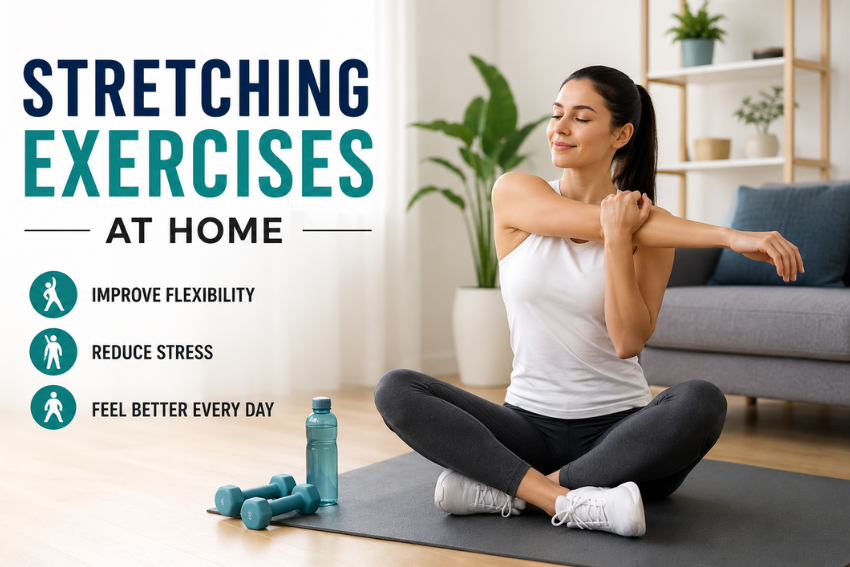
Let’s be honest, most of us spend way too much time hunched over screens. Your neck feels tight, your lower back aches, and your hamstrings have practically forgotten what it feels like to lengthen. The good news? You don’t need a gym membership, expensive equipment, or even a yoga mat to fix this. Stretching exercises at home are one of the simplest, most effective ways to reclaim your mobility, relieve tension, and feel better in your own skin, all without leaving your living room.
I’ve put together a complete beginner-friendly routine featuring stretching exercises that target every major muscle group. Whether you’re looking to loosen up after a long workday, improve your flexibility over time, or just feel less stiff in the morning, this guide has you covered.
Why Stretching Matters More Than You Think
Before we jump into the moves, let’s talk about why these matters. Stretching isn’t just for athletes or yoga enthusiasts; it’s for anyone who wants to move through life with less pain and more ease.
When you stretch regularly, you:
- Enhance the flexibility and mobility of joints and muscles.
- Reduce muscle tension from long hours of sitting or repetitive movements.
- Boost blood flow to your muscles, which aids recovery and reduces stiffness.
- Support better posture by balancing muscle imbalances caused by desk work.
- Lower stress levels through deep breathing and mindful movement.
The best part? You only need 10 to 15 minutes a day, twice a week to start seeing real benefits. That’s less time than scrolling through social media.
Before You Start: Safety Tips for Beginners
Stretching should feel good—not painful. Keep these simple guidelines in mind:
- Warm up first. Take 5 minutes to walk around or do gentle arm swings before stretching. Cold muscles don’t stretch well.
- Don’t bounce. Hold each stretch steady for 15 to 30 seconds. Bouncing can cause tiny tears in your muscles.
- Breathe deeply. Exhale as you move deeper into a stretch. Holding your breath creates tension, which defeats the purpose.
- Stop at mild tension, not pain. You should feel a gentle pull, never sharp or joint pain.
- Don’t lock your joints. Keep a soft bend in your knees and elbows.
Now, let’s get moving.
The 12 Best Stretching Exercises at Home for Beginners
I’ve organized these from head to toe so you can flow through them in order. Hold each stretch for 20 to 30 seconds and repeat 2 to 3 times on each side where applicable.
Neck Release
Why: Counteracts the “tech neck” we all get from staring at screens.
How: Sit or stand tall. Tilt your head towards your right shoulder. Lightly guide with right hand to take head further into stretch. Stop for 20 seconds and then turn to the other side. If you’re feeling extra relief, gently roll your chin towards your chest and back.
Shoulder Rolls
Why: Melts away tension that builds up in your upper back and shoulders.
How: Stand with your feet shoulder-width apart and arms relaxed at your sides. Roll your shoulders backward in large circles for 30 seconds, then reverse direction for another 30 seconds.
Behind-the-Head Tricep Stretch
Why: Opens up your arms and shoulders—especially helpful if you spend hours typing.
How: Extend your right arm upwards and bend the elbow so that the hand hangs behind the head. Gently pull right elbow down with left hand. Maintain this position for 20 seconds, and then alternate arms.
Standing Chest Opener
Why: Reverses the rounded-shoulder posture that comes from hunching forward.
How: Stand tall and clasp your hands behind your back. Straighten your arms and gently lift your hands upward while opening your chest. Hold for 20 to 30 seconds.
Cat-Cow Stretch
Why: Mobilizes your spine and releases tension in your back.
How: Begin on hands and knees under shoulders and knees. Breathe in, arch back and lift the chin and chest (Cow). Exhale, arch back upward like an angry cat, tuck your chin (Cat). Now take some slow breaths between these two positions for 1 minute.
Child’s Pose
Why: A deeply relaxing stretch for your back, hips, and shoulders.
How: On all fours, push hips back toward heels. Hold arms out in front and place forehead on the ground. Take deep breaths and hold for 30 seconds to 1 minute.
Standing Forward Fold
Why: Lengthens your hamstrings and decompresses your spine.
How: Feet hip distance apart. Hinge through hips and allow upper body to drop forward. If your hamstrings are tight, maintain a slight bend at the knees. Allow head and arms to hang down toward the floor. Hold for 30 seconds.
Standing Hamstring Stretch
Why: Tight hamstrings pull on your lower back and restrict hip movement.
How: Stand and cross your right foot in front of your left. Bend at your waist and slowly lower your forehead toward your right knee. Keep both knees straight (but not locked). Hold for 20 to 30 seconds, then switch sides.
Quad Stretch
Why: Activates blood flow through your lower body and relieves tight thighs.
How: Stand upright with holding onto a wall or a chair for support. Bring right knee to chest and right heel towards buttocks. Hold the ankle in the right hand and pull it upwards slowly. Knees should be together. Squeeze for 20 seconds and then change sides.
Butterfly Stretch
Why: Opens up your hips and inner thighs—great for counteracting all that sitting.
How: Sit on floor and place soles of feet together. Allow knees to fall out to the sides. Using your elbows, press knees towards floor. Hold for 30 seconds.
Figure-Four Glute Stretch
Why: Your glutes work hard all day. This stretch releases tension and supports hip mobility.
How: Lie on your back with both knees bent. Cross your right ankle over your left thigh, just above your knee. Gently pull your left thigh toward your chest. You’ll feel a deep stretch in your right glute. Hold for 30 seconds, then switch sides.
Standing Calf Stretch
Why: Loosens tight calves and supports better ankle mobility.
How: Stand facing a wall, about an arm’s length away. Place your right foot behind you with your heel pressed flat on the floor. Keep your right leg straight as you gently lean forward into the wall. Hold for 20 to 30 seconds, then switch sides.
How to Build a Daily Stretching Habit
Consistency matters more than duration. Here’s how to make stretching exercises at home stick:
- Start small.Even 5 to 10 minutes a day makes a difference. Pick 4 or 5 stretches from this list and do them daily.
- Pair it with an existing habit.Stretch right after your morning coffee, during your lunch break, or before bed.
- Set a reminder.Add a 10-minute stretching block to your calendar so you don’t forget.
- Listen to your body.Some days you’ll feel more flexible than others. That’s normal. Never push into pain—stretching is about release, not force.
Final Thoughts
Starting a stretching routine doesn’t have to be complicated or time-consuming. These 12 stretching exercises at home are designed for real people with real schedules—no fancy gear, no prior experience, no excuses.
Pick a few moves that feel good, do them consistently, and watch how your body responds. Over time, you’ll notice less stiffness, better posture, and a greater sense of ease in your daily movements.
Your body spends all day taking care of you. It’s time to return the favor.