











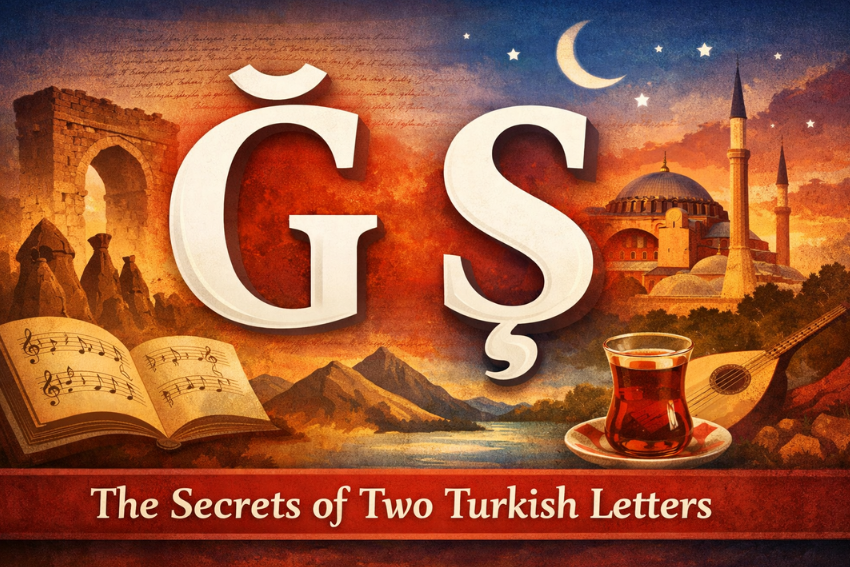
Ğş often confuses readers at first glance, yet these two Turkish letters carry a subtle, fascinating role that reveals much about how language evolves, sounds shift, and meaning flows naturally in speech.
If you have ever looked at Turkish text and paused at the letter Ğ or wondered why ş looks familiar but sounds different, you are not alone. These letters are not just symbols. They represent history, phonetics, and a linguistic identity that stands apart from English and many other languages.
Let’s explore what makes Ğş so intriguing and why understanding them opens the door to mastering Turkish pronunciation and rhythm.
What Does Ğş Mean in Turkish?
The Turkish alphabet is based on the Latin script, but it includes several modified letters to represent sounds specific to Turkish. Among these, Ğ (soft g) and Ş (s-cedilla) are particularly distinctive. They are not just letters; they embody centuries of linguistic adaptation and cultural identity.
- Ğ (Soft G): Known as yumuşak g, it has no direct equivalent in English. It lengthens vowels and creates a smooth transition between sounds.
- Ş (S-cedilla): Represents the “sh” sound, similar to English “sh” in “shoe,” but with a crisp articulation.
Both letters are indispensable in Turkish spelling and pronunciation, shaping the rhythm and melody of the language.
The Story Behind Ğ
Historical Roots
The letter Ğ traces back to Ottoman Turkish, where it represented a voiced velar fricative. Over time, its pronunciation softened, eventually becoming a lengthening marker rather than a distinct consonant. Today, it rarely carries a sound of its own.
Modern Usage
- Ğ never appears at the beginning of a word.
- It usually follows a vowel, extending its duration.
- In some contexts, it acts as a glide, connecting vowels smoothly.
For example:
- dağ (mountain) is pronounced like “daa.”
- ağaç (tree) sounds like “aa-ach.”
Linguistic Significance
Ğ is a reminder that letters can evolve beyond their original phonetic roles. It teaches learners that Turkish pronunciation relies heavily on vowel harmony and fluid transitions.
The Role of Ş
Origins
Ş comes from the Ottoman script adaptation of Arabic and Persian influences. The cedilla beneath the S was introduced to distinguish the “sh” sound from a regular “s.”
Everyday Use
- Ş appears in many common Turkish words.
- It is pronounced consistently, unlike Ğ, which varies depending on context.
Examples:
- şeker (sugar)
- şarkı (song)
- şimdi (now)
Why It Matters
Ş provides clarity in pronunciation. Without it, Turkish would lose precision in distinguishing words, leading to confusion between similar sounding terms.
Ğş Together: A Unique Duo
When combined in words, Ğ and Ş create a rhythm that defines Turkish speech. They balance fluidity and sharpness:
- Ğ softens and elongates.
- Ş sharpens and defines.
This interplay gives Turkish its musical quality, making it pleasant to listen to and challenging yet rewarding to learn.
Common Mistakes Learners Make
- Mispronouncing Ğ as a hard “g”: In modern Turkish, Ğ is not a hard consonant. Treating it as such changes meanings.
- Ignoring vowel lengthening: Ğ stretches vowels, and skipping this alters pronunciation.
- Confusing Ş with “s”: English speakers often default to “s,” but Ş must be pronounced as “sh.”
Practical Tips for Mastering Ğş
- Listen to native speakers and mimic vowel length where Ğ appears.
- Practice minimal pairs: sarı (yellow) vs. şarı (nonexistent but useful for contrast).
- Use Turkish songs and poetry to internalize rhythm.
- Record yourself and compare with native pronunciation.
Cultural Insights
Language is more than sound; it reflects identity. Ğ and Ş are symbols of Turkish heritage:
- Ğ represents subtlety and continuity.
- Ş embodies clarity and distinction.
Together, they remind us that alphabets are living systems shaped by history, culture, and daily use.
Why Ğş Fascinates Linguists
- Ğ challenges the idea of letters as fixed sound markers.
- Ş demonstrates adaptation of Latin script to non-Latin sounds.
- Their coexistence shows how languages balance tradition and practicality.
Conclusion
Ğş are more than just letters. They are gateways into understanding Turkish culture, history, and linguistic artistry. For learners, mastering them is a milestone in achieving fluency. For linguists, they are fascinating examples of how alphabets evolve. And for anyone curious about language, they are proof that even small symbols can carry profound meaning.
FAQs About Ğş
What is the sound of Ğ?
Ğ does not have a strong sound. It lengthens the preceding vowel or acts as a glide between vowels.
Is Ş the same as English “sh”?
Yes, Ş is pronounced like “sh” in English, but it is always consistent and never varies.
Can Ğ appear at the start of a word?
No, Ğ only appears after vowels.
Why are Ğ and Ş important in Turkish?
They preserve clarity, rhythm, and cultural identity in the language.