









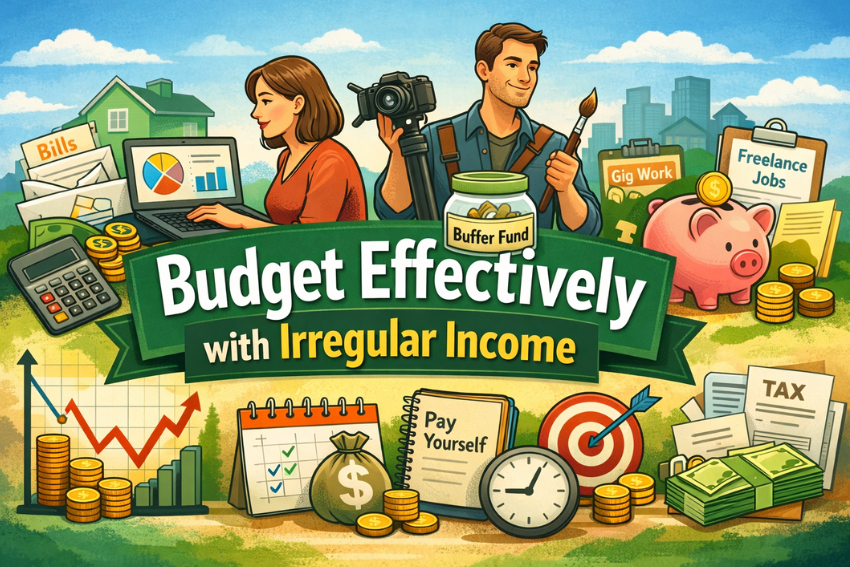
One of the most useful skills that freelancers, entrepreneurs and anyone whose monthly income fluctuates should have is budget effectively with irregular income. People whose income is not regular do not have the same problems as traditional employees who are given a certain salary. The hesitation of not knowing the exact amount of money that will be received every month can be a source of stress, difficult to plan and can result in financial instability unless one is keen on managing it.
The article is a complete guide on how to budget when income is not regular. It includes how to develop stability, cash flow management, and how to develop a flexible plan that functions even when your income varies.
Why Irregular Income Requires a Different Approach
Traditional budgeting assumes a steady paycheck. You are aware of the earnings you will receive and can spend money on bills, savings and leisure spending. With irregular income, that predictability disappears.
Common examples of irregular income include:
- Freelancers and consultants paid per project
- Small business owners with seasonal sales
- Gig workers with fluctuating demand
- Commission-based professionals such as real estate agents or salespeople
The issue is how to balance the abundance of months and leaner months. In the absence of a roadmap, one can easily spend heavily when incomes are high and have difficulties when faced with a downturn.
10 Steps to Budget Effectively with Irregular Income
This step-by-step tutorial demonstrates real-life planning to plan on a non-salaried income and maintain your budget in a state of balance and flexibility.
Step 1: Know Your Baseline Expenses
The first step in budgeting effectively with irregular income is to know your baseline expenses. These are the fixed expenses which you are bound to incur each month.
Examples include:
- Rent or mortgage
- Utilities
- Insurance premiums
- Loan payments
- Groceries
- Transportation
When you have determined this baseline, then you have known the lowest income you need to maintain your household. This is the basis of your budget.
Step 2: Identify Your Average Monthly Income
Even though there will be changes in income, an average can be determined by examining previous earnings. Consider at least 12 months of revenue to take into consideration seasonal changes.
For example:
- If you earned $60,000 last year, your average monthly income is $5,000.
- If your lowest month was $2,500 and your highest was $8,000, you know the range you must plan for.
This average assists you in being realistic and not basing your budget on overstated figures.
Step 3: Build a Buffer Fund
A buffer fund is essential for anyone with irregular income. Imagine that it is a personal safety net that levels out the peaks and valleys.
How to build it:
- Save during high-income months instead of increasing spending.
- Aim for at least three months of baseline expenses.
- Keep the buffer in a separate savings account to avoid accidental spending.
This fund enables you to pay yourself a regular monthly payment even when the real income varies.
Step 4: Pay Yourself a Salary
Being a good employee to yourself is one of the best ways to do it. Calculate a standard monthly wage, depending on your average earnings and minimum spending.
For example:
- If your average monthly income is $5,000, you might set a salary of $4,000.
- During high-income months, deposit the excess into your buffer fund.
- During low-income months, withdraw from the buffer to maintain your salary.
This brings stability and minimization of financial stress.
Step 5: Prioritize Essential Spending
In cases where the income is erratic, then prioritization is important. Split up the separate expenses into categories:
- Essential: Housing, food, utilities, insurance, debt payments
- Important but flexible: Savings, retirement contributions, education
- Discretionary: Dining out, entertainment, travel
Cover essentials first. If income allows, move to flexible and discretionary categories. This ensures you never compromise on necessities.
Step 6: Use a Zero-Based Budget
A zero-based budget allocates all dollars a use. You do not leave money lying around with no purpose but rather determine where it will go.
Steps:
- List of your income for the month.
- Allocate funds to essentials, savings, and discretionary spending.
- Ensure the total equals zero.
This technique prevents extravagance and will purposely leave you with money.
Step 7: Separate Business and Personal Finances
Mixing business and personal finances is confusing when it comes to freelancers and entrepreneurs. Keep individual records to be able to measure income and expenses.
Benefits include:
- Easier tax preparation
- Better understanding of business profitability
- Clearer view of personal spending capacity
Step 8: Automate Savings and Bill Payments
Automation minimizes chances of forgetting or mismanagement of money. Even when the income is not regular, you can automate some things:
- Schedule automatic transfers to savings during high-income months.
- Automate bill payments for essentials to avoid late fees.
- Use apps that round up purchases and save the difference.
Step 9: Plan for Taxes
Unpredictable earnings tend to lack automatic tax deduction. To avoid surprises:
- Set aside a percentage of each payment for taxes.
- Keep tax savings in a separate account.
- Consult a tax professional to estimate quarterly payments.
Step 10: Adjust Regularly
Budgeting of irregular income is not a one-time thing. Look at your budget at the end of every month and make changes depending on actual revenues. Flexibility is key.
Unique Insights
Several Americans who have irregular incomes use credit cards to fill lean months. Although this might look handy, it can easily result in debt traps. Rather, work on creating a buffer fund and earn yourself a salary.
The other lesson is the significance of health insurance. It is not always a consideration for freelancers and gig workers because of cost. But then financial stability may be derailed by medical bills. Insurance should be considered as a priority in your base costs.
Practical Tips for Staying Consistent
- Track income and expenses using apps like Mint or YNAB.
- Avoid lifestyle inflation during high-income months.
- Review financial goals quarterly.
- Celebrate small wins to stay motivated.
Conclusion
To budget effectively with irregular income, one must be disciplined, forward-looking as well as flexible. Understanding what you spend in the business, creating a buffer fund and earning yourself a salary can help you establish stability in the business even when revenue is inconsistent. The trick is to focus on necessities, automate savings and make optimizations.
Irregular income does not have to mean financial chaos. With the right strategies, you can achieve stability, reduce stress, and build long-term wealth.
FAQs
How do I budget when I don’t know my income in advance?
Use your lowest monthly income as the baseline. Establish a buffer fund to resolve deficits and remunerate yourself a regular salary.
Should I save or pay off debt first with irregular income?
Discuss necessities and create a buffer fund. When it becomes stable, it makes debt repayment of high interest a priority.
How much should I keep in my buffer fund?
Aim for three to six months of baseline expenses. The bigger the buffer you need is the more volatile your income is.
Can I invest with irregular income?
Sure, but once you create a buffer and essentials. Begin with automated savings to retirement plans.