









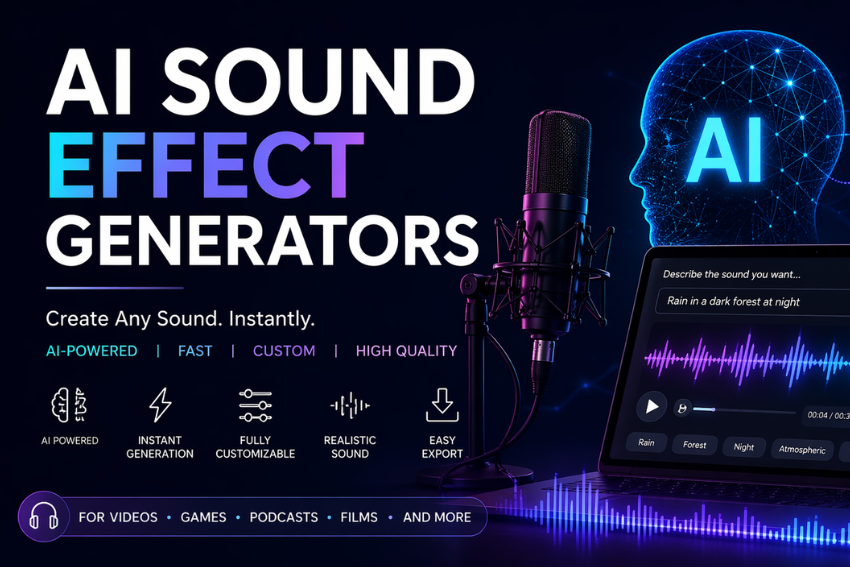
The use of AI sound effect generators is transforming the process of audio design by creators. In the past, it would cost a lot of money to create quality sound effects because it would need costly equipment, field recording, or it would need hours of browsing stock libraries. Nowadays, it is possible to write a brief description and get a customized sound in seconds. That change is not so tangible in the beginning, but when you start using such tools, it is clear. There is a quicker workflow. The output is more personal. The creative process becomes open.
Sound is not a luxury, particularly in case you make videos, create games, design applications or even make podcasts. It influences mood, focus, and tends to define the experience in the first place. However, it can be irritating to get the right effect. This is where AI comes in.
This is a guide on the best AI sound effect generators. They all have something a bit different. Others are more realistic, and others more experimental. Some find a compromise between the two. Break them down, let us.
What Are AI Sound Effect Generators?
AI sound effect generators provide machine learning models to generate audio based on text prompts, references, or parameters. You do not have to look through libraries, you tell what you desire.
For example:
- “Heavy rain hitting a metal roof at night”
- “Sci fi laser blast with echo”
- “Crowd cheering in a stadium”
The system processes your input and produces a sound file. Many tools also allow adjustments such as duration, intensity, or environment.
This approach saves time. It also gives creators more control.
Why Use AI Sound Effect Generators?
Before diving into the list, it helps to understand why these tools matter.
- Speed and Efficiency: Traditional workflows take time. AI compresses that process into seconds.
- Customization: You get sounds tailored to your exact need, not generic clips.
- Cost Reduction: Many platforms offer free tiers or affordable plans compared to licensing libraries.
- Creative Exploration: You can experiment freely without worrying about recording logistics.
10 Best AI Sound Effect Generators for 2026
Learn about the best AI sound effect generators which you must use in music, podcasts, and video projects. Find out the tools which enhance creativity, make editing easier, and provide the ability to create audio effects of the professional quality with minimal effort.
ElevenLabs Sound Generation
ElevenLabs has left voice synthesis behind and made its bold stride into sound design. The first thing that stands out is that it knows its context. You need not have excessively technical prompts. Basic descriptions tend to work, but the results do not lack detail.
ElevenLabs is not a tool in practice and more of a partner. You modify a word or two and the output alters in significant realms. As an example, the introduction of such words as distant or echoing changes the space of the sound. Experimentation is natural to that degree of responsiveness.
Consistency is another subtle strength. The results of many AI tools are impressive initially, but after that, they cannot provide quality results. ElevenLabs is likely to remain consistent over a variety of generations. Reliable will generate trust, particularly when you are working on bigger projects where audio cohesion is a factor.
Key Features:
- Text to sound generation with contextual understanding
- High resolution audio output suitable for production
- Strong environmental realism with layered textures
Why It Stands Out: It captures nuance. A request for “rain in a quiet forest” feels different from “rain in a busy city.” That distinction matters.
Best For: Filmmakers, YouTubers, and creators focused on immersive storytelling.
Soundraw AI
Soundraw AI sits in a curious position between music and sound effects. It does not make a strict distinction between the two. Rather it incorporates them into more flowing. This is a tool to be used when you consider more than individual effects. Think about creating an image instead of placing a clip. You could begin with a cool background color and slowly add some minor details that change the atmosphere. This is more of a composing than a generating technique.
Control is what makes it useful. Parameters can be fine-tuned without having to re-create. It will result in reduced frustration and increased refinement. With time, you achieve a feeling of how to control the tool, and this results in more conscious outcomes.
Key Features:
- Adjustable mood, tempo, and intensity
- Layer based audio customization
- Fast export options for different formats
Why It Stands Out: It allows you to shape how sound evolves over time, not just how it starts.
Best For: Brand storytelling, background environments, and narrative content.
Boomy AI
Boomy is simple-minded, almost intentionally so. It does not attempt to overwhelm you with choices. Rather, it is more about speed and accessibility. This tool is bright in times when you have to hurry. Perhaps you are trying something out or creating a prototype. During such times, it is not so much about perfection but momentum. It promotes such an attitude.
The depth tradeoff is depth. You might not achieve the same degree of realism as more sophisticated tools. Nevertheless, it does not render it any lesser. A lot of artists base their work on Boomy and polish the sound elsewhere. It can be easily integrated with a layered workflow.
Key Features:
- Quick sound generation with minimal input
- Clean interface designed for beginners
- Cloud storage for easy project management
Why It Stands Out: It removes friction. You can go from idea to output in seconds.
Best For: Beginners, casual creators, and rapid prototyping.
Adobe Audition AI Tools
Adobe Audition takes a different approach to AI. It is not all about generation. Rather, it complements the overall audio process.
It is also familiar when you have been using the old school editing programs. The distinction is in the way in which AI alleviates manual work. Works that used to be accomplished in minutes are now accomplished in seconds. Reduction of noise, balancing and enhancement occur within a short period of time but still can be fine-tuned.
The other benefit is workflow continuity. You may produce or import sounds, make adjustments and complete your mix without changing platforms. That will save time and keep your process on track. This efficiency is necessary in case of larger projects.
Key Features:
- AI assisted sound cleanup and enhancement
- Advanced editing tools with precision control
- Integration with the broader Adobe ecosystem
Why It Stands Out: It combines creativity with technical control in one environment.
Best For: Audio professionals, editors, and production teams.
AIVA Sound Design
AIVA is emotion oriented. It might look abstract, however, practically, it does matter. This is a tool that can make you think about the reason why there is a sound, rather than what it is. As an example, a basic ambient sound can be relaxing, tense or enigmatic, and it depends on the way it is produced. AIVA copes with these differences.
This is especially handy with the scenes based on delicacy. Rather than the apparent effects, there is audio that helps the story in the background. In the course of time, you start noticing the effects that minor changes have on emotional impact. Being aware enhances your general creative process.
Key Features:
- Emotional tone control for sound creation
- Layered audio composition
- Flexible export formats
Why It Stands Out: It aligns sound with narrative intent.
Best For: Films, games, and story driven content.
PlayHT Audio Studio
PlayHT is not limited to voice generation but is an extended audio toolkit. The platform is coherent, and this aids in facilitating production. In audio production, dealing with various aspects is one of the greatest problems. Effects, voice, and background sound tend to be found in different tools. PlayHT simplifies that.
You are able to make narration and overlay it with sound effects in one environment. This uniformity enhances quality and speed. It is also less likely to have audio mismatched levels or styles.
Key Features:
- Text driven audio generation
- Real time preview for quick adjustments
- Integration with external tools
Why It Stands Out: It brings voice and sound together in one workflow.
Best For: Podcasters, educators, and digital content creators.
LALAL.AI Sound Tools
LALAL.AI does not focus on generation alone. Instead, it excels at refining audio. AI generated sounds are not always perfect. Sometimes they include unwanted noise or lack clarity. This tool addresses those issues.
You can isolate elements, adjust levels, and enhance quality without starting over. This makes it a valuable companion tool. Instead of replacing generators, it complements them. Together, they create a more complete workflow.
Key Features:
- Stem separation for detailed editing
- Noise isolation and cleanup
- High quality processing
Why It Stands Out: It improves raw audio and makes it usable.
Best For: Editors, sound designers, and audio engineers.
VEED.IO AI Sound Generator
VEED.IO focuses on accessibility. Everything runs in your browser, which makes it easy to start. It works well when speed matters. You open your browser, generate a sound, and place it directly into your project. There is no setup or installation.
The platform also includes basic editing tools, which helps you finalize content quickly. While it may not offer deep customization, it covers the essentials effectively. For many creators, that is enough.
Key Features:
- Online sound generation and editing
- Drag and drop interface
- Quick export options
Why It Stands Out: It keeps the process simple and approachable.
Best For: Social media creators and quick video projects.
Murf AI Studio
Murf blends voice and sound design into a unified platform. It simplifies production. You can build complete audio tracks without advanced skills. This accessibility makes it popular among teams that need consistent output.
Another strength is structure. The platform organizes audio elements clearly, which reduces confusion. You spend less time managing files and more time creating.
Key Features:
- Audio layering with voice integration
- Simple editing tools
- Wide range of voice options
Why It Stands Out: It creates polished audio without complexity.
Best For: Marketing teams, educators, and businesses.
Synthesys Audio Creator
Synthesys works well for projects that require multiple types of audio. Instead of switching tools, you can handle everything in one place. This reduces complexity and improves efficiency.
The platform also allows customization, which helps tailor output to specific needs. Over time, this flexibility becomes a major advantage, especially for teams managing large volumes of content.
Key Features:
- AI generated sound effects
- Voice synthesis integration
- Customizable parameters
Why It Stands Out: It provides versatility within a single platform.
Best For: Businesses and creators with diverse audio needs.
How to Choose the Right AI Sound Effect Generator
Not every tool fits every project. The right choice depends on your needs.
- Consider Your Use Case: Are you creating films, games, or social media clips? Each requires different audio styles.
- Check Output Quality: Listen carefully. Some tools produce cleaner, more realistic sounds than others.
- Evaluate Ease of Use: If the interface feels confusing, it will slow you down.
- Look at Pricing: Free tiers help you test tools before committing.
Tips for Getting Better Results
Using AI tools effectively requires a bit of strategy.
- Write Clear Prompts: The more specific your description, the better the output.
- Experiment with Variations: Generate multiple versions and compare.
- Combine Tools: Sometimes one tool creates the base sound, while another refines it.
- Edit After Generation: Use audio software to polish the final result.
The Future of AI Sound Design
AI audio technology continues to evolve. We can expect:
- More realistic sound generation
- Real time customization
- Integration with video editing tools
- Greater creative control
At the same time, human creativity remains essential. AI speeds up production, but the vision still comes from the creator.
Final Thoughts
AI sound effect generators are not a matter of experiment. They are practical, strong and available. These platforms can revolutionize the way you work with sound, whether you are a beginner or a professional.
The trick is to select the appropriate tool and know how to control it. When you do, it seems that you have limitless possibilities. You work quicker, produce more and waste less time trying to find the best sound.
And maybe that is the greatest change. Rather than shaping your vision to your audio, you shape audio to your vision.