








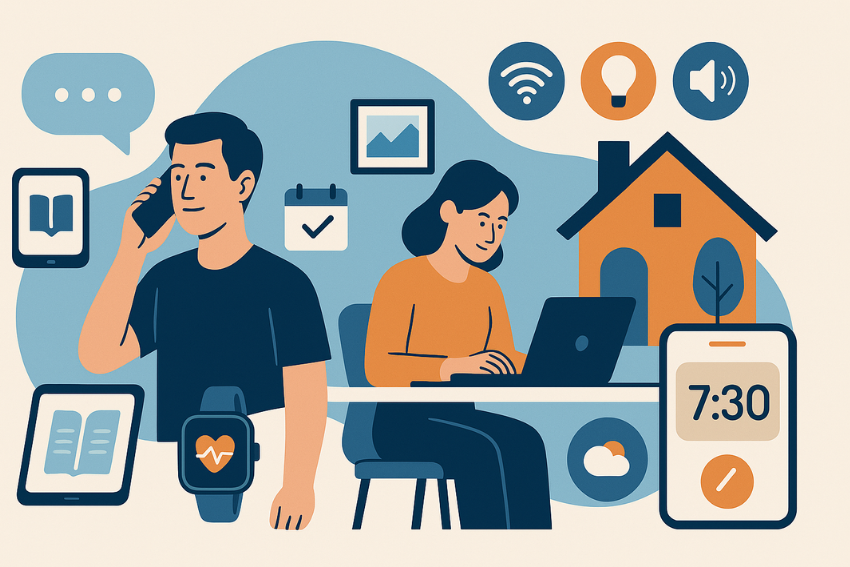
The impact of technology has become so deeply woven into our daily existence that we barely notice its presence anymore. Technology influences our choices, interactions and experiences from the moment our alarm wakes us up in the morning until we are scrolling through social media before going to sleep at night.
But let’s be honest with ourselves. A lot of us assume these digital devices are commonplace. We live a swiping, tapping and clicking existence, seeing only how these technologies have revolutionized our lives.
Let’s explore what the tangible impacts of technology are on our daily life, relationships, work and even our health and wellbeing. When you’re finished, you’ll have your smartphone, laptop, and smart devices in a completely different light.
How Technology Transforms Communication and Social Connections
Think about how you kept in contact in the past by having to write letters and then wait for them to reach you, or arrange a time to phone? The old days seem like a long time ago these days. Communication is revolutionized by the technology.
The Immediacy Factor
You are able to call anybody from any place at any time now. Distance is virtually irrelevant today, whether in the form of a text message on WhatsApp, a FaceTime conversation or a direct message on Instagram. This constant connectivity can be a good thing and a bad thing.
Social Media as a Double Edged Sword
Social media, from Facebook to Twitter and TikTok, has changed the way people communicate, experience and even meet new people. The benefits are obvious:
- Reconnecting with old friends and distant family members becomes effortless
- Finding communities of people who share your niche interests becomes possible
- Access to diverse perspectives and global news happens in real time
But there are disadvantages, as well. Social media can give rise to anxiety and comparison as we strive to present ourselves in a perfect manner. The constant notifications are taking away our capacity to sink into anything intensely. Sometimes, though, digital interactions become an alternative to real-life face-to-face interactions.
Video Calls and Remote Relationships
Collaborative technology such as video conferencing (Zoom, Google Meet) has become commonplace and allowed for face-to-face communication even when not physically there. For parents traveling for work, grandparents living in another state, or friends separated by college decisions, these visual connections provide emotional comfort that voice calls alone cannot match.
The Workplace Revolution: Productivity and Flexibility
The impact of technology is hard to miss when it comes to the way in which we work. The 9-5 desk job is no longer the norm, but rather something more flexible, more complex.
Remote Work Possibilities
The huge migration to remote working in recent months, brought upon by the worldwide pandemic, would not have been possible without project management software such as Trello and Asana, or video conferencing platforms. The people of today feel the same way about the office building that most of us felt about the barn during our youth. Most of us feel the same way about the barn as most people do about the office building the day they wake up to make their coffee and get to work.
Automation and Efficiency
Artificial intelligence and machine learning solutions now take care of repetitive tasks that used to take hours of human time. Now there are several ways to automate data entry, customer service inquiries, even some content creation. This frees up human workers to work on creative problem solving, strategic thinking and interpersonal skills.
However, this automation does create some legitimate problems that need to be addressed. The anxiety over job displacement is felt in many industries, and employees need to make ongoing adjustments and acquire new skills to remain relevant. Technology can free and can be disturbing to the employment.
Collaboration Across Borders
Teams are now able to work seamlessly across time zones and continents. A developer working in India, a designer in Brazil and a project manager from California can work on the same project at the same time. Multicultural collaboration involves sharing a variety of perspectives, as well as dealing with the differences and difficulties of communication across cultures.
Health, Wellness, and Medical Advancements
The impact of technology on healthcare deserves special attention because it quite literally saves lives. From wearable fitness trackers to robotic surgeries, innovation has transformed medicine in ways our grandparents could never have imagined.
Wearable Technology and Personal Health Management
Smartwatches and fitness bands track and alert you to irregular heart rhythms, monitor your sleep patterns, count steps and more. These tools enable people to manage their health proactively instead of relying on yearly check-ups to detect issues.
Telemedicine and Accessible Care
Patients who are unable or unwilling to travel to the clinic or rural communities can now use video consultation to connect to specialists. Minor medical problems that used to take hours to travel and wait to receive care can now be taken care of in minutes. This accessibility translates into better outcomes for all involved and lower healthcare costs.
AI In Diagnosis and Treatment
AI systems can now interpret medical images, identify early signs of illness, such as cancer, and recommend treatment options through the processing of vast amounts of data. Although final diagnoses and emotional support remain in the hands of human doctors, AI can be a tremendously effective diagnostic tool.
The Mental Health Dimension
There is a growing awareness of the need for mental wellness, and mental health apps, meditation platforms, and online therapy services have helped eliminate the stigma associated with seeking help for psychological needs. These digital options offer valuable support when someone does not have the financial means or may not feel comfortable visiting them in person for therapy.
Education and Learning: Breaking Traditional Boundaries
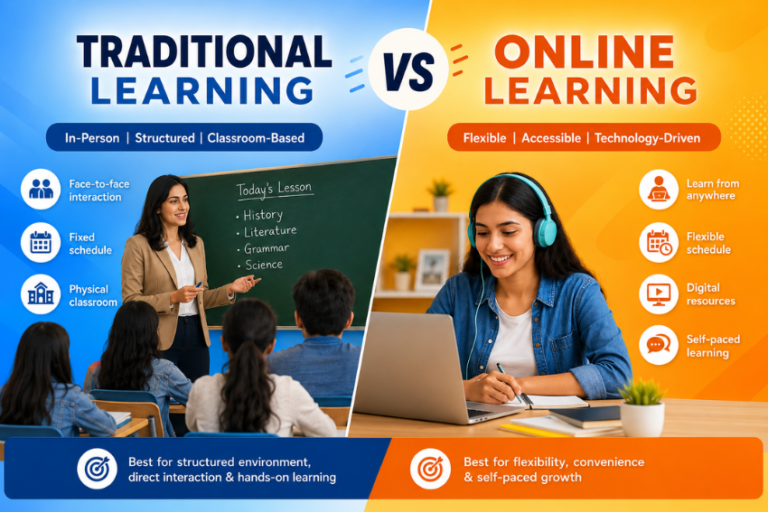
The impact of technology in education has revolutionized the way we learn and build skills. Education doesn’t have to be confined to the classroom.
Access to Infinite Information
We have instant access to nearly all information we want on the internet. From how to fix a leaky faucet to calculus, anything can be learned through a YouTube video. Web-based courses from sites such as Coursera, edX and Khan Academy provide university education to anyone with an Internet connection.
Personalized Learning Experiences
Adaptive learning software tailors’ educational content to each student’s pace and learning style. Struggling with fractions? The system provides extra practice. Have some basic algebra knowledge? Proceed to more difficult subject matter. This personalization was not previously possible as we could not assess and adapt in real time without digital tools.
Global Classrooms
Students now have the opportunity to meet with other students and teachers from other countries and learn about other cultures and points of view. Virtual exchange programs and collaborative international projects expose students to the workforce of the 21st century, which is becoming global.
Challenges in Digital Education
But the digital divide continues to exist. Students who are not able to access the Internet or own a device are disadvantaged compared to their more privileged peers. Also, children’s social development and emotional learning may be affected in fully-remote learning without face-to-face social interaction.
Entertainment and Leisure: The Attention Economy
It’s important to examine the impact of technology on the way we entertain ourselves. Now we have more and more choices of digital options that seek to capture and hold our attention during leisure time.
Streaming Services Have Killed Appointment Viewing
Netflix, Hulu, Disney+, and many other platforms give us the freedom to view what we want, when we want. People’s habit of watching the same show at the same time is gone. This is a freedom that is desirable to some, but problematic for others because it may break up common ground.
Gaming As Mainstream Entertainment
Games have grown from being kids’ pastimes to a huge entertainment business, more formidable than movies or music. Esports is no longer a niche pastime but a profession that now brings a level of fame and fortune to talented gamers, and thrills stadium audiences everywhere. Games tell stories, offer difficult challenges, and have social communities for millions of people all over the world.
The Paradox of Choice
With so many entertainment options available, we often spend more time deciding what to watch or play than actually enjoying anything. The paradox of choice affects our satisfaction levels, making us constantly wonder if we made the right decision.
Social Media as Entertainment
Short form videos are a new, engaging type of content that have led to new entertainment categories on platforms such as TikTok and Instagram Reels. These sites are designed to be addictive in order to maximize engagement, not well-being.
Daily Routines Transformed: From Morning to Night
Consider how technology impact shapes the most mundane aspects of our daily existence.
Morning Rituals
Smart alarms detect sleep cycles and reawaken you at the best time. Coffee machines that are controlled by an app on a smartphone begin brewing the coffee before you even get out of bed. Clothing suggestions are provided for the day according to the weather forecast in the weather apps. News Apps provide customized short news feeds based on your interests.
Transportation and Navigation
Print-out directions or paper maps are no longer necessary because one can use GPS navigation. Ride sharing services, such as Uber and Lyft, have revolutionized taxi occupations and made getting around easier. Smart traffic solutions and electric vehicles are poised to bring even more changes in the way people commute around their cities.
Shopping and Consumer Habits
Amazon can safely ship anything from food to electronics in a matter of hours. The price comparison apps help us to get the best deals. Customer reviews enable us to buy with our brains on before spending our money! The traditional brick and mortar retail has changed and stores are now acting as showrooms to online purchases.
Home Management
Smart thermostats can automatically learn our temperature preferences, and do so to save energy. Home automation devices and lights are operated by voice commands from devices with voice recognition software such as Alexa and Google Home. For us, there’s peace of mind in the form of a security camera that we can see from our phones when we’re away from home.
Evening Wind Down
Blue light blocking glasses aid in preparing our eyes for sleep. Relaxation Apps help us to meditate or practice breathing. Sleep tracking tools help us get better sleep by looking for patterns and offering recommendations for improvement.
Financial Services and Money Management
The impact of technology has transformed how we earn, spend, save, and invest our money.
Digital Banking
Mobile banking apps allow us to deposit checks, transfer money and keep track of our accounts without having to make a trip to our bank’s physical location. Real-time spending alerts allow us to better keep track of our budgets than ever before.
Digital Payments
Paying with cash or physical cards is becoming increasingly unnecessary thanks to Venmo, PayPal, Apple Pay and Google Pay. We share costs with friends, pay for coffee, or pay family members within seconds, using our phones.
Cryptocurrency and Blockchain
While there are plenty of debates still to go, cryptocurrencies are a major leap in the way money and value are thought. The promise of blockchain technology is transparency and security that traditional financial systems have not been able to offer.
Robo Advisors and Investment Accessibility
Algorithmic investment platforms are user-friendly tools that enable regular investors to get into the financial markets with little to no knowledge or capital. The current low fees and automated portfolio management have made investing accessible to everyone from a once-hard-to-access world for the affluent.
Financial Literacy
Learning about managing finances is now accessible with financial education apps and resources. Technology offers opportunities for learning that those of yesteryear did not have, from simple budgeting skills to more advanced investment strategies.
Environmental Impact: The Complicated Relationship
The impact of technology on our environment presents a complex picture with both promising solutions and serious problems.
Renewable Energy Technologies
Solar and wind technologies, along with battery storage, are constantly getting more efficient and cost competitive. Smart power grids are used to optimize energy distribution and minimize energy loss. The production and disposal of batteries are also associated with environmental issues; however, electric vehicles offer a promising alternative to fossil fuels.
E Waste Concerns
We’re constantly upgrading to newer devices which creates huge amount of e-waste. The toxic elements in smartphones, laptops and other devices need to be treated with care when disposing of or recycling the devices. Our devices’ environmental price needs to be taken seriously.
Monitoring and Conservation
Satellite technology and environmental sensors allow scientists to track deforestation, pollution levels, and climate change indicators with unprecedented accuracy. This data drives policy decisions and conservation efforts that can mitigate environmental damage.
The Carbon Footprint of Digital Infrastructure
The electricity consumption of data centers, servers and vast networks powering our digital lives is huge. Carbon emissions are caused by streaming videos, cloud storage and cryptocurrency mining. However, the footprint of tech companies continues to grow and be committed to renewable energy in their operations.
Privacy and Security: The New Battleground
The impact of technology on privacy should be taken seriously as there are a lot of data trails in our digital world, which can be leveraged by companies and governments.
Personal Data as Currency
Every search query, like, click, and online purchase contributes to a detailed digital profile. Companies monetize this data to deliver targeted advertising, but the implications extend far beyond marketing. Our digital profiles influence everything from insurance premiums to employment opportunities.
Cybersecurity Threats
Digital identity theft, ransomware attacks, and data breaches have become commonplace. Protecting our personal information requires constant vigilance, strong passwords, two factor authentication, and healthy skepticism about suspicious emails and messages.
The Surveillance Question
Governments and corporations collect unprecedented amounts of data about citizens and consumers. The balance between security and privacy creates ongoing ethical debates. Where should we draw the line between safety and freedom?
Digital Footprint Management
Nowadays navigating the digital world is an important life skill. Photos we post, comments we make, searches we can make – all of this are things that can stay available forever. It is particularly important to educate youth about the consequences of their online behavior in the future.
Mental Health and Emotional Wellbeing
The impact of technology on psychological health deserves honest acknowledgment, both positive and negative.
Positive Mental Health Applications
There are even apps such as Headspace or Calm that help make meditation a part of everyday life for people with a cell phone. Internet support groups offer social support for depression, anxiety and drug/alcohol addiction. Crisis text lines provide adults and youth immediate assistance when they are in crisis and may not seek hotline help.
The Anxiety and Comparison Problem
Social media websites give unrealistic pictures of other people’s lives and can cause a person to feel bad about themselves. There is an increasing flow of negative and outrageous information, leading to chronic stress. The fear of missing out (FOMO) is a cause of compulsive checking and anxiety.
Digital Burnout
Exposure to screens and notifications creates cognitive fatigue. No matter how hard we try, our brains aren’t that good at shutting off after a long day of work when you bring the email home. The constant duty cycle doesn’t allow for rest and recovery.
Healthy Technology Boundaries
Digital wellness has become an important consideration for individuals and families. Strategies include:
- Setting screen time limits
- Creating tech free zones like the dinner table
- Designating periods without notifications
- Practicing digital minimalism
- Using apps that block distracting websites
The Future: What Comes Next?
Understanding the impact of technology today helps us prepare for the innovations coming tomorrow.
Artificial Intelligence Integration
AI will increasingly be a part of our everyday tools and experiences. Virtual assistants will be more intuitive and capable. The revolution of automation will continue to shape industry and work.
Virtual and Augmented Reality
VR and AR will impact the way we do entertainment, education, and even social interaction. Think of going to concerts, virtually, viewing and touring apartments from the comfort of your couch, or augmented reality, with information about the physical world around you.
Biotechnology and Human Enhancement
Health monitors that could be worn to identify disease will get more sophisticated, maybe before the disease symptoms even show. Treatment will be personalized through genetics.
Quantum Computing
The use of quantum computers will enable solving problems that are impossible to solve with traditional computers, which will result in the development of new materials, drugs and complex modeling.
Ethical Considerations
With the development of technology comes ethical dilemmas surrounding privacy, autonomy and inequality. Our decisions today can have an impact on our future for generations.
Finding Balance in a Digital World
The impact of technology can be extraordinary in the benefits it provides, but can also present challenges that must be actively managed.
Intentional Technology Use
The key to thriving in our digital age lies not in rejecting technology but in using it intentionally. Ask yourself: Does this app or device serve my values and goals, or does it distract me from what matters?
Digital Minimalism
Consider adopting digital minimalism practices. Remove unnecessary apps. Unsubscribe from email lists that clutter your inbox. Turn off notifications for everything except genuine priorities.
Real Connections Matter
Find quality time to connect, without a screen. Focus on real-life connection and interactions rather than virtual ones. The best technology complements real life connections; it does not supplant them.
Continuous Learning
Stay curious about new technologies while remaining critical of their effects. Educate yourself about privacy settings, data security, and digital literacy. Understanding how technology works helps you control it rather than being controlled by it.
Conclusion
The impact of technology in our lives is so great that sometimes we find ourselves wondering about how we made it through before smart phones, social media and constant connectivity. New capabilities have emerged, and new challenges have emerged. New capabilities have been achieved but new challenges have been created as well which was not present in previous generations.
It’s not about rejecting technology, but about using it wisely and with purpose. Technology is at its best when it adds to our humanity, not takes away from it. It should build our bonds, help us to stay healthy, and increase our capacity while still allowing for humanity and introspection.
With the transition to a more digital world, there is a need to think carefully about the values that we are promoting. It’s so convenient, but privacy also counts. Efficiency makes life better, but thinking and reflection is essential. Connectivity brings us together, but nothing can replace the true humans.
Technologies that we create are a reflection of our identity and values. If we can wisely use technology as part of our lifestyle, we can have the best of both worlds, and enjoy technology without losing our humanity.