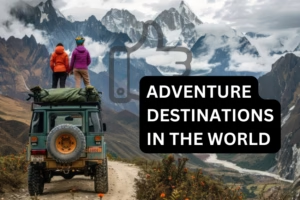
Are you planning to go trekking in Nepal? Therefore, it is very important to choose the right season and time to enjoy trekking to the fullest.
The best time for trekking in Nepal depends on many aspects including personal choice, fitness and economic considerations. It is always advisable to plan in advance, update yourself with the weather forecast in the area of visit and carry with you the right equipment and backup whenever you decide to visit.

Depending on what you are attracted to either the colorful flowers of spring, the spectacular views of autumn or the exclusive difficulties of winter, Nepal has something to offer to every kind of trekker. Keep in mind to preserve the environment and society around you, and do something good to this beautiful country.
Choosing the right season when you trek in Nepal will assure you of a lifetime experience where you will have an infinite memory and a life-long experience of the natural beauty and cultural richness of the area.
This article will discuss the best time for trekking in Nepal giving an insight into their pros and cons.
March-May Spring
Spring is probably the best season for trekking in Nepal where temperatures slowly begin to rise after the snowy winter. The months of March, April and the beginning of May are characterized by bright skies and rather favorable weather, this is why it is an ideal time to make treks of different altitude. The warmer areas like the ones around Kathmandu and Pokhara, enjoy a warm day and cool nights, an ideal place to acclimatize and prepare to go higher.
Among the key tourist attractions in this season is the beautiful foliage. Nepal Rhododendrons in full glory are the national flower of the country. Such trails as the Annapurna Circuit and Everest Base Camp are strewn with colorful flowers that make a magical feast on the eyes. Besides there are high chances of having cloud-free days that will give one a chance to have unsurpassed views of the snow-covered Himalayan Mountains.
However, spring is the time of unpredictable weather conditions because of the onset of monsoons. There may be rain showers in late May, thus it is better to plan your trip a little earlier in the season or be ready to sudden changes. March particularly during early spring is not as busy as April and early May, serving a quieter and more peaceful environment to the people who want less flow of tourists.
September to November Autumn
The highest peak trekking season in Nepal is in autumn (September to November). As the temperature drops a bit off summer, this season is the ideal combination of warm days and cool nights, hence comfortable to undertake long treks. Skies are generally clear and visibility is superb, and you will be amazed by the view of Himalayas.
Trekking is particularly famous in the autumn period due to the good weather and due to the beautiful views. Golden leaves and full greenery scattered around the trails make the setting very scenic. Individuals, who are intending to undertake the well-regarded Everest Base Camp trek or the Annapurna Circuit, would find autumn as the time when they can enjoy the overwhelming beauty of the mountains with a limited concern about the unfavorable weather.
Although autumn is the most suitable time to go trekking, it has its disadvantages. The international tourists are very numerous and this may create congestion on the trails and this may not be a good idea to many since others go out to trek to have a peaceful atmosphere. In addition, some of the routes are very popular and, thus, such services as teahouses and lodges are always booked and reservations in advance are necessary.
December to February Winter
The winter, December-February, is a special and less travelled trekking season. It is cooler and the lower altitudes have frosty mornings and the higher ones are in snow resembling a magic winter wonderland. Such common routes as the Everest Base Camp or Annapurna Circuit are covered in snow making the countryside look like a pristine frozen paradise.
The solitude is one of the main benefits of trekking in winter. There are less trekkers along the routes and you can have a calmer and meditative experience. The cold weather also implies that teahouse crowd is minimal and one can stay there in a more relaxed manner. Moreover, the skies are clear and there are few clouds in the sky so that the mountains are breath-takingly seen, usually without the haze covering the sights in other seasons.
Nevertheless, trekking in winter needs a careful planning and preparation. It may be unsafe to travel in high altitude due to the presence of snow and ice and appropriate equipment such as crampons and ice axes should be used. The process of acclimatization is essential to avoid altitude sickness, and the chances of avalanches raise. You have to be well set physically and logistically so that you have enough of what you require and support.
Summer (June-August)
Most trekkers prefer to avoid the summer period which is usually in the months of June, July and August because monsoon season starts. The main feature during this period is heavy rains which result in muddy trails and high chances of landslides. It is not very clear and the mountains are many times obscured by the clouds that bar the view of the trekkers of their major attraction which is clear views of the Himalayas.
Nevertheless, there are still adventurous people who opt to trek during monsoon. Green landscapes, flowering flowers, and an opportunity to see that part of Nepal that not many tourists get to see, make it a fascinating choice. Yet it is important to mention that numerous trekking paths are closed at this period and the ones that can be visited need a thorough planning and even helicopter evacuations in case of a harsh weather.
Conclusion
When to trek in Nepal entirely depends on the preferences of individuals, fitness and travel intentions. Spring is beautiful because of the flowering rhododendrons and skies and is perfect when one wants vivid colors and pleasant weather.
The best time to trek in Nepal to enjoy clear skies and fair temperatures is in autumn when the most trekkers arrive. Winter offers isolation and a white scenery, which is attractive to experienced explorers. However, summer is very tough but it shows a green, beautiful picture of Nepal that few people can enjoy.
Finally, every season has a beauty and a problem. Being aware of these peculiarities, trekkers will be able to make any decisions to get a memorable and safe journey in the enchanted territory of Nepal.